
Jelly Donutz strain guide: Humboldt Seed Company’s Hella Jelly × White Runtz, a candy-gas dessert hybrid that finishes in roughly 55 days and washes like a dream.
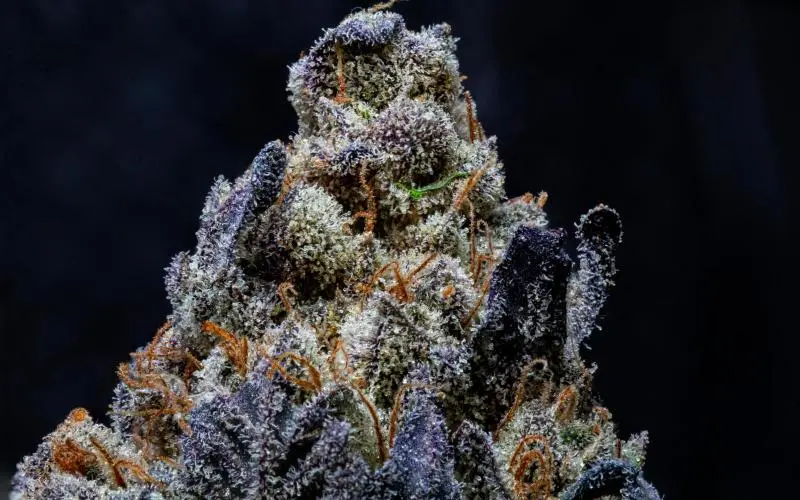
Jelly Donutz is what happens when a breeder treats candy terpenes as a starting point rather than the finish line. Berry jam and sweet dough over a cotton-candy-and-fuel nose, deep purple-and-green flowers drenched in greasy resin, up to 35% THC breeder-stated, and a flowering time short enough to beat an Australian autumn. It is one of the few genetics in the collector catalogue that reads as a mainstream crowd-pleaser and a serious solventless pick at the same time.
This guide covers the Jelly Donutz strain in full: the Humboldt breeding project behind it, what Hella Jelly and White Runtz each contribute, the terpene chemistry, phenotype variation and keeper criteria, how it performs across Australia’s subtropical and temperate growing zones, and why it is one of the better wash candidates going. Jelly Donutz feminised seeds are available in the Sigma catalogue. For reading the lineage before you run the pack, the cannabis genetics guide covers cross notation and predicting terpenes from parent lines.
In this guide
- The origin: Humboldt’s three-year pheno-hunt
- Lineage: Hella Jelly × White Runtz explained
- Terpene profile: candy, cream, and floral diesel
- Phenotype variation: what to expect across the pack
- What to hunt for: the keeper criteria
- Growing Jelly Donutz in Australia: subtropical vs temperate
- Washing and resin: why it presses
- Jelly Donutz in the Sigma catalogue
Jelly Donutz: At a Glance
| Original Breeder | Humboldt Seed Company (Northern California) |
| Cross | Hella Jelly × White Runtz (full pedigree: Jelly Donutz #160 × #17 × Hella Jelly × White Runtz) |
| Also known as | JDz |
| Indica / Sativa | Sativa-leaning hybrid · ~60% sativa / 40% indica |
| THC | High-20s typical · up to 35% breeder-stated · CBD <1% |
| Terpenes | Limonene · Caryophyllene · Myrcene (inferred — no published COA) |
| Flavour | Berry jam · Cotton candy · Cream · Floral diesel · Caramel |
| Flowering time | ~55 days (7–8 weeks) · fast for a sativa-dominant |
| Yield | High · 500–600 g/m² indoor · 300–600 g/plant outdoor |
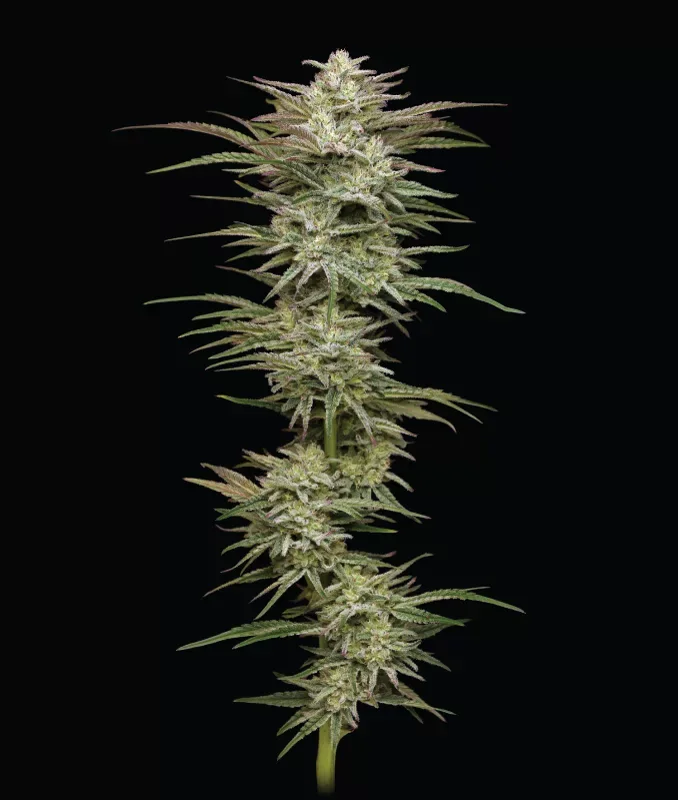
| Height | Medium-tall · 120–150cm indoor · builds vertical, low stretch |
| Difficulty | Easy · vigorous, mould and mildew resistant |
| Seeds | Jelly Donutz feminised photoperiod — Sigma Seeds Australia |
The Origin: Humboldt’s Three-Year Pheno-Hunt
A bred line, not a clone chase
Jelly Donutz has a cleaner provenance than a lot of the modern exotic catalogue, and that is worth saying first. Where strains like Super Boof and MAC 1 began as clone-only cuts that were later worked into seed, Jelly Donutz was a deliberate seed-breeding project from the start. Humboldt Seed Company — a Northern California breeder with a long track record of selecting on aroma and consistency — spent around three years pheno-hunting and stabilising the line before releasing it commercially. The result is a pack that behaves predictably: you are hunting for the best expression of a stable cross, not chasing a cut that may or may not be the real thing.
The pedigree behind the simple name
The lineage is usually written as Hella Jelly × White Runtz, and that is the useful shorthand. Humboldt’s own current feminised pedigree is more involved — they list it as Jelly Donutz (#160 × #17) × Hella Jelly × White Runtz, which reflects the reworking and backcrossing the line went through during the three-year project. The point of all that selection was twofold: lock in the candy-gas terpene expression, and keep the fast flowering time and resilience that make the plant easy to run. The White Runtz used in the cross was an authentic cut sourced from the Emerald Cup, which matters — “Runtz” is one of the most widely faked names in cannabis, and the genuine creamy-candy Runtz character is a large part of what Jelly Donutz delivers.
On the “Jelly Donutz” name
Several unrelated strains circulate under the Jelly Donutz name — Clearwater Genetics runs a White Hot Guava × Apple Fritter version, and there is an older, separate “Jelly Donut” (singular) that is Purple Punch × French Toast. Neither is this strain. The Jelly Donutz covered in this guide, and the one Sigma stocks, is the strain Humboldt Seed Company created on Hella Jelly × White Runtz — not the Clearwater version and not the older Purple Punch one. The breeders guide covers why breeder attribution matters this much in the modern market.
Lineage: Hella Jelly × White Runtz Explained
Hella Jelly: the berry-jam, fast-finish parent
Hella Jelly is one of Humboldt’s own staples — a cross of Notorious THC × Very Cherry, and once circulated under the name Jelly Rancher. It is the parent responsible for the berry-jam sweetness in the profile and, just as importantly, for the traits that make Jelly Donutz forgiving to grow: fast flowering, strong vigour, and a real resistance to grey mould and powdery mildew. Hella Jelly is a hardy, quick plant, and it passes both qualities down. When growers describe Jelly Donutz as easy, it is the Hella Jelly side they are describing.
White Runtz: the candy, cream, and resin parent
White Runtz is a Zkittlez × Gelato cross — a Cookies-family descendant through Gelato (itself a Sunset Sherbet × Thin Mint GSC cross). It brings the creamy candy sweetness the name promises, the floral-diesel gas that sits under it, and the greasy, oversized trichome heads that give Jelly Donutz its bag appeal and its extraction credentials. Without the White Runtz side, Jelly Donutz would be a sweet, fast berry plant; the Runtz is what makes it a candy-gas dessert hybrid with resin worth washing. The full Cookies family tree that sits behind Gelato is mapped in the Cookies cannabis lineage guide.
Jelly Donutz Lineage: Traced Back
| Strain | Cross | What it contributes to Jelly Donutz |
|---|---|---|
| Hella Jelly | Notorious THC × Very Cherry | Berry-jam sweetness, fast flowering, vigour, and the grey-mould and powdery-mildew resistance that makes the plant forgiving. |
| White Runtz | Zkittlez × Gelato | Creamy candy sweetness, floral-diesel gas, deep colour, and the greasy oversized trichome heads behind the bag appeal and the wash quality. |
| Gelato | Sunset Sherbet × Thin Mint GSC | The Cookies-family resin architecture and the creamy dessert base, carried in through White Runtz. |
| Zkittlez | Grape Ape × Grapefruit (Dying Breed) | The candy-fruit terpene brightness and the limonene-forward sweetness that reads as cotton candy, carried in through White Runtz. |
Terpene Profile: Candy, Cream, and Floral Diesel
What Jelly Donutz smells like
Humboldt describe the nose as cotton candy dipped in petrol and caramel, and that is close to exact. Open a cured jar and the candy and cream arrive first — berry jam, cotton candy, a caramel sweetness — with a floral-diesel gas sitting underneath rather than leading. This is a dessert strain with a fuel edge, not a gasser with a sweet note, and that balance is the whole character. On the grind the caramel deepens and the diesel sharpens; on the exhale the candy and the gas carry together. It fills a room the moment a jar opens.
A note on the terpene data
Humboldt publish aroma descriptors rather than a full lab panel, so the dominance order below is inferred from the reported aroma and the Gelato-Runtz-Zkittlez lineage rather than read off a COA. Expect it to shift with phenotype and cure — the point of the order here is to tell you what to smell for, not to stand in for a lab result. For how to read and weight a terpene profile yourself, the Sigma terpene guide covers the method.
Terpene Stack: Jelly Donutz (inferred)
| Terpene | Role | Aroma contribution |
|---|---|---|
| Limonene | Candy-citrus top note | The cotton-candy sweetness and citrus lift that opens the jar. Carried in from the Zkittlez side of White Runtz. |
| Caryophyllene | Gas backbone | The floral-diesel, peppery fuel note that sits under the candy and keeps it from reading as pure sweetness. |
| Myrcene | Creamy base | The sweet-dough, creamy depth from the Gelato heritage that holds the berry and the gas together. |
The research underpinning how terpenes interact with cannabinoids and each other is in Russo’s 2011 paper Taming THC: potential cannabis synergy and phytocannabinoid-terpenoid entourage effects in the British Journal of Pharmacology.
Phenotype Variation: What to Expect Across the Pack
Two parent directions
Because Humboldt stabilised the line hard, Jelly Donutz runs more consistent than most sativa-dominant dessert crosses — but there is still a real split along the two parents. Hella Jelly-leaning phenotypes lead fruitier and brighter, with the berry-jam up front, and tend to be the fastest and hardiest in the pack. White Runtz-leaning phenotypes run creamier and gassier, with the candy-diesel dominant, denser bag appeal, and the deepest colour. The best keepers usually sit between the two, holding both the berry-candy sweetness and the floral-diesel gas without letting either flatten the other.
What the grow reports consistently show
Cultivator reports on this line are unusually uniform, which is itself a mark of how stabilised it is. The arc growers describe again and again: fast, near-total germination; a deliberately slow vegetative phase; then almost no stretch on the flip, so the plant arrives at flower close to the height it finishes. Stems come up surprisingly strong and stable for a plant that builds vertical, holding the large dense colas without much staking. Reports of hermaphrodite traits or genetic instability are notably absent. And the resin clouds early — some growers pull a faster-finishing phenotype well inside the window and still report a strong, energetic, long-lasting effect, which points to a plant that reaches maturity quickly rather than one that needs chasing to the last day.
Visual characteristics
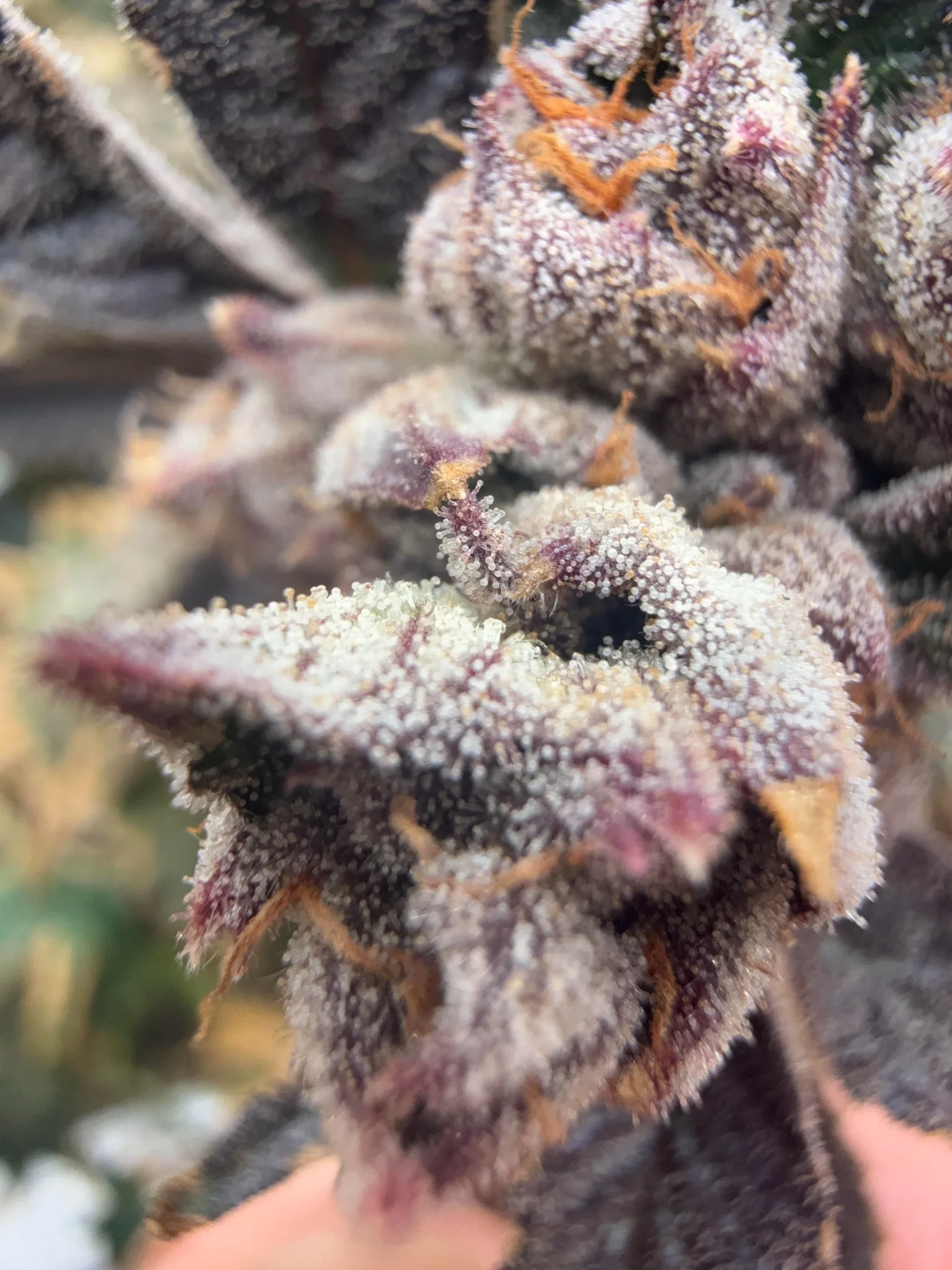
At harvest Jelly Donutz runs bright green shot through with deep purple, orange pistils threaded across the calyxes, and a heavy, greasy white trichome coverage that reads wet under light. The purple is genetic, carried from the Gelato and Zkittlez side, but it depends on a cool finish to express fully — a point that matters a great deal in Australia, where whether you get the colour for free or have to work for it comes down entirely to your growing zone.
What to Hunt For: The Keeper Criteria
Sigma Secrets: What to hunt for in a Jelly Donutz pack
1. Both halves of the cross, present at once. The keeper carries the berry-jam and cotton-candy sweetness up front and the floral-diesel gas underneath, with neither flattening the other through cure. A phenotype that reads candy-only has lost the Runtz gas; one that reads gas-only has lost the point of the cross. Evaluate at a proper cure, not off the dry.
2. Greasy, oversized trichome heads. This is the extraction tell and the bag-appeal tell at once. Look for large, bulbous, full-melt-grade heads under magnification — the White Runtz morphology — not just a heavy frost. The phenos with the biggest heads are the ones worth washing.
3. Deep purple with density, not colour alone. The most striking phenos pair deep purple against green with dense, rock-hard bud structure. Purple on an airy, light bud is less valuable than full colour on a solid, resin-loaded one. Give it the cool finish (see the growing section) and the best phenos reward it.
4. Candy that survives the cure. The limonene candy top note is the most fragile part of the profile. The keeper holds its cotton-candy sweetness through an extended cure rather than drifting to flat gas. A phenotype that still reads candy-and-cream at six weeks of cure is the one to keep.
5. Finishes in the fast window. Jelly Donutz is built to come off in roughly 55 days. The keeper reaches full candy-gas-and-frost expression inside that window rather than needing an extra fortnight it was never bred to run. A pheno that is still underdeveloped at nine weeks is fighting the genetics.
For the full methodology on running a pack from seed to keeper selection, the phenohunting guide covers the process in detail.
Growing Jelly Donutz in Australia: Subtropical vs Temperate
Why the fast finish is the whole story here
Jelly Donutz is rated easy — vigorous, resilient, resistant to grey mould and powdery mildew, and forgiving of a grower still finding their feet. Indoors it reaches a medium-tall 120–150cm on strong vertical stems, takes topping and ScrOG well, and finishes in roughly 55 days at 500–600 g/m². It is a heavy feeder that handles a strong program and high light without complaint. But the trait that matters most in Australia is the flowering speed, because a roughly 55-day flower combined with genuine mould resistance is exactly what a dense-budded dessert strain needs to survive an Australian autumn — and how much that helps you depends entirely on your zone.
The subtropical north
In the Northern Rivers, south-east Queensland, and the humid coastal strip, humidity and the autumn wet are the enemy, and they are what kill most dense dessert genetics — botrytis setting into tight colas from the inside before harvest. Jelly Donutz is one of the better answers to that problem. The short flower means it finishes in early autumn, ahead of the worst of the wet, and the Hella Jelly mould and mildew resistance buys margin that most Runtz-adjacent strains simply do not have. Run it with strong airflow through the canopy, stay on top of lower-canopy humidity in the final weeks, and it handles the subtropics better than buds this dense have any right to. The trade-off up north is colour: the warm nights tend to keep the purple muted, so unless a cool snap lands near the finish you are growing it for the terpenes and the resin, not the bag-appeal purple. That is a fair trade in a climate where getting a clean, un-rotted harvest off at all is the real win.
The temperate south
In Victoria, Tasmania, the ACT, southern New South Wales, and the Adelaide Hills, the picture flips. Here the cool autumn nights do the colour work for you, drawing out the deep purple the genetics carry with no intervention at all — the same anthocyanin response the northern grower has to chase. And the quick finish earns its keep differently: it gets the plant harvested before the cold, damp tail of the southern season sets in, which is where a slower strain starts to suffer. The watch in the south is warmth at the other end — because Jelly Donutz vegs slowly and barely stretches, you need to start early enough that the plant has built its full height before the days shorten and growth slows. Plant it late in a cool climate and it simply will not have time to size up. Started on time, the temperate south is where this strain looks its best: full purple, full density, cleanly finished.
Sigma Secrets: Reading the zone before you plant
Subtropical / humid coastal (Northern Rivers, SE QLD). Grow it for the wet-dodge. Prioritise airflow and canopy management, expect muted colour, and treat the clean early finish as the prize. The mould resistance plus the fast flower is the reason to pick this strain over a slower, softer-budded dessert hybrid that will rot on you.
Temperate south (VIC, TAS, ACT, southern NSW, Adelaide Hills). Grow it for the colour and the clean finish. The cool autumn nights pull full purple for free, and the fast flower beats the cold-damp end of season. Start early so a slow-veg, low-stretch plant has time to build height.
Indoors, anywhere. You control the finish, so you get both: drop lights-off temperature in the final two weeks to pull the purple, hold humidity down through the dense colas, and run the 55-day window. Indoors is where Jelly Donutz gives its full expression regardless of what climate you live in.
Washing and Resin: Why It Presses
A genuine solventless pick
Jelly Donutz is one of the stronger wash candidates in the catalogue, and it comes by it honestly through the White Runtz side. Gelato and Runtz genetics are solventless staples for a reason — the Cookies-family trichome architecture produces large, bulbous, capitate-stalked heads on thick stalks that survive agitation and release cleanly. Jelly Donutz inherits that morphology and throws it heavily: the greasy, oversized heads that give the flower its wet-looking frost are the same heads that make it press. Extractors consistently rate it a top-shelf wash pick, and the resin production reported across grows is extreme rather than merely good.
Protecting the candy in the wash
The one thing to respect is heat. The limonene candy top note and the cotton-candy sweetness are the most heat-fragile part of the profile — the same way the citrus is on the fruit-forward strains in the range — and they are the first thing a warm wash or a hot press strips out. Run cold and gentle, and the candy-cream-and-gas stack carries through into the concentrate; run hot and you will get a competent floral-diesel rosin that could have come from any gassy Cookies cross, with the dessert character cooked off.
Sigma Secrets: Extraction notes
Fresh frozen preferred. The limonene candy fraction degrades faster than the caryophyllene gas through drying and curing. Fresh-frozen processing preserves the sweet top note that defines the strain. Process within 48–72 hours of harvest for the strongest terpene retention.
Ice water hash. Run cold at 1–4°C with gentle agitation. The oversized Runtz-derived heads wash readily and yield well. The first wash is the most terpene-rich and carries the clearest candy-and-cream character.
Rosin press temperature. Keep it low — around 75°C — for the clearest expression of the candy top note. Above roughly 80°C the sweet fraction flattens faster than the gas, and the rosin drifts toward a one-note floral-diesel. Low and slow is how you keep Jelly Donutz tasting like Jelly Donutz.
Jelly Donutz in the Sigma Catalogue
The bridge strain
Jelly Donutz sits in a specific and useful spot in the catalogue: it is a bridge between the mainstream and the connoisseur end. The Runtz name and the candy-dessert profile pull a wide audience — this is an approachable, recognisable, crowd-pleasing strain — but the greasy full-melt resin, the genuine phenotype hunt, and the fast, hardy, zone-smart growing profile give it real depth for a collector. It rewards a grower who just wants loud, fast, pretty, resinous flower, and it rewards one who wants to wash the frostiest keeper in the pack. Not many strains do both.
Where it fits against the rest
Among Sigma’s dessert and fruit strains, Jelly Donutz carves out the candy-berry-gas lane. It is sweeter and more overtly candy than the dark-cherry-and-citrus of Super Boof, and it runs gassier and faster than the lemon-cherry-cream of Lemon Cherry Gelato, with which it shares the Gelato-Runtz heritage. For the solventless-minded, it sits alongside the catalogue’s benchmark wash strains — Cap Junky and GMO — while finishing faster and growing easier than either.
Jelly Donutz in context
A fast 55-day flower, real mould resistance, greasy full-melt resin, and a candy-gas profile that pulls a crowd — Jelly Donutz is a rare strain that is easy to grow and serious to wash, and a credit to the Humboldt Seed Company line it was created from. Jelly Donutz feminised seeds are available in the Sigma catalogue. Browse the full range in the Sigma seed catalogue.
Frequently Asked Questions: Jelly Donutz Strain
What is the Jelly Donutz strain?
Jelly Donutz is a sativa-leaning hybrid (roughly 60% sativa / 40% indica) bred by Humboldt Seed Company from Hella Jelly × White Runtz. It is a candy-gas dessert strain — berry jam and cotton candy over a floral-diesel nose — known for heavy greasy resin, deep purple-and-green colour, up to 35% THC breeder-stated, and an unusually fast flowering time of around 55 days.
What are Jelly Donutz’s genetics?
Hella Jelly × White Runtz. Hella Jelly (Notorious THC × Very Cherry) brings the berry-jam sweetness, fast flower and mould resistance; White Runtz (Zkittlez × Gelato) brings the creamy candy, floral-diesel gas and greasy resin. Humboldt’s full reworked pedigree is Jelly Donutz (#160 × #17) × Hella Jelly × White Runtz, the result of a roughly three-year stabilisation project.
How strong is Jelly Donutz?
Humboldt state up to 35% THC, with CBD under 1%. Independent testing more commonly lands it in the mid-to-high 20s, so treat 35% as a well-grown ceiling rather than a typical result. Either way it is potent — an energetic, euphoric, creative lift that settles into relaxation, and long-lasting with it.
How long does Jelly Donutz take to flower?
Around 55 days indoors — roughly 7–8 weeks — which is fast for a sativa-dominant strain. Outdoors in Australia, expect an early autumn finish; the quick flower is what lets it beat the autumn wet in humid zones and the cold-damp tail of the season in cool ones.
Is Jelly Donutz easy to grow in Australia?
Yes — it is one of the easier modern dessert strains to run here. It is vigorous and resistant to grey mould and powdery mildew, and the fast finish suits both subtropical and temperate zones. In the humid north the mould resistance and early harvest dodge the wet; in the temperate south the cool nights pull full purple and the quick flower beats the cold end of season. The main rule is to start early, because it vegs slowly and barely stretches.
Does Jelly Donutz grow purple?
Yes, but the colour depends on a cool finish. The purple is genetic, carried from the Gelato and Zkittlez side, and needs a temperature drop in the final weeks to express fully. Growers in the temperate south get it for free from the cool autumn nights; growers in the warm subtropical north usually see muted colour unless a cool snap lands, or they grow indoors and drop the night temperature themselves.
Is Jelly Donutz good for washing and rosin?
Yes — it is one of the better solventless candidates in the range. The White Runtz heritage gives it large, greasy, full-melt-grade trichome heads that wash cleanly and yield well. Run fresh-frozen and keep it cold, and press rosin low — around 75°C — to protect the heat-fragile candy top note. Pressed hot, the dessert character cooks off and you are left with a generic floral-diesel rosin.
Is the Jelly Donutz from Humboldt the same as other Jelly Donutz strains?
No. Several unrelated strains share the name — Clearwater Genetics runs a White Hot Guava × Apple Fritter version, and there is an older “Jelly Donut” (singular) that is Purple Punch × French Toast. The strain in this guide, and the one Sigma stocks, is the Jelly Donutz that Humboldt Seed Company created on Hella Jelly × White Runtz — that lineage is how you tell it from the others sharing the name.
