
A note on genetic provenance: This guide discusses the documented history and original breeder attribution of the named cultivar. Sigma Seeds supplies line-worked representations sourced through established European and North American breeding partners, not original-breeder packs unless explicitly stated. Stabilisation improves consistency but does not eliminate natural phenotype variation.
GMO strain guide: Chemdog D × GSC Forum Cut, the savouriest terpene profile in the modern catalogue, and the most misunderstood name in cannabis. GMO does not stand for Garlic, Mushroom, Onion. That backronym came later, stuck because it was too accurate to argue with, and now defines the strain more than its actual origin. Skunkmasterflex named it GMO after reading a headline about Girl Scout Cookies biscuits containing genetically modified ingredients. The garlic and onion aroma was a discovery, not a starting point. Understanding the naming story is the right way into understanding GMO: a strain that defied the dessert wave of the 2010s, went fully savoury instead, and became the benchmark for funk-forward cannabis in the process.
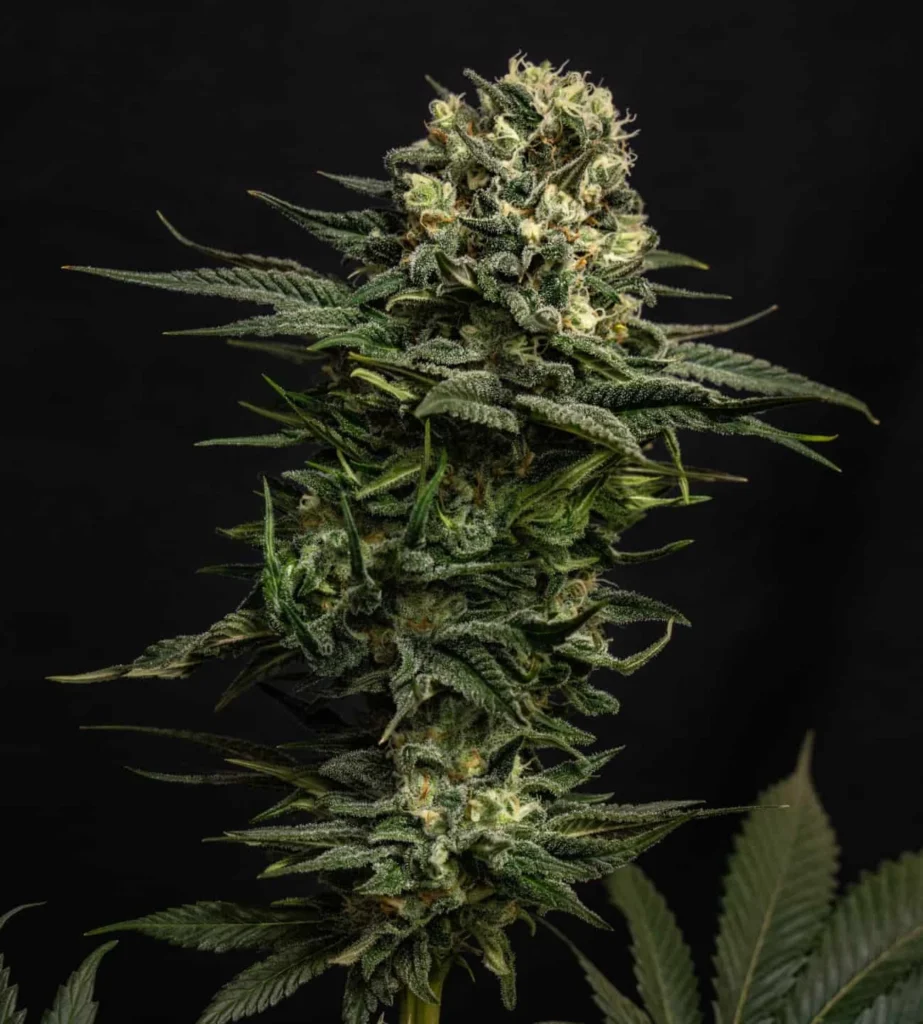
This is a deep-dive into the GMO strain: Mamiko Seeds’ cross and Skunkmasterflex’s role in finding the phenotype, what Chemdog D and GSC Forum Cut each contribute, the terpene chemistry including the volatile sulfur compounds that no standard lab panel captures, phenotype variation, keeper criteria, and what growing GMO in Australia actually requires. GMO seeds are available in the Sigma catalogue. For the foundations on reading exotic genetics and terpene profiles, the exotic strains guide and the terpene guide cover the essentials.
In this guide
- The origin: Mamiko Seeds, Skunkmasterflex, and how GMO got its name
- Lineage: Chemdog D × GSC Forum Cut explained
- Terpene profile: caryophyllene, myrcene, humulene, and the sulfur question
- Phenotype variation: what to expect across the pack
- What to hunt for: the keeper criteria
- Growing GMO: what the lineage demands
- Extraction: the benchmark savour-forward solventless
- GMO’s place in the Sigma catalogue
GMO: At a Glance
| Breeder | Mamiko Seeds (cross) · Skunkmasterflex / Skunk House Genetics (phenotype selection) |
| Cross | Chemdog D × GSC Forum Cut |
| Also known as | Garlic Cookies · GMO Cookies · Chem Cookies · D-Cookies |
| Indica / Sativa | Indica dominant |
| THC | 22–30% · CBD <1% |
| Terpenes | Caryophyllene · Myrcene · Humulene · Limonene |
| Flavour | Garlic · Diesel · Pepper · Creamy · Citrus · Berry · Cookie dough |
| Flowering time | 70–74 days (8–9 weeks) · take to full maturity |
| Yield | High |
| Height | Tall · sativa stretch despite indica classification |
| Difficulty | Moderate |
| Seeds | GMO feminised photoperiod — Sigma Seeds Australia |
The Origin: Mamiko Seeds, Skunkmasterflex, and How GMO Got Its Name
Two roles, one strain
The GMO origin story has two parts that often get collapsed into one. Mamiko Seeds made the cross (Chemdog D × GSC Forum Cut) in the early 2010s and released seeds under the name Chem Cookies, a reference to the Chem D parent. Skunkmasterflex, an active grower on the cannabis cultivation forums of that era (THC Farmer, ICMag), grew a pack of Mamiko’s seeds and found a phenotype with a profile that didn’t resemble anything known: garlic, gas, onion, spice, and a pungency that lingered on surfaces and in rooms long after the jar was closed. He kept the cut and named it GMO.
The ICMag forum thread that documented the discovery summarised the attribution accurately: “Mamiko made the original cross. Skunkmasterflex found the GMO pheno.” The December 2017 issue of High Times, the mainstream moment that broke GMO to the broader market, featured the strain and confirmed Skunkmasterflex’s role. High Times named GMO flower among the ten best weed strains of 2018, describing the profile in terms that remain accurate: “garlic, halitosis, DMT and dry socket.” The GMO seeds in the Sigma catalogue are Mamiko’s Chemdog D × GSC Forum Cut genetics — the same cross that produced Skunkmasterflex’s elite phenotype. That is what you are hunting from when you run this pack.
What the name actually means
Skunkmasterflex named the phenotype GMO after reading a news headline about Girl Scout Cookies biscuits containing genetically modified ingredients. The GSC name was already in the cannabis lexicon, and the coincidence of the same acronym appearing in a news story about the actual biscuits was the naming moment. GMO was not an acronym for Garlic, Mushroom, Onion when it was named. That backronym developed in the market as the strain’s profile became widely known — collectors and dispensaries reaching for the most accurate verbal shorthand for what the strain smells like. It was too accurate to argue with.
The Garlic Cookies alternative name has a different origin: dispensaries in California’s adult-use market were wary of stocking a product labelled GMO. The rebranding to Garlic Cookies was a retail decision, not a breeder one, and it has persisted on dispensary menus where the GMO label creates customer confusion about genetic modification.
On the Divine Genetics confusion
Divine Genetics developed a separate Chem Cookies strain using Chemdog #4 × GSC — a different Chemdog phenotype crossed with the same GSC, producing different genetics and different phenotypic expression. Both lines circulated under the Chem Cookies name in the same era, creating attribution confusion that persists in some sources. The Sigma GMO is Mamiko’s Chemdog D × GSC Forum Cut — the confirmed lineage of Skunkmasterflex’s GMO phenotype. Chemdog D and Chemdog #4 are distinct phenotypes of the original Chemdog line with meaningfully different terpene expressions: Chem D is the more diesel-forward, acrid, and pungent of the two, which is why it produced the savour-funk profile that defines GMO rather than the heavier, more sedative profile of the Divine Genetics line.
Skunkmasterflex and Skunk House Genetics
Skunkmasterflex operates under the Skunk House Genetics banner, responsible for several of the most significant genetics in the modern savoury-funk category beyond GMO. Hash Burger and Donny Burger, both on the Sigma catalogue horizon, are Skunk House genetics that build directly on the GMO savoury direction. The throughline from Skunkmasterflex’s GMO phenotype selection to the broader catalogue of Skunk House genetics is the same breeding philosophy: find and preserve the most aggressively pungent, savoury, and funky expressions in the Chemdog family tree, and cross them forward into new genetics that carry that character reliably.
Lineage: Chemdog D × GSC Forum Cut Explained
Chemdog D: the dominant parent
Chemdog D is one of the most storied phenotypes in American cannabis history. The Chemdog line traces back to a legendary 1991 Grateful Dead parking lot transaction: a bag of commercial cannabis that contained viable seeds, grown out by a grower known as Chemdog, who selected and preserved the phenotypes that became the foundation of modern gas-forward cannabis breeding. Chem D is one of those original phenotypes: acrid, diesel-forward, fuel-heavy, with a pungency that has never been replicated through any intentional breeding programme. It came from an unknown genetic origin and has never been reverse-engineered.
In GMO, Chemdog D contributes the dominant terpene direction: the diesel-fuel acidity, the caryophyllene-forward spice and pepper backbone, and the aggressive pungency that defines the strain’s first impression. It’s the parent that makes GMO smell the way it does. Without Chem D, the cross would have produced a conventional Cookies strain. With it, the GSC’s sweetness and density sit underneath a chemical, savoury, and petrol-heavy top note that bears almost no resemblance to the Cookies-family profile most collectors are familiar with.
GSC Forum Cut: the structural foundation
The GSC Forum Cut is a specific Girl Scout Cookies phenotype that circulated through the cannabis cultivation forums in the early 2010s, distinguished from other GSC cuts by its tight, dense bud structure, exceptional trichome coverage, and slightly more pronounced sweet-dough and Durban Poison-adjacent citrus character. Girl Scout Cookies is itself a Durban Poison × OG Kush cross, which means the Forum Cut contributes OG Kush structural genetics (compact density, resin production), Durban Poison sativa genetics (citrus, some sativa stretch, the uplifting effect profile), and the Cookies-family dessert sweetness that anchors the profile under the Chem D gas.
The full story of how the Forum Cut was developed, how Ghost spread it globally for $3,500, and how it became the foundation of modern Cookies-family breeding is in the Cookies cannabis lineage guide.
In GMO, the GSC Forum Cut contributes three things: the dense, high-bract-ratio bud structure and exceptional trichome coverage that makes GMO an extraction-grade genetics, the cookie-dough sweetness that lurks in the base of the profile and becomes more apparent through the cure, and the euphoric-uplifting effect architecture from the Durban Poison side that prevents GMO’s heavy indica classification from translating into a purely couch-forward experience.
GMO Lineage: Traced Back
| Strain | Cross | What it contributes to GMO |
|---|---|---|
| Chemdog D | Original Chemdog line (1991 Grateful Dead parking lot origin) | The dominant terpene direction: diesel-fuel acidity, caryophyllene spice backbone, aggressive pungency. The parent that makes GMO smell the way it does. |
| GSC Forum Cut | Durban Poison × OG Kush (Forum Cut phenotype) | Dense bud structure, exceptional trichome coverage, cookie-dough sweetness in the base, euphoric-uplifting effect architecture from the Durban Poison heritage. |
| Chemdog (original) | Unknown (1991 bag seed, Grateful Dead parking lot) | The foundational gas-and-fuel terpene character. Never replicated through intentional breeding. The pungency that defines the entire Chemdog family tree. |
| Durban Poison | South African sativa landrace | Sativa structure (the stretch that surprises growers expecting a pure indica), citrus terpene contribution, uplifting effect architecture. |
| OG Kush | Hindu Kush × Chemdawg (disputed) | Compact indica density and resin production architecture. The structural genetics that produce the high bract-to-leaf ratio and trichome coverage. |
Terpene Profile: Caryophyllene, Myrcene, Humulene, and the Sulfur Question
What GMO smells like — before the chemistry
Open a well-cured jar of GMO and the first thing that arrives is not cannabis. It’s something you might smell in a kitchen: roasted garlic, onion, something umami and savoury. Then the fuel and diesel underneath, the caryophyllene pepper rising through it, and somewhere in the background the cookie-dough sweetness from the GSC heritage that stops the profile from being purely chemical. On the break, the garlic-onion character sharpens and the diesel note becomes more pronounced. The exhale carries a roasted herb and pepper quality that lingers on the palate for fifteen to thirty minutes. What catches people off guard is the disconnect between the smell and the smoke: the nose prepares you for something heavy and sedating, and then the onset arrives clear, fast, and euphoric — the Durban Poison sativa heritage through the GSC side coming through in a way the jar doesn’t hint at. Experienced growers who open a tent of GMO at harvest describe the smell as something between a head shop and a delicatessen. It’s the most polarising terpene profile in the current Sigma catalogue, and the one with no equivalent.
Caryophyllene: the dominant registered terpene
Caryophyllene is the dominant terpene on standard lab panels for GMO — the peppery-spice-fuel backbone that comes through the Chemdog D heritage. At these concentrations, caryophyllene contributes the chemical spice and fuel depth that sits underneath the garlic-onion character. It’s the terpene most associated with GMO’s lingering palate persistence; caryophyllene’s lower volatility means it stays present on the exhale and in the room longer than lighter terpene fractions. Myrcene contributes earthy depth and the creamy undertone that softens the Chem D acidity. Humulene adds the herbal-hop quality: a dry, slightly bitter note that contributes to the roasted herb character on the exhale. Limonene provides the citrus brightness that lurks behind the dominant savoury notes and becomes more apparent through the cure.
The sulfur question: what the lab panel doesn’t show
The garlic and onion character in GMO is not fully explained by the terpene profile. Caryophyllene, myrcene, humulene, and limonene do not, in combination, produce garlic and onion aroma. The compounds responsible for that specific quality are volatile sulfur compounds (VSCs): organosulfur molecules that occur in cannabis at trace concentrations, measured in parts per billion rather than the percentage concentrations used for terpene reporting. Standard cannabis lab panels don’t test for VSCs because they require different analytical equipment and because the compounds occur at concentrations far below the reporting threshold for terpenes.
VSCs are the same family of compounds responsible for garlic, onion, and skunk aroma in nature. In GMO, the Chemdog D genetics produce VSCs at concentrations sufficient to dominate the aroma profile despite their trace-level presence. This is why GMO smells the way it does when the terpene panel alone would not predict it. It explains why the garlic-onion character in GMO is so distinctive from anything else in the Chem family tree. Chemdog D’s unique origin is likely the source: the 1991 bag seed genetics have never been replicated intentionally, and the VSC-producing pathway in that line is part of what makes the Chemdog profile unreproducible from known parent genetics.
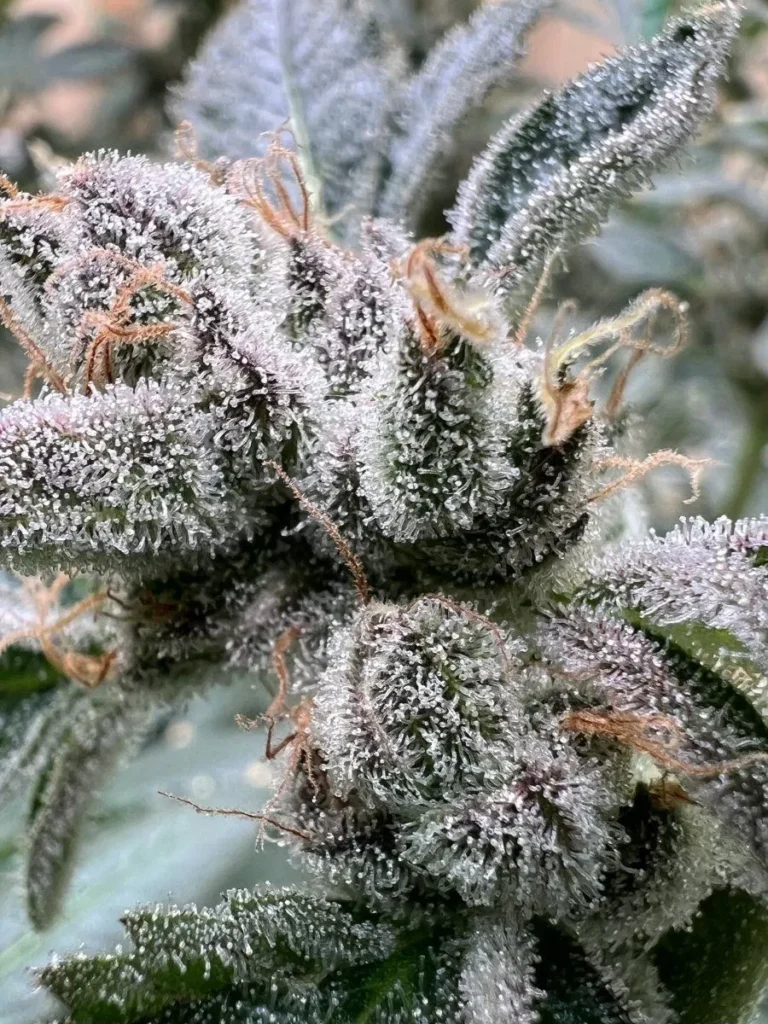
Why GMO’s aroma can’t be fully read from a terpene panel
Standard cannabis lab panels test for terpenes at percentage concentrations. Volatile sulfur compounds operate at parts-per-billion — levels that most lab panels don’t test for and wouldn’t report if they did. The garlic-onion character in GMO is driven by VSCs working alongside caryophyllene and myrcene. A terpene panel showing high caryophyllene is consistent with what GMO produces, but caryophyllene alone doesn’t explain the garlic-onion note. The interaction between the standard terpene profile and the VSC layer is what produces GMO’s unique character. When evaluating a claimed GMO phenotype, the nose is the most reliable instrument — if the garlic-onion VSC character isn’t present, the terpene panel showing caryophyllene doesn’t confirm the genetics.
Terpene Stack: GMO
| Terpene | Role in profile | Aroma contribution | Source parent |
|---|---|---|---|
| Caryophyllene | Primary / gas backbone | Pepper, fuel, chemical spice. Lingering and persistent — present on exhale and in the room long after the jar is closed. | Chemdog D |
| Myrcene | Secondary / earthy depth | Earthy, creamy undertone. Softens the Chem D acidity and provides the base that the garlic-diesel sits over. | Both parents |
| Humulene | Herbal depth | Dry herbal, hop-adjacent bitterness. Contributes to the roasted herb character on the exhale. Rare as a significant cannabis terpene. | Chemdog D |
| Limonene | Background brightness | Citrus brightness. Lurks behind the dominant savoury notes — more apparent through the cure as heavier compounds stabilise. | GSC Forum Cut |
| VSCs | Garlic-onion character | Garlic, onion, skunk. Volatile sulfur compounds operating at parts-per-billion — not captured on standard lab panels but the most distinctive characteristic of the profile. | Chemdog D (unique to this line) |
The research underpinning terpene-cannabinoid interactions and why the full chemical matrix matters beyond individual compound percentages is covered in Russo’s 2011 paper Taming THC: potential cannabis synergy and phytocannabinoid-terpenoid entourage effects in the British Journal of Pharmacology.
Phenotype Variation: What to Expect Across the Pack
The two phenotype directions
GMO produces variation across the two parent lines. Phenotypes leaning toward the Chemdog D heritage are taller, with more sativa-like stretch, a more open bud structure, and a profile where the fuel-diesel-garlic notes dominate more aggressively. These phenotypes carry the VSC expression most strongly: the garlic-onion character is at its most pronounced. Phenotypes leaning toward the GSC Forum Cut are more compact with denser bud structure, heavier trichome coverage, and a profile where the cookie-dough sweetness from the GSC base is more prominent alongside the Chem notes. Both directions produce exceptional genetics; the difference is in which parent’s character leads.
Chemdog-leaning phenotypes are the most aggressively pungent expressions in the pack. The VSC garlic-onion character is loudest here, the diesel fuel note is most prominent, and the profile is most polarising in the best possible way. Structure is more open, with wide internodal spacing and a growth pattern that surprises growers expecting an indica-dominant plant. These phenotypes are the most sought-after by collectors specifically for the garlic-diesel profile intensity.
GSC-leaning phenotypes are more compact with shorter internodal spacing, denser bud formation, and a profile that leads more clearly with the cookie-dough sweetness before the Chem notes arrive. The garlic-onion VSC character is present but slightly less dominant. Trichome coverage is typically highest in this direction: the OG Kush resin architecture from the GSC side expressing fully. These phenotypes are the stronger extraction candidates for yield-per-gram of input material.
Visual characteristics
GMO buds are distinctive at harvest: spear-shaped, dense, with a high bract-to-leaf ratio and a wet-looking trichome coverage from the capitate-stalked resin glands that produces a visually heavy, greasy appearance. Colour ranges from light green through olive green to darker green-purple expressions in some phenotypes. The bud structure is elongated and slightly asymmetric, not the round, compact nugget shape of most Cookies-family genetics. Experienced growers describe GMO as an “awkward-looking” strain that is nonetheless easy to recognise once you’ve seen it.
A note on running GMO for the first time
GMO is not for everyone and it’s worth being clear about that before you run the pack. The garlic-onion-diesel profile is the most divisive in the catalogue — people who love it will seek it above everything else, and people who don’t will find it off-putting in a way that MAC 1, Cap Junky, or Jealousy never are. If you’ve never smelled genuine GMO flower from a well-grown run, smell it before you grow it. The collector market for GMO is strong and specific. The Sigma phenohunting guide covers how to run a pack systematically once you’ve decided to commit.
What to Hunt For: The Keeper Criteria
Keeper criteria in priority order
Sigma Secrets: What to hunt for in a GMO pack
The phenotype you’re hunting is the one that makes the tent smell like a delicatessen at harvest. If you open the room during week seven and smell something that doesn’t belong in a cannabis grow, you’re close. The criteria below describe what that smell is made of and how to confirm it through cure.
1. The garlic-onion VSC character is present and aggressive at week 6 of cure. This is the non-negotiable. The garlic-diesel-onion character driven by volatile sulfur compounds must be present, clear, and strong at six weeks of cure on the fresh break. Any phenotype where this note is absent and the profile reads as conventional Chem-gas without the savoury dimension is not the keeper. The VSC expression is the primary differentiator in GMO — everything else is secondary.
2. Fuel and garlic coexist — neither flattens the other. The keeper holds the diesel-fuel backbone from the caryophyllene and the garlic-onion VSC note simultaneously. A phenotype where the garlic overwhelms entirely and the fuel disappears is one-dimensional. A phenotype where the fuel dominates and the garlic is barely present has lost the VSC expression that defines GMO. The intersection is the target.
3. Cookie-dough sweetness is detectable in the base at week 8 of cure. The GSC Forum Cut’s contribution — a baked sweet-dough quality that sits in the base of the profile — should become more apparent as the heavier compounds stabilise through an extended cure. It won’t lead the profile. It should be present in the background, adding complexity and preventing the profile from reading as purely chemical. If you can find it at eight weeks, the GSC genetics are expressing.
4. Palate persistence. GMO at its best lingers on the palate for fifteen to thirty minutes after a session. The garlic-gas footprint on the exhale should be detectable after the smoke has gone. Phenotypes where the profile disappears quickly on the exhale are not expressing the VSC and caryophyllene depth that defines the strain.
5. The effect doesn’t match the smell — and that’s the tell. GMO smells heavy and savoury. The onset is fast, clear, and euphoric in a way that surprises people who expected something sedating from the nose. That disconnect — savoury jar, clear head — is one of GMO’s most discussed characteristics among collectors who have run it. The keeper should arrive with a noticeable cerebral uplift before the indica body weight builds underneath it. A phenotype that arrives purely heavy and flat from the first session, with none of the Durban Poison-driven clarity, is leaning too far toward the GSC indica architecture. Evaluate under consistent conditions across multiple sessions before deciding.
Growing GMO: What the Lineage Demands
The stretch that surprises growers
GMO is classified as indica dominant but grows with a sativa-like stretch that catches first-time growers off guard. The Chemdog D heritage, which has significant sativa influence from its unknown 1991 origin, and the Durban Poison genetics through the GSC Forum Cut both contribute to a growth pattern that produces wide internodal spacing and significant height development through the vegetative and early flower phases. Growers expecting a compact, Christmas-tree indica structure will need to recalibrate. GMO requires training to manage the canopy height and distribute the bud development efficiently across lateral sites.
Harvest timing is non-negotiable
Skunkmasterflex himself documented the correct harvest window at 70–74 days, confirmed by the High Times 2018 coverage. This is the most important grow note for GMO: the full terpene development, including the VSC garlic-onion character, reaches its peak in the final days of that window. Harvesting at day 60 on a plant that should run to 72 produces a flatter, less savoury profile where the VSC expression hasn’t fully developed. The cure requirement is also extended: the full GMO profile, including the cookie-dough sweetness from the GSC base and the full garlic-diesel integration, requires eight weeks minimum to express completely. Do not evaluate GMO at three weeks of cure and consider the result representative.
Feeding and environment
The Chemdog D heritage drives significant feeding demands, particularly nitrogen through vegetative growth and into the early stretch. GMO is a hungry plant that benefits from consistent, high-quality nutrition through the full lifecycle. The GSC Forum Cut’s OG Kush genetics make it somewhat sensitive to overfeeding in late flower. Cookies-family genetics respond to tip burn from excess nitrogen in the pre-flower and early flower window. The balance is starting nitrogen-heavy in veg and dialling back progressively through flower. Airflow through the dense bud structure is important in the final weeks: the high bract-to-leaf ratio and dense formation create moisture retention risk without adequate circulation.
Sigma Secrets: Australian growing notes
Manage the stretch early. In Australian indoor conditions, GMO’s sativa-adjacent stretch can produce plants significantly taller than the moderate height rating on the product page suggests. Topping at the fourth or fifth node in veg and using low-stress training to develop a flat, lateral canopy before the flip is the most effective approach. The lateral branching that develops under training responds well and produces substantially better yield distribution than running the plant untopped.
Week seven is when you’ll know. By week seven of flower, the tent should smell like something that doesn’t belong in a cannabis grow room. If you open the door and the garlic-diesel VSC character hits you before the typical sweet-flower smell, the phenotype is expressing. If it still smells like conventional cannabis at week seven, manage expectations for the final profile. The VSC development tracks closely with flowering maturity and intensifies in the final two weeks.
Outdoor performance. GMO suits Australian outdoor conditions well in temperate to warm climates. Spring planting (September–October) with the 70–74 day flowering window targeting harvest in late March to mid-April for most states. The sativa stretch is an asset outdoors where height isn’t a constraint — GMO outdoors given space develops the lateral structure and bud mass that produces the highest VSC expression at harvest.
Carbon filtration is not optional. GMO in flower produces an aggressive odour profile that carbon filtration at rated capacity will manage but not eliminate entirely in an uncontrolled environment. Size your extraction and filtration above what you’d run for most other genetics. This is a consequence of the VSC production that defines the strain — the same compounds that make the profile remarkable at harvest are present throughout flower.
Extraction: The Benchmark Savour-Forward Solventless
Why GMO is an extraction benchmark
GMO’s reputation in the solventless community is as strong as MAC 1’s, for the same fundamental reason: Chemdog-family trichome architecture. The capitate-stalked resin glands that produce the high-density trichome coverage at harvest are exactly the structure that ice water extraction requires: large, fully-formed heads on intact stalks that survive agitation and separate cleanly. The resin yield per gram of input material is documented as high across grower and hashmaker reports, and the terpene concentration in the resulting hash preserves the garlic-diesel-caryophyllene character that defines the flower.
The VSC behaviour in extraction is worth specific attention. Volatile sulfur compounds are, by definition, volatile. They degrade faster under heat than heavier terpene fractions. Fresh frozen processing preserves the garlic-onion VSC character significantly better than dry-cured material. A fresh frozen live rosin from GMO carries the savoury character more clearly than dry-cured rosin at any press temperature. If the GMO garlic-diesel profile is the reason you’re running this pack, fresh frozen is not optional: it is the extraction format that preserves what makes GMO worth extracting.
Sigma Secrets: Extraction notes
Fresh frozen is the priority format. Process immediately after harvest — the VSC compounds that drive the garlic-onion character are the most volatile components of the GMO profile and begin degrading from the moment the plant is cut. Freezing immediately after harvest and processing within 48–72 hours preserves VSC concentration significantly better than any amount of optimised dry-cured processing.
Ice water hash. Run at 1–4°C with gentle agitation. GMO washes well — Chemdog-family trichome structure performs reliably in ice water extraction. The garlic-diesel character in the resulting hash is most present in the first wash. Don’t over-agitate: trichome head integrity is the priority.
Rosin pressing. Keep press temperatures at 65–72°C for live rosin. The VSC fraction and lighter terpenes degrade faster under heat than caryophyllene — lower temperatures preserve the savour-forward character. At 80°C+, the profile flattens toward conventional gas-caryophyllene without the distinctive garlic note. The difference in press temperature makes more difference to GMO rosin quality than for almost any other genetics in the catalogue.
GMO’s Place in the Sigma Catalogue
The only truly savoury strain in the range
Every other strain in the current Sigma catalogue goes sweet, tropical, citrus, floral, or gas. Jealousy, Permanent Marker, and Cap Junky are Cookies-dessert. RS11 and Future #1 are tropical-citrus. MAC 1 is incense-citrus. Blackberry Moonrocks is floral-berry. GMO is savoury-funk with garlic and diesel: a terpene category that has no representation anywhere else in the range. A collection built around the current catalogue without GMO lacks something that cannot be substituted. There is no other strain that fills this position.
The closest direct counterpoint is Gorilla Cookies. Both connect Cookies genetics with a gas-heavy parent, but Gorilla Cookies keeps the profile in diesel, mint cookie and dark chocolate while GMO moves decisively into garlic, onion and savoury funk.
The comparison that makes this clearest is running GMO hash alongside MAC 1 hash or Cap Junky hash in the same session. Both MAC 1 and Cap Junky carry Chemdog heritage through the Alien Dawg and Animal Cookies lineages. Comparing their profiles against GMO makes the VSC garlic-diesel character of genuine Chemdog D genetics legible. GMO shows you what the Chemdog family was before the Cookies crosses sweetened and domesticated it.
GMO’s position in the modern catalogue
GMO is proof that the most interesting terpene profiles in cannabis are not always the most immediately appealing. The garlic-diesel-onion character is a deliberate departure from the sweet dessert direction that dominated the 2010s and continues to define most of the modern exotic catalogue. It’s the strain that the collector market reaches for when it wants something that isn’t another variant of Cookies or Z-lineage genetics — something with roots in the underground forum culture that shaped cannabis breeding before marketing took over. Mamiko made the cross. Skunkmasterflex found the phenotype. The pack in front of you contains the same genetic potential they were working with. Browse the full Sigma Seeds catalogue to see how GMO sits alongside the rest of the range.
Frequently Asked Questions: GMO Strain
What is the GMO strain?
GMO is an indica-dominant hybrid developed from Mamiko Seeds’ Chemdog D × GSC Forum Cut cross, with the specific elite phenotype selected by Skunkmasterflex of Skunk House Genetics. It’s named after a news headline about Girl Scout Cookies biscuits containing genetically modified ingredients: not an acronym for Garlic, Mushroom, Onion, though that backronym became the dominant association. Also known as Garlic Cookies, GMO Cookies, and Chem Cookies.
What are GMO’s genetics?
GMO is Chemdog D × GSC Forum Cut. Chemdog D is one of the original phenotypes from the legendary 1991 Grateful Dead parking lot Chemdog line: the source of the diesel-fuel terpene architecture that defines the strain. GSC Forum Cut is a specific Girl Scout Cookies phenotype (Durban Poison × OG Kush) that contributes dense bud structure, exceptional trichome coverage, and cookie-dough sweetness in the base profile.
What does GMO smell like?
Garlic, onion, diesel fuel, pepper, and roasted herbs, with a cookie-dough sweetness in the base that becomes more apparent through an extended cure. The garlic-onion character is driven by volatile sulfur compounds (VSCs) operating at parts-per-billion that standard lab panels don’t capture. The caryophyllene provides the pepper-fuel backbone, humulene adds the roasted herb note, and the GSC’s limonene adds a citrus brightness that lurks behind the dominant savoury notes. Palate persistence of fifteen to thirty minutes after a session is characteristic.
Does GMO stand for Garlic Mushroom Onion?
No, not originally. Skunkmasterflex named the phenotype GMO after reading a news headline about Girl Scout Cookies biscuits containing genetically modified ingredients. The Garlic-Mushroom-Onion backronym developed after the strain’s profile became widely known, because it was too accurate to argue with. GMO’s alternative name Garlic Cookies emerged when California dispensaries were wary of stocking a product labelled GMO: a retail decision, not a breeder one.
What are volatile sulfur compounds and why do they matter in GMO?
Volatile sulfur compounds (VSCs) are organosulfur molecules found in cannabis at trace concentrations — parts per billion rather than the percentage concentrations used for terpene reporting. Standard lab panels don’t test for them. In GMO, VSCs from the Chemdog D genetics produce the garlic-onion character that defines the strain’s identity. Caryophyllene, myrcene, and humulene together do not explain the garlic-onion aroma. The VSC layer working alongside the terpene profile produces it. VSCs are highly volatile and are best preserved through fresh frozen extraction processing.
How long does GMO take to flower?
70–74 days, documented by Skunkmasterflex himself and confirmed by High Times in their 2018 coverage. This is a critical figure: the full terpene and VSC development reaches its peak in the final days of that window. Harvesting early produces a flatter, less savoury profile. The cure requirement is also extended: eight weeks minimum for the full garlic-diesel integration and cookie-dough base to express.
Is GMO good for solventless extraction?
Yes, one of the strongest solventless candidates in the Sigma catalogue. Chemdog-family trichome architecture produces large, fully-formed resin heads that wash well in ice water extraction. Fresh frozen processing is strongly recommended over dry-cured material: VSCs are volatile and degrade faster than heavier terpene fractions, so fresh frozen live rosin carries the garlic-diesel savoury character significantly more clearly than dry-cured rosin. Keep rosin press temperatures at 65–72°C to preserve the VSC fraction alongside the caryophyllene backbone.
How does GMO differ from MAC 1 and Cap Junky?
All three carry Chemdog heritage but through different routes. MAC 1 and Cap Junky carry it through Alien Dawg (Chemdawg × Afghani), one generation removed, the Chem character present but mediated by the Afghani and then by the Alien Cookies and Kush Mints parents. GMO uses Chemdog D directly as a parent: the raw, unmediated Chem character with nothing between it and the final profile except the GSC Forum Cut’s sweetness and density. Running all three side by side makes GMO’s direct Chem D heritage legible by comparison.
