
A note on genetic provenance: This guide discusses the documented history and original breeder attribution of the named cultivar. Sigma Seeds supplies line-worked representations sourced through established European and North American breeding partners, not original-breeder packs unless explicitly stated. Stabilisation improves consistency but does not eliminate natural phenotype variation.
Cap Junky strain guide: Alien Cookies × Kush Mints #11, the Capulator and Seed Junky collaboration, and the most potent mint-gas-citrus genetics in the modern catalogue.
The name decodes the collaboration directly. Cap from Capulator, the reclusive California breeder behind MAC 1 and the Alien Cookies lineage. Junky from Seed Junky Genetics, JBeezy’s operation responsible for Kush Mints, Wedding Cake, and Jealousy. Two breeders at the peak of their influence, combining their respective flagship genetics, releasing clones at $1,000 each in 2021. Also known as Miracle Mints on dispensary menus: a nod to both the Miracle Alien Cookies lineage and the unmistakable mint character the Kush Mints #11 parent brings.
This guide covers the Cap Junky strain in depth: the collaboration story, what Alien Cookies and Kush Mints #11 each contribute, the terpene chemistry, how Cap Junky differs from its MAC 1 sibling genetics, phenotype variation, keeper criteria, and what the genetics demand from a grower. Cap Junky seeds are available in the Sigma Vault catalogue. For the foundation on reading exotic genetics and terpene profiles, the exotic strains guide and the terpene guide cover the essentials.
In this guide
- The collaboration: Capulator × Seed Junky and why it mattered
- Lineage: Alien Cookies × Kush Mints #11 explained
- Terpene profile: caryophyllene, limonene, myrcene, linalool, pinene
- Cap Junky vs MAC 1: same foundation, different direction
- Phenotype variation: what to expect across the pack
- What to hunt for: the keeper criteria
- Growing Cap Junky: what the lineage demands
- Extraction: benchmark solventless genetics
Cap Junky: At a Glance
| Breeders | Capulator × Seed Junky Genetics (JBeezy) |
| Cross | Alien Cookies × Kush Mints #11 |
| Also known as | Miracle Mints |
| Indica / Sativa | 50% Indica · 50% Sativa |
| THC | 28–35% · CBD <1% |
| Terpenes | Caryophyllene · Limonene · Myrcene · Linalool · Pinene |
| Flavour | Sour fruit rind · Gas · Mint · Black pepper · Mango yogurt · Cookie dough |
| Flowering time | 8–9 weeks |
| Yield | Medium-high · improved over MAC 1 |
| Height | Medium · compact with strong lateral branching |
| Difficulty | Advanced |
| Awards | Michigan High Times Cannabis Cup People’s Choice 2023 · Leafly Hot Strains 2025 |
| Seeds | Cap Junky feminised photoperiod — Sigma Seeds Australia |
The Collaboration: Capulator × Seed Junky and Why It Mattered
Two breeders, two flagship genetics
Cap Junky came together between 2020 and 2021 from a collaboration between two of the most influential breeders in modern cannabis. Capulator, the reclusive California-based breeder behind MAC 1 and the Alien Cookies lineage, brought his Alien Cookies mother to the cross. JBeezy of Seed Junky Genetics, whose catalogue includes Kush Mints, Wedding Cake, Jealousy, and Permanent Marker, brought Kush Mints #11. The collaboration brought together two genetic lines that had each independently shaped the direction of the collector market in the 2010s: Capulator’s resin-dense, terpene-complex Alien Cookies family, and Seed Junky’s mint-and-fuel-forward Kush Mints line.
The name encodes the origin precisely. Cap from Capulator. Junky from Seed Junky. For anyone familiar with the two breeders, the name alone communicates the cross before the genetics are listed. The alternative name Miracle Mints appears on dispensary menus: a reference to the Miracle Alien Cookies lineage on the Capulator side and the mint character from the Kush Mints #11 parent. Both names are in use; Cap Junky is the collector-market standard.
The launch and the $1,000 clone
Cap Junky launched in 2021 as a clone-only release, with Seed Junky selling a limited number of cuts at $1,000 each. Capulator’s farm affiliate L.A. Made sold Cap Junky flower in California’s adult-use market in 2022, the first time most consumers encountered the genetics in retail form. The Michigan High Times Cannabis Cup People’s Choice award followed in 2023. Leafly listed it among the hottest strains of 2025. The trajectory from $1,000 clone to People’s Choice award to Leafly’s annual list follows a pattern now familiar in the collector market: genetics that perform under scrutiny hold their position, and Cap Junky has held its across four years of market exposure.
On the Capulator and Seed Junky connection
Capulator and JBeezy operate differently in the market — Capulator is private, forum-era, clone-only by philosophy; Seed Junky is a commercial operation with a seed catalogue, a brand, and a commercial distribution footprint. Cap Junky is one of the few projects where both breeders’ fingerprints are equally present in the genetics. The Alien Cookies architecture came directly from Capulator’s personal breeding work. The Kush Mints #11 is one of Seed Junky’s most refined selections. For collectors, that means Cap Junky carries the resin credentials of the MAC 1 lineage and the structural vigour and market-facing profile of Seed Junky’s best work simultaneously. Both breeders have covered the MAC 1 story and Capulator’s background in the MAC 1 strain guide.
Lineage: Alien Cookies × Kush Mints #11 Explained
Alien Cookies: the mother
Alien Cookies is the same mother at the foundation of MAC 1: the Alien Dawg × Girl Scout Cookies cross bred by JAWS Genetics and selected by Capulator for its exceptional terpene character, specifically the bisabolol-linalool incense-floral quality he described as smelling like nag champa on the exhale. Alien Dawg is a Chemdawg × Afghani cross, contributing the chem-fuel backbone and indica density. Girl Scout Cookies contributes the Cookies-family sweetness, terpene complexity, and the euphoric effect architecture. Alien Cookies combines both into a profile that sits outside the standard Cookies-family dessert direction: deeper, more incense-complex, with a fuel and floral quality that distinguishes it from the Gelato-Sherbet-Runtz branch of the Cookies tree, represented clearly by Lemon Cherry Gelato’s lemon-cherry-cream profile.
The full Cookies family history is covered in the Cookies cannabis lineage guide.
In Cap Junky, Alien Cookies contributes the same qualities it contributed to MAC 1: resin density, bisabolol-adjacent incense complexity, rock-hard bud structure, and the chem-forward terpene base that anchors the profile underneath the mint-and-gas top notes from the Kush Mints side. The full Alien Cookies lineage story is in the MAC 1 strain guide.
Kush Mints #11: the father
Kush Mints is an Animal Mints × Bubba Kush cross developed by Seed Junky, one of JBeezy’s most refined selections and the backbone of the Minntz brand, Seed Junky’s collaboration with Cookies. Animal Mints is itself an Animal Cookies × SinMint Cookies cross, which means Kush Mints carries GSC heritage through two separate routes: through Animal Cookies and through SinMint Cookies. Bubba Kush contributes the heavy OG-adjacent indica density, the compact structure, and the fuel-and-earthiness that gives Kush Mints its gas depth alongside the mint herbal character.
The #11 designation is a specific Seed Junky phenotype selection, not the first Kush Mints cut but the one chosen for this cross. The Kush Mints #11 phenotype is known for particularly strong lateral branching, good vigour, and a minty-lime terpene expression that is more pronounced than other Kush Mints cuts. In Cap Junky, Kush Mints #11 contributes three things the Alien Cookies mother lacked: vigour, structural strength, and the icy mint-and-fuel top note that became Cap Junky’s defining aroma characteristic.
Cap Junky Lineage: Traced Back
| Strain | Cross | What it contributes to Cap Junky |
|---|---|---|
| Alien Cookies | Alien Dawg × Girl Scout Cookies | Resin density, bisabolol-adjacent incense-floral terpene complexity, rock-hard bud structure, chem-fuel backbone underneath the profile. |
| Kush Mints #11 | Animal Mints × Bubba Kush (Seed Junky selection) | Vigour, lateral branching, icy mint and menthol top note, fuel-and-earthiness from Bubba Kush OG heritage, structural correction of Alien Cookies limitations. |
| Alien Dawg | Chemdawg × Afghani | Chem-fuel terpene backbone and Afghani indica density. The deep gas foundation that anchors the profile beneath the mint and citrus top notes. |
| Animal Mints | Animal Cookies × SinMint Cookies | Double GSC heritage (through both Animal Cookies and SinMint Cookies), mint and herbal aromatic character, Cookies-family terpene complexity. |
| Bubba Kush | OG Kush heritage | Heavy OG indica density, compact structure, fuel-and-earthiness that gives Kush Mints its gas depth alongside the mint character. |
Terpene Profile: Caryophyllene, Limonene, Myrcene, Linalool, Pinene
Caryophyllene: the dominant backbone
Caryophyllene leads the Cap Junky terpene profile: the peppery-gas-spice backbone that comes through the OG/Chemdawg heritage on the Alien Dawg side and the Animal Cookies heritage on the Kush Mints side. Both parent lineages are caryophyllene-producing genetics, which means Cap Junky’s caryophyllene dominance is a convergent result from two separate genetic routes rather than a single parent’s contribution. The practical result is a gas-and-pepper note that is pronounced and persistent: present on jar open, through the grind, on the inhale, and lingering on the exhale.
Caryophyllene at these concentrations (documented at 0.6–1.2% by weight in well-grown Cap Junky) is also associated with the effect profile characteristics collectors consistently describe: fast, forceful onset, cerebral clarity in the early phase, transitioning to a body weight that develops over the session. For a full treatment of caryophyllene’s function in the cannabis terpene matrix, the Sigma terpene guide covers it in depth.
Limonene: sour citrus rind
Limonene is the secondary terpene, contributing the sour fruit rind and citrus character that sits above the caryophyllene base. Cap Junky’s limonene expression is distinctly sour and rind-forward rather than the candy-sweet limonene of Z-lineage genetics or the tropical-citrus of Future #1. It reads as fermented citrus: orange or lemon rind with a slight funk that comes from the limonene expressing through the caryophyllene gas underneath. This is the characteristic most reviewers try to capture with descriptors like “mango yogurt” or “sour tropical.”
Myrcene, linalool, and pinene: the supporting stack
Myrcene provides the earthy-tropical depth that holds the profile together beneath the caryophyllene and limonene. Linalool contributes the floral softening that rounds the caryophyllene edge and gives Cap Junky’s exhale its smooth, slightly herbal finish. Pinene is the terpene most responsible for the mint and herbal-cool quality in the profile: it’s not menthol (that’s a monoterpene alcohol), but pinene in the context of the Kush Mints #11 genetics produces the fresh, cool, pine-adjacent note that makes Cap Junky read as distinctly minty without a literal peppermint flavour. The five-terpene stack working together produces the signature profile: sour fruit rind and gas on the nose, smooth gas and black pepper on the inhale, mango yogurt, cool mint, and cookie dough on the exhale.
Terpene Stack: Cap Junky
| Terpene | Role in profile | Aroma contribution | Source parent |
|---|---|---|---|
| Caryophyllene | Primary / gas backbone | Pepper, fuel, pungent gas. Persistent from jar open through exhale. The loudest note in the profile. | Both parents — Alien Dawg + Animal Cookies OG heritage |
| Limonene | Secondary / sour citrus rind | Sour fruit rind, fermented citrus, mango yogurt. Rind-forward rather than candy-sweet — the funk that lifts the gas base. | Alien Cookies (GSC lineage) |
| Myrcene | Foundation / earthy depth | Earthy, tropical depth. Holds the profile together and contributes to trichome density. | Both parents |
| Linalool | Floral softener | Floral, herbal, lavender-adjacent. Smooths the caryophyllene edge and gives the exhale its rounded finish. | Alien Cookies (GSC / Alien Dawg heritage) |
| Pinene | Mint / cool herbal note | Fresh pine, cool herbal, mint-adjacent. The terpene responsible for Cap Junky’s distinctive mint character without a literal peppermint flavour. | Kush Mints #11 (Bubba Kush / OG heritage) |
The research underpinning caryophyllene’s documented interaction with the endocannabinoid system and its role in the entourage effect alongside THC and other terpenes is covered in Russo’s 2011 paper Taming THC: potential cannabis synergy and phytocannabinoid-terpenoid entourage effects in the British Journal of Pharmacology.
Cap Junky vs MAC 1: Same Foundation, Different Direction
What they share
Cap Junky and MAC 1 share the same Alien Cookies foundation: the same mother genetics, the same resin architecture, the same bud density and trichome coverage that made MAC 1 the benchmark solventless genetics of its era. Both carry the chem-fuel backbone from Alien Dawg. Both produce the near-white trichome coverage that is the Alien Cookies visual signature. Both are rated advanced difficulty for the same reason: the Alien Cookies mother’s sensitivity to environmental fluctuation transmits to both crosses.
Where they diverge
The divergence is the father. MAC 1’s father was Miracle 15, a Starfighter × Colombian landrace cross that contributed sativa vigour and a bright, sharp citrus-sour top note, with the bisabolol incense-floral quality from the Alien Cookies mother expressed clearly in the absence of a competing aromatic direction. Cap Junky’s father is Kush Mints #11, which brings a very different terpene direction: icy mint, cool herbal pinene, and OG-adjacent gas depth from the Bubba Kush side. The Alien Cookies incense-floral quality is present in Cap Junky but sits in a different context. The bisabolol note is less prominent relative to the mint and gas than it is in MAC 1, where it is the defining characteristic.
Cap Junky vs MAC 1: Side by Side
| Cap Junky | MAC 1 | |
|---|---|---|
| Shared genetics | Alien Cookies (same mother) | |
| Father | Kush Mints #11 | Miracle 15 (Starfighter × Colombian) |
| Terpene lead | Caryophyllene (gas-pepper dominant) | Limonene (citrus-sour dominant) |
| Defining note | Icy mint-gas-sour fruit rind | Citrus-incense-cream (nag champa) |
| THC range | 28–35% | 20–28% |
| Yield | Medium-high (improved) | Medium (Alien Cookies limitation) |
| Structure | Compact with strong lateral branching | Short and compact, minimal stretch |
| Difficulty | Advanced | Advanced |
On running both
Running MAC 1 and Cap Junky side by side is one of the more instructive exercises available in the current Sigma catalogue. Both genetics share the Alien Cookies foundation. The difference between their profiles is entirely attributable to the father parent: Miracle 15’s Colombian sativa brightness versus Kush Mints #11’s mint-and-OG-gas direction. Comparing the two side by side makes the contribution of each father parent visible in the smoke, which is a more effective terpene education than any reference guide.
Phenotype Variation: What to Expect Across the Pack
The two phenotype directions
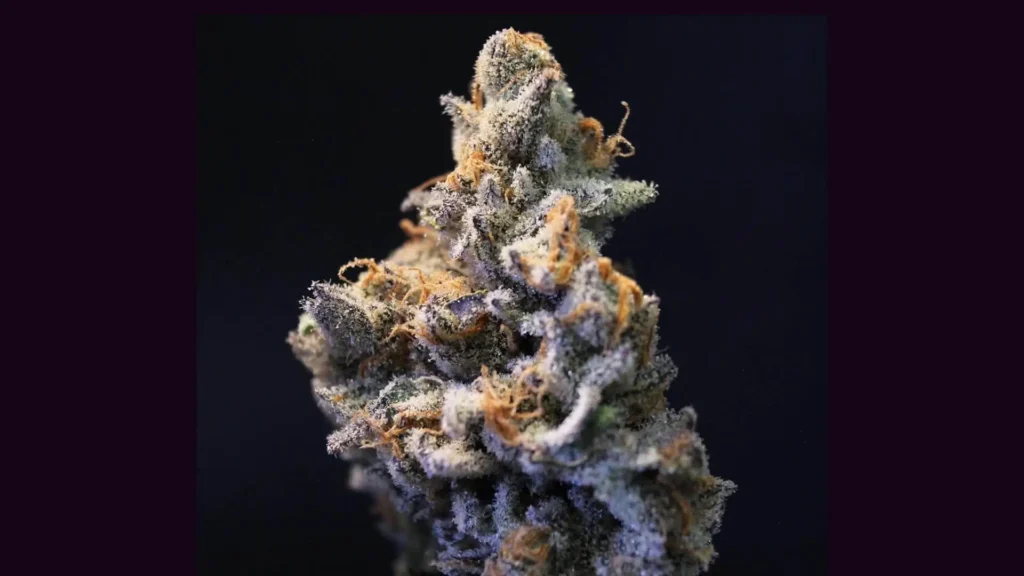
Cap Junky seeds produce variation along the two parent lines: phenotypes leaning toward the Alien Cookies mother’s expression and phenotypes leaning toward the Kush Mints #11 father’s direction. Both produce exceptional material; the differences are in terpene balance, structure, and yield.
Alien Cookies-leaning phenotypes are denser, more compact, and slower to develop, reflecting the Alien Cookies mother’s structural characteristics. The bisabolol incense-floral quality is more present in these phenotypes, giving the profile a complexity that sits closer to MAC 1’s character. Resin density is typically the highest in the pack. These phenotypes require more environmental precision and produce lower yield, but deliver the most complex terpene expression.
Kush Mints-leaning phenotypes grow with more vigour and branching strength, reflecting the Kush Mints #11 father’s structural contribution. The mint-gas-citrus character is more pronounced and cleaner in these phenotypes, with the caryophyllene dominance expressed more vividly and the pinene mint note more clearly defined. Structure is easier to manage. Yield is improved. These phenotypes represent the more commercially accessible face of the genetics while still producing at the highest level of terpene quality.
Visual signature
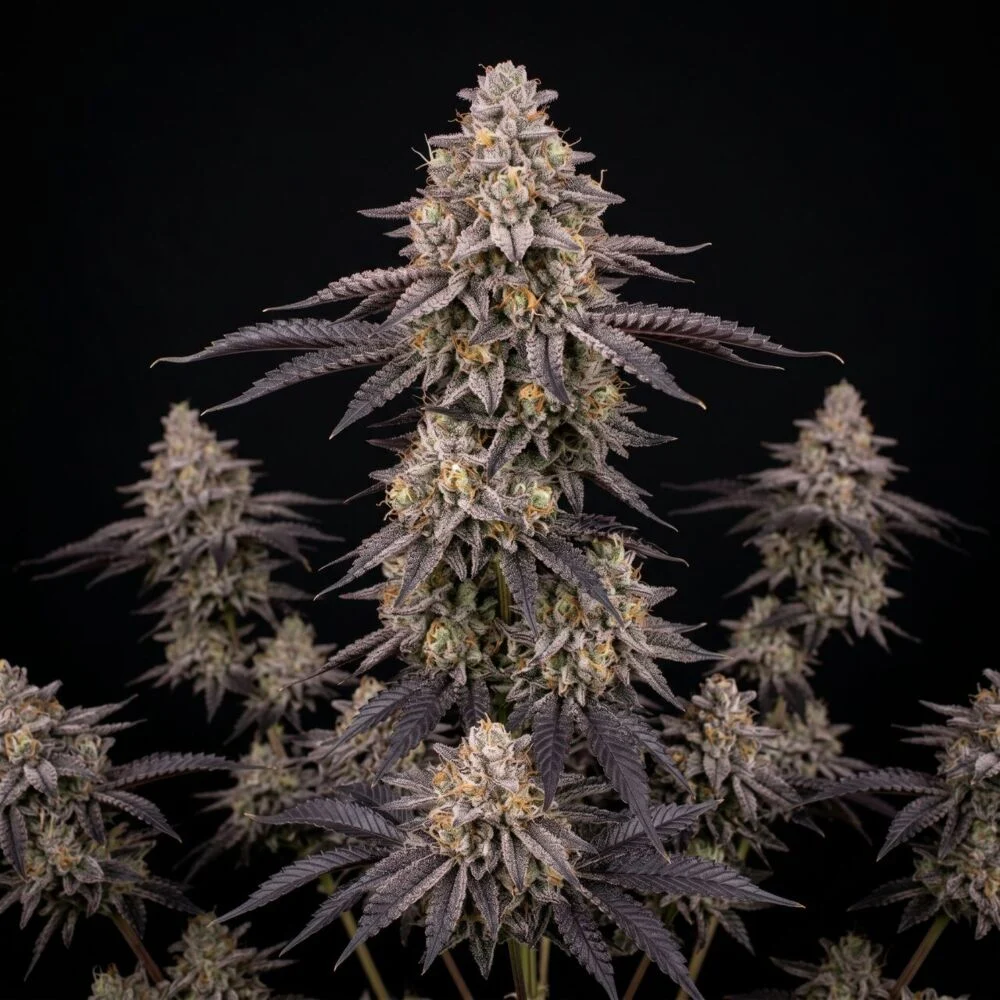
Cap Junky inherits the near-white trichome coverage from the Alien Cookies architecture: buds that appear frost-silver under direct light, with the underlying green structure almost entirely obscured by resin. This is the same visual signature as MAC 1 and the characteristic that made both genetics identifiable in California dispensary cases. Purple and olive-green colour expression develops in the final two weeks under cool temperatures in phenotypes carrying the Kush Mints anthocyanin genetics. Dense, chunked bud structure with thick bracts is consistent across the pack regardless of phenotype direction.
What makes this pack worth hunting
The Cap Junky phenotype that earns its place is the intersection expression: the plant where the Alien Cookies incense complexity and the Kush Mints mint-gas character are both present and neither overwhelms the other. These phenotypes produce the sour-fruit-rind nose, the smooth gas on the inhale, and the mango-yogurt-mint exhale that reviewers consistently identify as Cap Junky at its best. They’re not the most common expression in the pack, but they represent what the collaboration between Capulator and Seed Junky was aiming for. Understanding that target before you start the hunt is how you find it. The full phenohunting framework is in the Sigma phenohunting guide.
What to Hunt For: The Keeper Criteria
Keeper criteria in priority order
Sigma Secrets: What to hunt for in a Cap Junky pack
1. Gas and mint are both present at week 6 of cure. The caryophyllene gas-pepper backbone and the pinene mint-cool note should coexist clearly. A phenotype where only the gas is present has lost the Kush Mints mint character. A phenotype where only mint is present has lost the caryophyllene depth. The keeper holds both. Evaluate at six weeks minimum: caryophyllene and pinene continue integrating through the cure.
2. Sour fruit rind on jar open. The limonene sour-citrus note should be the first impression on jar open, before the heavier gas terpenes emerge. This is the Alien Cookies limonene expressing through the caryophyllene base. If the first impression is flat or purely gassy without a citrus lift, the limonene expression is underdeveloped. The keeper has the sour rind nose arriving first.
3. Near-white trichome coverage at harvest. The frost-silver visual signature should be present across bud and sugar leaf. Dense, fully-formed trichome heads under magnification. This is both a quality indicator and a confirmation that the Alien Cookies resin architecture is expressing strongly in the phenotype.
4. Mango yogurt and cool mint on the exhale. The exhale should carry the secondary terpene complexity: myrcene tropical depth and linalool floral softness alongside the dominant caryophyllene gas note, resolving into the cool mint aftertaste that is Cap Junky’s most recognisable finish. A phenotype that finishes flat or purely bitter is not expressing the full terpene stack.
5. Fast, forceful effect onset. The keeper should arrive hard and fast — the cerebral clarity and euphoric pressure that Cap Junky’s high THC and caryophyllene-dominant terpene profile are known for. Evaluate under consistent conditions. Effect consistency across multiple sessions confirms the phenotype is performing at the level the genetics are capable of.
Growing Cap Junky: What the Lineage Demands
What Kush Mints #11 corrected
The Alien Cookies mother’s primary limitation, slow growth, minimal stretch, and poor yields, is partially corrected by Kush Mints #11’s vigour and lateral branching contribution. Cap Junky grows with more structural strength than MAC 1: better lateral development, more manageable height, and improved yield potential. The Kush Mints #11 branching tendency means the canopy develops more naturally under training than the Alien Cookies mother’s compact, tight structure. This is a meaningful practical difference for growers familiar with MAC 1: Cap Junky is the more forgiving plant of the two, though both remain advanced-difficulty genetics.
What the Alien Cookies mother still demands
The environmental sensitivity that makes MAC 1 advanced-difficulty carries through to Cap Junky. The Alien Cookies architecture is responsive to pH inconsistency, VPD fluctuation, and feeding errors in ways that simpler genetics are not. The gap between a dialled environment and an inconsistent one is narrower for Cap Junky than for MAC 1, the Kush Mints vigour provides some buffer, but it’s still wider than most Cookies-family genetics. Low humidity through late flower (40–50% RH through weeks six to nine) is the most important environmental variable: the dense trichome coverage that defines both parent lines creates elevated moisture retention risk in the mid-canopy without adequate airflow.
Harvest timing and cure
Cap Junky flowers in 8–9 weeks. The caryophyllene-pinene terpene integration develops in the final weeks and continues into the cure. The minimum cure time documented across grower reports is three weeks, but the full mint-gas-citrus profile integrates at six to eight weeks, with the caryophyllene-limonene-myrcene backbone fully expressing alongside the secondary linalool and pinene notes. Trichome maturity is the harvest indicator: milky heads with developing amber, not calendar timing.
Sigma Secrets: Australian growing notes
Indoor recommended. Like MAC 1, Cap Junky is better suited to controlled indoor conditions than outdoor growing in most Australian climates. The environmental sensitivity of the Alien Cookies architecture is amplified outdoors where humidity, temperature, and airflow are harder to control precisely. For outdoor runs, a dry temperate or inland climate with protection from prolonged late-season rain is the most suitable option. Northern NSW, southeast Queensland and other humid coastal regions materially increase the risk around Cap Junky’s dense, resin-heavy flowers; those locations demand an open canopy, strong airflow and close weather monitoring.
Australian outdoor timing. Under natural photoperiods, spring establishment generally points to a late March–April finish, but latitude and phenotype can shift the window. The more compact Alien Cookies-leaning plants may finish differently from vigorous Kush Mints-leaning expressions, so use plant maturity rather than a fixed calendar date.
Veg time. More veg time than standard practice is recommended, particularly for Alien Cookies-leaning phenotypes that develop the canopy more slowly. The Kush Mints-leaning phenotypes are more responsive to standard veg timing, but all plants in the pack benefit from an additional two weeks of structural development before the flip.
Cure discipline. The mint-gas-citrus integration that defines Cap Junky at its best requires patience in the cure. A three-week cure produces a good result. A six to eight week cure produces the profile that justifies running advanced-difficulty genetics. Don’t shortcut the cure on a pack you’ve invested this much environmental precision in growing.
Extraction: Benchmark Solventless Genetics
Why Cap Junky is prized for solventless
Cap Junky is prized in the solventless community for the same reason MAC 1 is: the Alien Cookies trichome architecture. Both genetics produce unusually large resin heads on thick stalks, the structure that ice water extraction requires. The resin yield per gram of input material is high across verified grower and hashmaker reports. The difference between MAC 1 and Cap Junky in the hash context is in the terpene expression of the final product. MAC 1 rosin carries the bisabolol incense-floral character distinctively. Cap Junky rosin carries the caryophyllene-pinene gas-and-mint complex: a different profile, equally distinctive, and one that stands out in a hash roster dominated by Cookies-dessert or Z-lineage tropical extracts.
Cap Junky in the hash roster
Caryophyllene’s lower volatility relative to limonene means it’s better preserved through extraction and pressing than lighter terpene fractions. The peppery-gas backbone that defines Cap Junky in flower carries through the rosin press with less degradation than a limonene-dominant genetics would experience. The pinene cool-mint note is a lighter, more volatile terpene and is better preserved in fresh frozen live rosin than in dry-cured rosin. Pressing fresh frozen material captures the full mint-gas profile where dry-cured pressing produces a slightly flatter but still excellent gas-forward extract.
Sigma Secrets: Extraction notes
Ice water hash. Cap Junky washes exceptionally well. Run fresh frozen material at 1–4°C with gentle agitation. The large Alien Cookies-heritage trichome heads survive gentle agitation at cold temperature and produce full-melt quality material in skilled hands. Don’t over-agitate: yield gains from extended agitation come at the cost of trichome head integrity and terpene concentration. First wash is the most terpene-dense.
Rosin pressing. Fresh frozen live rosin at 65–75°C preserves the pinene mint note best. The lighter pinene fraction degrades faster under heat than caryophyllene — keeping the press temperature at the lower end of the range preserves the mint-gas balance in the final product. Dry-cured rosin at 75–80°C still performs well, with caryophyllene dominance more pronounced and the mint note slightly reduced.
Harvest timing. Wait for full trichome maturity. The caryophyllene fraction accumulates through the final week of flower. Pulling early reduces both trichome head size and terpene density simultaneously. Milky heads with developing amber at the tips is the target.
Frequently Asked Questions: Cap Junky Strain
What is Cap Junky?
Cap Junky is a balanced hybrid cannabis strain developed through a collaboration between Capulator (creator of MAC 1) and JBeezy of Seed Junky Genetics, crossing Alien Cookies with Kush Mints #11. It launched as a clone-only release in 2021 at $1,000 per cut, won the Michigan High Times Cannabis Cup People’s Choice award in 2023, and was listed among Leafly’s hottest strains of 2025. Also known as Miracle Mints on dispensary menus.
What are Cap Junky’s genetics?
Cap Junky is Alien Cookies × Kush Mints #11. Alien Cookies is an Alien Dawg × Girl Scout Cookies cross, the same mother genetics at the foundation of MAC 1, selected by Capulator for its exceptional resin density and incense-floral terpene character. Kush Mints #11 is an Animal Mints × Bubba Kush cross from Seed Junky Genetics, contributing vigour, lateral branching, and the mint-gas-citrus terpene direction that defines Cap Junky’s profile.
What does Cap Junky smell and taste like?
Sour fruit rind and pungent gas on the nose, loud and room-filling. Smooth gas and black pepper on the inhale, transitioning to mango yogurt, apricot, and cool mint on the exhale, with a cookie dough sweetness that lingers. The caryophyllene-dominant backbone anchors the profile throughout. The mint character from the pinene and Kush Mints #11 heritage is fresh and cool rather than a literal peppermint flavour.
What is Cap Junky’s THC level?
Cap Junky tests at 28–35% THC across verified sources, with retail lab labels commonly showing 28–32%. This places it at the top end of the potency spectrum in the current Sigma catalogue. Effect onset is fast and forceful: rapid cerebral uplift followed by a body weight that develops over the session.
What is the difference between Cap Junky and MAC 1?
Both genetics share the Alien Cookies mother, giving them the same resin architecture, bud density, and trichome coverage. The difference is entirely in the father parent. MAC 1’s father was Miracle 15, contributing Colombian sativa brightness and the context in which the Alien Cookies bisabolol incense-floral character becomes the defining note. Cap Junky’s father is Kush Mints #11, contributing mint, OG-adjacent gas, and vigour, redirecting the profile toward gas-mint-sour citrus and improving yield and structure over MAC 1. The MAC 1 strain guide covers both lineages in full detail.
Why is Cap Junky called Miracle Mints?
Miracle Mints is the dispensary menu name for Cap Junky: a name that encodes the lineage. Miracle references the Miracle Alien Cookies (MAC) genetics on the Capulator side. Mints references the Kush Mints #11 father from Seed Junky. The name Cap Junky is the collector-market standard; Miracle Mints is used on retail menus where the Cap Junky branding is less established.
Is Cap Junky good for solventless extraction?
Yes, one of the strongest solventless candidates in the Sigma catalogue alongside MAC 1. The Alien Cookies trichome architecture produces unusually large resin heads that wash exceptionally well and produce full-melt quality ice water hash in skilled hands. Fresh frozen live rosin at 65–75°C preserves the caryophyllene-pinene mint-gas profile with the mint note clearly present. The caryophyllene backbone’s lower volatility means it carries through the press better than lighter terpene fractions.
Where can I find Cap Junky seeds in Australia?
Cap Junky feminised photoperiod seeds are available in the Sigma Seeds catalogue as a Vault tier genetics, alongside MAC 1, the Alien Cookies sibling cross that shares the same mother. Both are available in 5, 10, and 20 seed packs with Australia-wide shipping.
