
A note on genetic provenance: This guide discusses the documented history and original breeder attribution of the named cultivar. Sigma Seeds supplies line-worked representations sourced through established European and North American breeding partners, not original-breeder packs unless explicitly stated. Stabilisation improves consistency but does not eliminate natural phenotype variation.
Future #1 strain guide Australia — GG4 × Starfighter F2, 37% THC, and the question of what maximum resin production actually looks like. Most high-THC claims in the cannabis market are marketing. The Future #1 figure — 37% THC in repeated lab tests, documented by Anesia Seeds and corroborated across independent sources — sits in a different category. It’s the result of Anesia Seeds’ deliberate European breeding programme that set out to find the biological ceiling of THC production in cannabis flower, and found it in a cross that also happens to be one of the more interesting terpene profiles in the current high-potency catalogue.
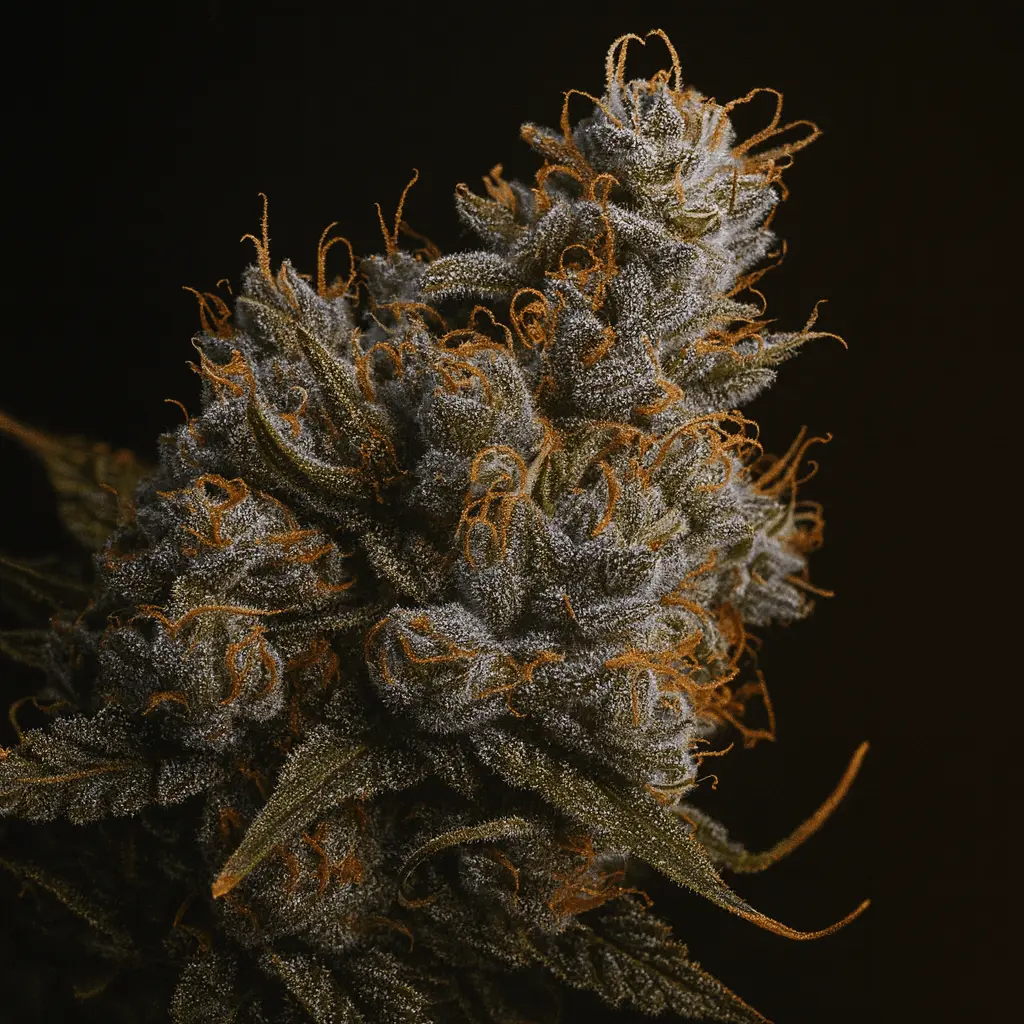
This is a deep-dive into Future #1 for collectors and growers who want to understand what they’re running before they run it. Lineage, the breeding philosophy behind the numbers, the terpene chemistry including nerolidol — a terpene worth understanding properly — phenotype variation, keeper criteria, and what Australian growers actually need to know. Both the feminised photoperiod and the autoflower format are covered in full. If you’re new to reading strain genetics and terpene profiles, the exotic strains guide and the terpene guide are the right starting points.
In this guide
- Anesia Seeds — the European breeding programme behind the numbers
- Lineage — what GG4 and Starfighter F2 actually are
- The 37% THC figure — what it means and how to read it
- Terpene profile — myrcene, nerolidol, limonene explained
- Phenotype variation — what to expect across the pack
- What to hunt for — the keeper criteria
- Growing Future #1 — what the lineage predicts
- Extraction — solventless potential
- Auto Future #1 — what changes and what doesn’t
Future #1 — At a Glance
| Breeder | Anesia Seeds |
| Cross | GG4 (Gorilla Glue #4) × Starfighter F2 |
| Indica / Sativa | 50% Indica · 50% Sativa (fem) · 70% Sativa · 30% Indica (auto) |
| THC | 35–37% (fem, repeated lab tests) · 28% (auto) |
| CBD | <1% |
| Terpenes | Myrcene · Nerolidol · Limonene |
| Flavour | Mango · Pineapple · Tropical · Citrus · Diesel · Earthy |
| Flowering time | 9–10 weeks (fem) · 9–10 weeks seed to harvest (auto) |
| Yield | 500g/m² indoors · up to 700g/plant outdoors (fem) · 450–500g/m² indoors · up to 250g/plant outdoors (auto) |
| Height | 110–130cm (fem) · Medium (auto) |
| Difficulty | Moderate |
| Seeds | Feminised photoperiod · Autoflower |
Future #1 Strain Guide — The Anesia Seeds Breeding Programme
A different approach to genetics
Anesia Seeds is a European seed bank with over fifteen years in operation, known for a breeding philosophy that sits distinctly outside the US West Coast collector culture that dominates most of the modern exotic market. Where the California underground was building the Cookies and Z-lineage genetics that define contemporary collector strains — prioritising terpene complexity, phenotype variation, and cultural cachet — Anesia were operating in Europe with a different primary objective: push the biological limits of cannabinoid production as far as they could go. The Blackberry Moonrocks strain guide shows how Anesia applied that same potency-first philosophy to a floral-berry-lavender terpene direction.
That focus produced Future #1. Anesia’s own description of the breeding process is unusually candid: they describe the pursuit of 37% THC as “a certain sport” — a deliberate challenge to find the ceiling of what cannabis genetics could produce. The cross of GG4 and a deeply selected Starfighter F2 took years of phenotype selection and refinement before the 37% result was recorded in repeated lab testing. The breeding methodology was data-driven throughout — terpene profiles and cannabinoid figures tracked across generations to confirm that the potency gains weren’t being made at the cost of terpene complexity.
European genetics in the Australian market
Future #1 is one of relatively few European genetics in the current Sigma catalogue, which is dominated by US West Coast lineages. That distinction is worth noting for Australian collectors: Future #1’s profile — high-potency, tropical-forward, GG4-structured — sits in the same territory as the American genetics that define the collector market, but comes from a breeding tradition that approached those goals through a different lens. The result is a strain that shares terpene families with much of the modern exotic catalogue but has its own character, driven by the nerolidol contribution that sets it apart from any US-bred GG4 derivative currently available.
On the 37% THC figure
THC lab figures require careful reading. The 37% result for Future #1 comes from repeated testing across multiple runs — it’s not a single outlier figure, which is the most important qualifier. However, lab results are phenotype and condition-dependent. The 37% represents the upper range of what this genetics can produce under optimised conditions. Most runs will land in the 30–35% range, which is still among the highest in the category. Understanding this distinction prevents disappointment and produces more honest evaluation of what your phenotypes are actually doing.
Future #1 Strain Lineage — What GG4 and Starfighter F2 Actually Are
GG4 — the resin foundation
Gorilla Glue #4 was developed by GG Strains — a cross of Chem’s Sister, Sour Dubb, and Chocolate Diesel — and became one of the defining genetics of the post-2010 American cannabis market. Its reputation rested on one characteristic above all others: resin production. GG4 buds were famously described as gluing scissors shut during trimming — not marketing language but a practical reality of the trichome density and resin mass the genetics consistently produced. That extreme trichome production was matched by a diesel-and-pine terpene profile built around myrcene and caryophyllene, and THC levels that regularly tested in the high 20s — exceptional for the era.
In Future #1, GG4 contributes the structural backbone and the resin production ceiling. The dense, compact bud architecture, the explosive trichome coverage, and the diesel-earth base notes running through the lower register of Future #1’s profile are all GG4 inheritance. Without GG4, the 37% figure would not be possible — it’s the resin production engine that enables the cannabinoid concentration the cross achieves.
Starfighter F2 — the tropical terpene direction
Starfighter is an Alien Genetics cross of Alien Tahoe OG and Lemon Alien Dawg — two OG-structured genetics with a citrus and tropical terpene direction that distinguishes them from the heavier, more earth-and-diesel profiles typical of pure OG Kush lineage. Alien Tahoe OG contributes indica-dominant density and structure. Lemon Alien Dawg contributes the sativa-leaning aromatic characteristics — the lemon, citrus, and fruity notes that become mango and pineapple in the context of the Future #1 cross. The terpene profile of Starfighter itself is limonene, myrcene, and caryophyllene dominant — a tropical citrus and spice combination that lifts the diesel base of the GG4 parent into genuinely interesting terpene territory.
The F2 designation reflects second-generation selection. Anesia didn’t use Starfighter off the shelf — they ran F2 selections to identify and stabilise the phenotypes expressing the target terpene traits most reliably before finalising the GG4 cross. This detail matters because it represents meaningful additional breeding work beyond a simple first-generation cross, and it’s part of why Future #1’s terpene profile is more consistent across the pack than a straight F1 of the same parents would be.
Future #1 Lineage — Traced Back
| Strain | Cross | What it contributes to Future #1 |
|---|---|---|
| GG4 | Chem’s Sister × Sour Dubb × Chocolate Diesel | Extreme resin production, dense bud architecture, diesel-earth terpene base. The cannabinoid production engine behind the 37% figure. |
| Starfighter F2 | Alien Tahoe OG × Lemon Alien Dawg (F2 selection) | Tropical and citrus terpene direction — mango, pineapple, lemon. Sativa influence and height. The terpene complexity that lifts Future #1 above a straight diesel strain. |
| Alien Tahoe OG | OG Kush lineage (Alien Genetics) | Structural density and indica weight. OG heritage that contributes to the resin stacking and compactness of the bud structure. |
| Lemon Alien Dawg | Alien Dawg × Lemon Afghan (Alien Genetics) | Lemon, citrus, and tropical aromatics. The terpene source for the fruity brightness that sets Future #1 apart from other GG4 derivatives. |
The 37% THC Figure — What It Means and How to Read It
What the number actually represents
The 37% THC figure for Future #1 is documented across multiple independent sources citing Anesia Seeds’ repeated lab testing — it’s not a marketing claim based on a single favourable result. It surpasses what was previously considered the biological ceiling for THC in cannabis flower, which most researchers had placed around 35%. The mechanism Anesia attributes this to is exceptional resin density — more trichome glands per unit surface area producing more cannabinoids than any previously measured variety.
What the number doesn’t mean is that every plant from a Future #1 pack will test at 37%. Lab results are phenotype, condition, and methodology dependent. The figure represents the documented upper range under optimised conditions from selected phenotypes. In practice, most Future #1 runs produce plants testing in the 28–35% range — which still places it comfortably at the top of the category. Understanding this prevents the disappointment of comparing your grow to a lab result achieved under conditions specifically optimised for maximum cannabinoid production.
Why potency matters less than the terpene conversation
The 37% figure is Future #1’s headline, but it’s worth being clear about what high potency actually means in practice. THC concentration in isolation doesn’t fully determine the character or quality of the experience — the terpene profile shapes that in ways the cannabinoid percentage doesn’t capture. A strain with 37% THC and a flat, undeveloped terpene profile is less interesting than one with 25% THC and a complex, expressive terpene matrix. Future #1’s significance as a collector strain is that it achieves extreme potency without sacrificing the terpene complexity — the nerolidol and limonene contributions give the profile genuine character that justifies running this pack beyond the headline figure.
Potency and the entourage effect
The research on cannabis potency increasingly supports the entourage hypothesis — that THC functions differently in the presence of different terpene matrices. The high terpene concentration that Future #1 produces alongside its extreme THC content is not incidental. Anesia’s stated goal was to maintain terpene complexity while maximising cannabinoid production. The myrcene and nerolidol profile that accompanies the high THC figure contributes to the overall character in ways that THC percentage alone doesn’t capture. For a rigorous treatment of terpene-cannabinoid interactions, Russo’s 2011 paper Taming THC: potential cannabis synergy and phytocannabinoid-terpenoid entourage effects remains the most-cited primary source.
Future #1 Terpene Profile — Myrcene, Nerolidol, Limonene Explained
Myrcene — the tropical base
Myrcene leads Future #1’s profile — the dense, mango-and-tropical-fruit base that opens the aroma and gives the profile its body. In most cannabis genetics, myrcene reads as earthy, herbal, or mildly fruity — the baseline terpene that accounts for the generic cannabis aroma. In Future #1, the myrcene concentration is elevated and the Starfighter F2 lineage has shaped the specific expression toward tropical fruit rather than the earthy-herbal baseline typical of myrcene-dominant OG-heritage genetics. The mango top note that defines Future #1’s first impression is myrcene working in concert with the Lemon Alien Dawg’s fruit-forward character — elevated concentration producing a tropical expression rather than the earthy baseline.
Myrcene at the concentrations Future #1 produces also correlates with resin density — a relationship consistent with what’s observed across other high-myrcene genetics. The trichome mass that makes Future #1 a strong extraction candidate is partly a product of this terpene concentration. For more on how myrcene functions across the cannabis terpene spectrum, the Sigma terpene guide covers it in full.
Nerolidol — the terpene that makes Future #1 distinctive
Nerolidol is the most unusual terpene in Future #1’s profile and the one most worth understanding in depth — because it’s the compound that distinguishes this strain from any other high-potency GG4 derivative currently available in Australia.
Nerolidol is a sesquiterpene alcohol found in neroli oil, jasmine, ginger, lavender, and the bark of certain trees. It’s relatively rare as a primary or secondary terpene in cannabis — most common cannabis terpene profiles don’t include nerolidol at meaningful concentrations. Its aroma profile is complex and difficult to categorise: woody, slightly floral, with a fresh herbal quality that doesn’t map cleanly to any common flavour reference point. Some describe it as rose-woody. Others note an apple-like sweetness in certain contexts. In Future #1, nerolidol sits in the mid-register of the profile — beneath the myrcene mango top notes, above the GG4 diesel base — and contributes the depth and complexity that prevents the profile from reading as straightforwardly tropical or straightforwardly gassy.
Nerolidol also has documented properties worth noting: it’s been studied for its penetrating quality in the context of the entourage effect, with research suggesting it may enhance the absorption of other compounds. In the context of Future #1’s extreme cannabinoid concentration, this is more than academic — it’s a plausible contributor to the character of the experience that distinguishes it from other high-THC genetics with simpler terpene matrices.
Limonene — the citrus brightness
Limonene provides the pineapple and citrus lift that sits above the myrcene base. In Future #1, limonene functions as a secondary brightness note rather than a primary driver — it’s present and clear, adding the pineapple and fresh citrus character that distinguishes the profile from a flat tropical-diesel expression, but it doesn’t lead the profile the way it does in Z-lineage genetics like RS11. The role of limonene here is to lift and brighten rather than to define — the mango depth comes first, the citrus brightness follows.
Terpene Stack — Future #1
| Terpene | Role in profile | Aroma contribution | Source parent |
|---|---|---|---|
| Myrcene | Primary / tropical base | Mango, tropical fruit, dense earthy depth. The first impression and the body of the profile. | GG4 and Starfighter F2 |
| Nerolidol | Secondary / distinctive mid-note | Woody, floral, herbal. Rose-adjacent with a fresh complexity. The terpene that makes this profile immediately different from any other GG4 derivative. | Starfighter F2 (Lemon Alien Dawg lineage) |
| Limonene | Tertiary / citrus lift | Pineapple, citrus zest, brightness. Lifts the myrcene base and adds the fresh tropical top note. | Starfighter F2 (Lemon Alien Dawg lineage) |
Phenotype Variation — What to Expect Across the Pack
The two phenotype directions
Future #1’s Starfighter F2 influence means the pack throws genuine variation across two main phenotype directions — plants that lean toward the GG4’s dense, heavy, diesel-and-resin expression, and plants that lean toward the Starfighter’s sativa structure and tropical terpene brightness. Both are worth understanding before you start the hunt.
GG4-leaning phenotypes grow compact and dense — shorter internodal spacing, heavier bud mass for their height, and a profile that pushes the diesel-earth base notes more prominently against the tropical top. Resin production is typically the highest in the pack in these phenotypes. The sativa stretch is minimal and structure management is easier. These are the phenotypes most likely to test at the upper range of the THC spectrum — the GG4 resin mass concentrated in a compact frame.
Starfighter-leaning phenotypes grow taller, with more sativa stretch and a looser bud structure that can surprise growers expecting GG4 compactness. The terpene profile in these phenotypes is more expressive on the tropical and citrus side — the mango and pineapple notes are more vivid, the nerolidol mid-note is clearer, and the diesel base recedes behind the fruit. These phenotypes require more structure management but tend to produce the most interesting and complex terpene profiles in the pack.
Colour development
Growers report purple and red colour development in some Future #1 phenotypes under cool late-flower temperatures — an unexpected characteristic given the GG4 and Starfighter parentage, neither of which is particularly known for anthocyanin expression. These phenotypes appear to be Starfighter-leaning expressions where the Alien Tahoe OG’s OG Kush heritage surfaces colour genetics under appropriate temperature conditions. Not every pack will produce it, and it shouldn’t be selected for as a primary criterion — but it’s a distinctive visual characteristic worth noting and documenting when it appears.
From growers running this pack
Consistent themes across verified grower reports on Future #1: the plant is significantly more nitrogen-hungry than most genetics — deficiency symptoms appear by week two to three in standard auto or photoperiod feeding programmes. Vigour is exceptional — described consistently as among the most vigorous seedlings growers have run. Airflow is critical throughout flower — powdery mildew risk increases without adequate circulation. More veg time before the flip is frequently recommended, particularly for the Starfighter-leaning phenotypes that benefit from structural development before the stretch begins.
These field observations are consistent across multiple independent growers and align with what the GG4 lineage would predict — GG4-heritage genetics are consistently described as nitrogen-hungry and airflow-sensitive. Factor both into your environmental planning before germinating this pack.
What to Hunt For — The Keeper Criteria
Keeper criteria in priority order
Sigma Secrets — What to hunt for in a Future #1 pack
1. The nerolidol mid-note is present and clear. The woody-floral complexity from nerolidol is what makes Future #1 interesting rather than just potent. Evaluate at six weeks of cure minimum. On the fresh break, beneath the mango top note, there should be a distinctive woody-floral character that doesn’t map cleanly to any standard reference point — this is nerolidol, and its presence or absence is the primary differentiator between a profile worth preserving and one that’s simply high-THC tropical.
2. Tropical leads, diesel anchors. The mango and pineapple top notes should be vivid and expressive, with the GG4 diesel base sitting underneath rather than overwhelming them. A phenotype where the diesel base is dominant and the tropical notes are thin is a GG4-leaning expression — not the most interesting outcome from this cross. The keeper has both simultaneously, in the right hierarchy.
3. Resin mass across bud and sugar leaf. GG4’s signature trichome density should be visible and dense throughout — buds and sugar leaf uniformly covered. Under magnification, large, fully-developed trichome heads on intact stalks. The phenotypes with the highest resin mass are typically also the highest-testing and the strongest extraction candidates.
4. Nose-to-smoke translation. The tropical mango and nerolidol woody-floral character should carry from jar to the exhale. Phenotypes with exceptional jar presence that flatline on the smoke are not worth preserving — the profile should be recognisable through the full experience.
5. Effect consistency with the potency claim. This is Future #1 — the keeper phenotype should confirm its potency clearly on consumption. Don’t select solely on aroma and visual criteria. Effect evaluation under consistent conditions is part of the keeper assessment for a strain built around extreme cannabinoid production.
For the full phenohunting framework — how to run a pack systematically, evaluate at each stage, and preserve your keeper through cloning — see the Sigma phenohunting guide.
Growing Future #1 in Australia
What the lineage predicts
Future #1’s grow behaviour is largely predictable from its parentage. GG4-heritage genetics are consistently nitrogen-hungry — the aggressive resin production that drives the high THC figures demands a corresponding nutrient supply, and deficiency symptoms appear earlier and more visibly in this line than most. The dense bud structure that GG4 contributes also creates airflow requirements that lighter-structured genetics don’t — moisture retention in the mid-canopy is a real risk without adequate circulation, particularly in the humid coastal conditions common in Queensland and Northern NSW.
The Starfighter F2 influence introduces the sativa stretch that most growers find unexpected. The height range of 110–130cm assumes the stretch is managed — Starfighter-leaning phenotypes will push well beyond that if given the space and the veg time. Growers who have run GG4 before will recognise the resin production and the feeding demands. Those unfamiliar with GG4-heritage genetics should factor in the nitrogen appetite and airflow requirements before their first run with this pack.
Harvest timing and terpene development
The nerolidol and limonene fractions that define Future #1’s terpene character continue to develop through the final week of flower — don’t harvest early. The difference between a week-nine and a week-ten harvest on a phenotype that’s ready to run the full window is meaningful in terpene density and profile complexity. Trichome maturity is the reliable indicator — milky heads with developing amber — rather than calendar timing. The same principle applies to the cure: the nerolidol mid-note deepens through an extended cure in a way that rewards patience beyond the standard two-to-three week window most growers use.
Sigma Secrets — Australian growing notes
Veg time. Multiple Australian growers running this line recommend more veg time than standard — particularly for Starfighter-leaning phenotypes that benefit from structural development before the flip. The GG4 resin engine performs better when the plant has had time to build the canopy structure that supports it. Rushing the flip is the most commonly reported mistake with this pack.
Brisbane and Northern Queensland. Warm subtropical conditions suit the GG4 heritage well. Growers in this climate consistently report exceptional vigour and lateral development. Airflow management is more critical here than in cooler southern states — the combination of humidity and dense bud structure warrants proactive rather than reactive circulation planning.
Outdoor harvest window. Spring planting (September–October) targets harvest in early-to-mid April for most Australian states — consistent with Anesia’s early October Northern Hemisphere timing translated to the opposite season. Queensland and Northern NSW can extend to May in warm years.
Extraction — Solventless Potential
Why Future #1 is worth running for extraction
Future #1 is one of the stronger extraction candidates in the current catalogue — arguably the strongest for raw resin mass. The GG4 heritage that drives the extreme trichome density in flower translates directly into extraction yield. The trichome head size and stalk integrity that ice water extraction requires are consistent with what GG4-heritage genetics reliably produce. Hash washers who have run GG4 or GG4-adjacent genetics will recognise the extraction profile immediately.
The nerolidol terpene is worth specific attention for extraction purposes. It’s a less volatile terpene than limonene — it degrades more slowly under heat and processing conditions than the lighter terpenes. This means nerolidol’s woody-floral complexity is better preserved through extraction than limonene’s citrus notes, which makes fresh frozen processing less critical for Future #1 than for a limonene-dominant genetics like RS11. A well-processed dry-cured rosin from Future #1 can still retain meaningful nerolidol expression, which is unusual compared to most tropical-forward genetics.
Sigma Secrets — Extraction notes
Ice water hash. Future #1 washes exceptionally well — GG4 trichome structure is among the most consistent performers in ice water extraction. Run at cold temperature (1–4°C) with moderate agitation. The resin yield per gram of input material is high relative to most genetics, and the first wash carries significant terpene concentration from the nerolidol and myrcene fraction. Don’t extend the wash beyond what the trichome heads can survive — yield gains from extended agitation come at the cost of trichome head integrity and terpene concentration.
Rosin pressing. The dense GG4 bud structure requires slightly higher press temperatures than lighter-structured genetics — start at 80°C rather than the 65–75°C that suits most tropical-forward genetics, and adjust from there. The nerolidol fraction survives the press temperature better than limonene would, meaning the woody-floral complexity of the profile is more present in the rosin than in many extraction formats from other tropical strains.
Harvest timing for extraction. Don’t pull early. The trichome maturity that produces the best extraction yield and the clearest terpene expression in Future #1 develops in the final week of flower. Harvesting at trichome maturity rather than calendar date produces meaningfully better results from this genetics — the resin continues to develop and the head size continues to increase right to the end of the window.
Auto Future #1 — What Changes and What Doesn’t
Key differences from the photoperiod
Auto Future #1 carries the same GG4 × Starfighter F2 lineage with ruderalis genetics introduced by Anesia for automatic flowering. The most significant difference between the two versions is the sativa/indica expression ratio — the auto presents as sativa dominant (70% Sativa / 30% Indica) rather than the balanced hybrid of the photoperiod. This shows in the structure: taller and stretchier relative to its size, with a Christmas-tree growth pattern and more pronounced lateral branching. The effect profile reflects this shift — the auto leads with a more cerebral, uplifting onset before the GG4-derived body weight settles in.
THC holds at 28% in the auto format — significantly below the photoperiod’s 35–37% ceiling but still exceptional for an autoflower. This is among the highest documented THC figures for any auto currently available in Australia. The terpene direction — myrcene-forward tropical mango and pineapple with nerolidol complexity — is preserved in quality phenotypes, though total terpene concentration is slightly lower than the photoperiod due to the compressed lifecycle.
Growing the auto
Auto Future #1 has the same significant nitrogen appetite as the photoperiod — a consistent GG4 heritage characteristic. Standard auto feed programmes often run too light on nitrogen for this genetics. Start at full nitrogen strength from true leaf development and monitor closely. The sativa-dominant structure means height management through LST in the first three weeks is worthwhile in indoor setups — bend and tie rather than cut, keeping aggressive training away from the first three weeks of lifecycle where recovery time isn’t available.
Auto Future #1 — rosin pressing note
The dense GG4 bud structure in Auto Future #1 requires slightly higher rosin press temperatures than most autos — consistent with the photoperiod version. Start at 80°C rather than the standard 65–75°C for lighter-structured auto genetics. The nerolidol fraction’s relative heat stability means the woody-floral complexity holds through the press better than lighter terpenes would.
Both formats — Future #1 feminised photoperiod and Auto Future #1 — are available in the Sigma catalogue in 5, 10, and 20 seed packs.
Frequently Asked Questions — Future #1 Seeds Australia
What is Future #1 cannabis?
Future #1 is a feminised balanced hybrid developed by Anesia Seeds from a cross of Gorilla Glue #4 and a deeply selected Starfighter F2. It holds one of the highest documented THC figures in cannabis — 37% in repeated lab testing — combined with a tropical terpene profile built around myrcene, nerolidol, and limonene. Bred by a European seed bank as a deliberate project to find the biological ceiling of THC production in cannabis flower.
What are Future #1’s genetics?
Future #1 is GG4 (Gorilla Glue #4) × Starfighter F2. GG4 is a Chem’s Sister × Sour Dubb × Chocolate Diesel cross from GG Strains, known for extreme resin production. Starfighter F2 is Anesia’s second-generation selection of Alien Genetics’ Starfighter — itself a cross of Alien Tahoe OG and Lemon Alien Dawg — selected specifically for terpene expression stability before the GG4 cross was finalised.
Is the 37% THC figure accurate?
It’s documented across multiple independent sources citing Anesia Seeds’ repeated lab testing — not a single outlier figure. It represents the upper range under optimised conditions from selected phenotypes. Most Future #1 runs produce plants testing in the 28–35% range, which is still among the highest in the category. The 37% result surpassed what was previously considered the biological ceiling for THC in cannabis flower at 35%.
What does Future #1 smell and taste like?
Myrcene-dominant tropical fruit — mango and pineapple — with a woody-floral nerolidol mid-note that sits beneath the fruit top and adds distinctive complexity, and limonene citrus brightness on the top. The diesel-earth base from the GG4 heritage anchors the profile underneath. The nerolidol mid-note is the most distinctive characteristic — woody, slightly floral, herbal — and the primary differentiator from other high-potency GG4 derivatives.
What is nerolidol and why does it matter in Future #1?
Nerolidol is a sesquiterpene alcohol found in neroli oil, jasmine, and certain tree barks — relatively rare as a significant terpene in cannabis. In Future #1, it sits in the mid-register of the profile producing a woody, floral, herbal quality that distinguishes the strain from any other GG4-heritage genetics available in Australia. Nerolidol is also more heat-stable than lighter terpenes like limonene, which means it survives rosin pressing and extraction processes better than the citrus fraction — making it more present in the final extract than its concentration in raw flower might suggest.
How long does Future #1 take to flower?
9–10 weeks for the photoperiod feminised version. Some Starfighter-leaning phenotypes may push slightly longer — the full terpene development and any colour expression happen in the final weeks. Don’t harvest early. The auto version runs 9–10 weeks seed to harvest under any light schedule.
What environmental conditions suit Future #1 best?
Future #1 performs best in warm, stable environments with strong airflow and consistent nutrition. The GG4 heritage makes it particularly responsive to warm temperatures — Brisbane and Northern Queensland climates suit the genetics well, with growers consistently reporting exceptional vigour and lateral development in these conditions. The primary environmental requirements are adequate nitrogen from early in the growth cycle, strong airflow throughout flower to prevent mildew risk in the dense bud structure, and a full nine to ten weeks of flowering time without an early pull.
Is Future #1 good for solventless extraction?
Yes — one of the strongest extraction candidates in the current catalogue for raw resin yield. GG4 trichome structure washes exceptionally well in ice water extraction and the dense bud architecture produces high-quality rosin at slightly elevated press temperatures (start at 80°C rather than standard 65–75°C). The nerolidol fraction’s heat stability means it’s better preserved through extraction than limonene-forward genetics of comparable terpene complexity.
What is the difference between Future #1 and Auto Future #1?
Same core lineage — GG4 × Starfighter F2 — with ruderalis genetics added for automatic flowering in the auto version. The auto expresses as sativa dominant (70/30) compared to the balanced hybrid (50/50) of the photoperiod, with a taller, stretchier structure and more cerebral onset. THC holds at 28% in the auto versus 35–37% for the photoperiod. The terpene direction — myrcene-tropical, nerolidol, limonene — is preserved in quality auto phenotypes at slightly lower total concentration due to the compressed lifecycle.
How does Future #1 compare to other strains in the Sigma catalogue?
Future #1 occupies a different category from the Z-lineage and Cookies-family genetics that define the rest of the Sigma collector catalogue. Where RS11 and Permanent Marker are primarily about terpene complexity and phenotype variation within the modern exotic lineage tradition, Future #1 is explicitly about maximum cannabinoid production — with terpene complexity maintained rather than sacrificed. It’s the appropriate choice for collectors who prioritise potency and extraction yield over phenotype hunting depth, or who want to run a high-potency genetics alongside the more complex collector strains in the catalogue.
