
A note on genetic provenance: This guide discusses the documented history and original breeder attribution of the named cultivar. Sigma Seeds supplies line-worked representations sourced through established European and North American breeding partners, not original-breeder packs unless explicitly stated. Stabilisation improves consistency but does not eliminate natural phenotype variation.
Permanent Marker cannabis seeds have won back-to-back Strain of the Year awards — High Times 2022 and Leafly 2023. That’s not common. Most strains that win one award are quickly eclipsed by whatever the market moves to next. Permanent Marker didn’t fade — it held, and then it won again. Understanding why requires understanding what’s actually going on in the genetics, what the terpene matrix is producing and why it’s unusual, and what makes the best phenotypes in this pack worth preserving once you find them.
This is a deep-dive into Permanent Marker for collectors who want more than a flavour description and a THC percentage. Lineage, terpene chemistry, the story behind the name, what to expect across the phenotype range, and how to grow it properly in Australian conditions. If you’re new to reading strain genetics and terpene profiles, start with What Are Exotic Cannabis Strains? and The Terpene Guide first — this guide assumes that foundation.
In this guide
- Lineage — the three-way cross and what each parent contributed
- The name — what it refers to and why it stuck
- Terpene profile — the chemistry behind the marker note
- Phenotype variation — what to expect across the pack
- What to hunt for — the keeper criteria
- Growing Permanent Marker in Australia
- Extraction — solventless potential
- The Auto Permanent Marker — what changes and what doesn’t
Permanent Marker — At a Glance
| Breeder | Seed Junky Genetics (JBeezy / Anthony Hart) |
| Cross | (Biscotti × Jealousy) × Sherb BX1 |
| Also known as | PM · Adios MF (original release name) · Gunnpowder (early release) |
| Indica / Sativa | 70% Indica · 30% Sativa |
| THC | 28–35% · CBD <1% |
| Terpenes | Myrcene · Limonene · Caryophyllene · Linalool |
| Flavour | Soapy · Solvent-marker · Candy · Cookie dough · Gas · Floral · Pepper |
| Flowering time | 8–10 weeks |
| Yield | High · 450–550g/m² indoors · 400–600g/plant outdoors |
| Height | Medium · manageable with LST |
| Difficulty | Moderate |
| Awards | Leafly Strain of the Year 2023 · High Times Strain of the Year 2022 |
| Seeds | Feminised photoperiod · Autoflower |
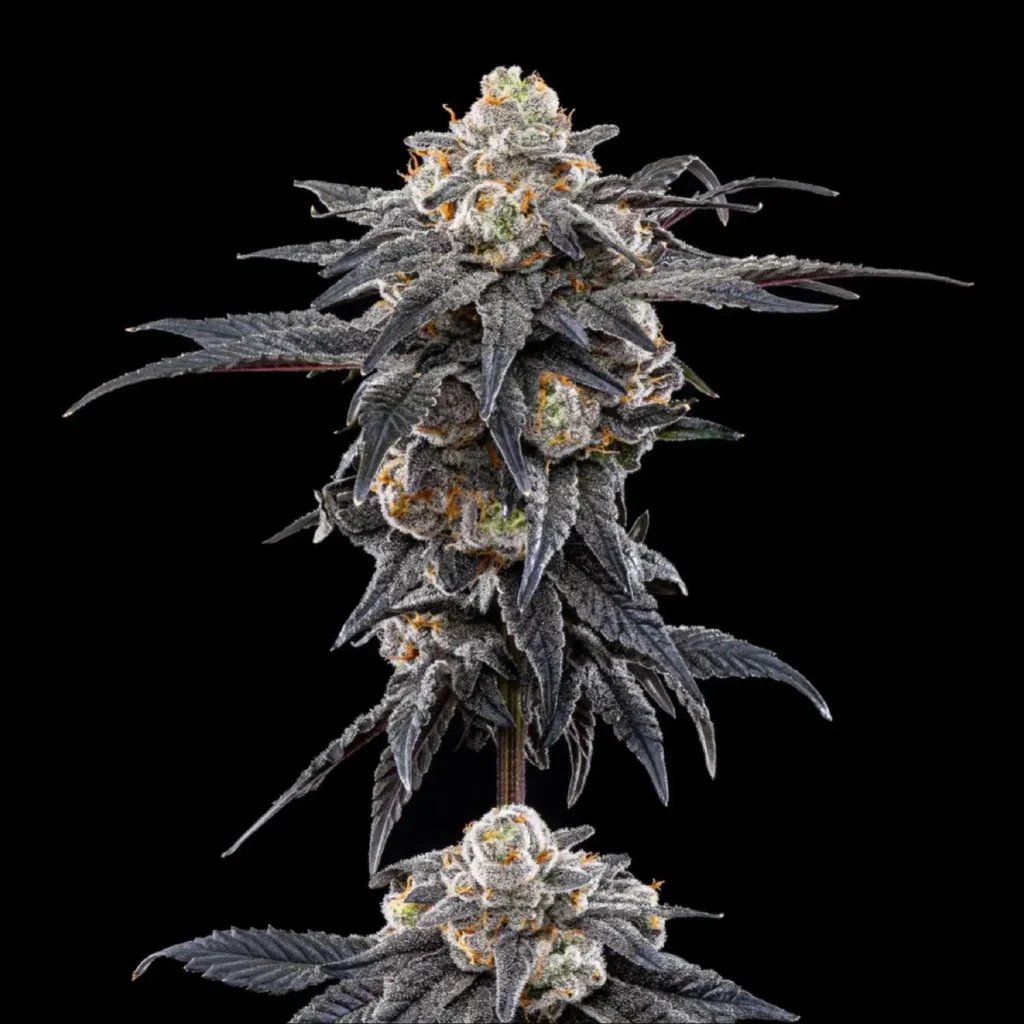
Lineage — The Three-Way Cross and What Each Parent Contributed
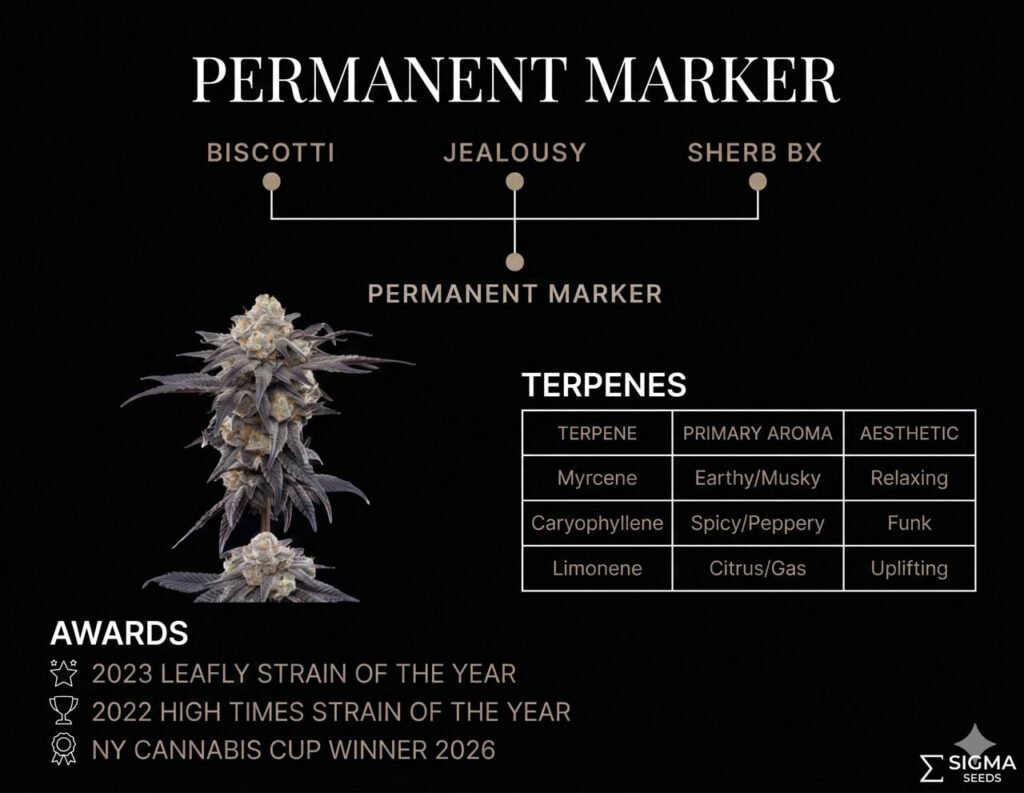
Permanent Marker is a three-way cross: (Biscotti × Jealousy) × Sherb BX1. The cross structure matters — Biscotti and Jealousy were crossed first to concentrate the Cookies-family layering, then that F1 was crossed into Sherb BX1 to tighten structure, deepen terpene complexity, and introduce the Sherbet colour and floral characteristics. Understanding what each parent contributes explains why the finished strain has the profile it does.
The full history of how the Cookies family tree evolved from Girl Scout Cookies through Sunset Sherbet to Gelato and beyond is in the Cookies cannabis lineage guide.
Biscotti is a Gelato #25 × South Florida OG cross — a Cookies-family descendant that carries Gelato’s cream-and-sweet character alongside South Florida OG’s kush-derived fuel and structure. In Permanent Marker, Biscotti contributes the cookie-dough sweetness, the dense bud architecture with tight internodes, and the OG-influenced gas backbone that sits in the lower register of the aroma profile. Its Gelato heritage is the foundation of much of the dessert-forward character that defines the strain.
Jealousy — itself a Seed Junky creation, Gelato #41 × Sherb BX1 — was Leafly’s 2022 Strain of the Year. It brings caryophyllene and limonene as co-dominant terpenes, dense trichome coverage, a candy-cream nose with a cool gelato-ice finish, and what JBeezy has described as a gassy, dessert complexity that was the starting point for building Permanent Marker. The Jealousy contribution is the terpene loudness — the reason Permanent Marker’s profile announces itself from across the room before you open the jar.
Sherb BX1 is a backcross to Sherbert (Sunset Sherbet) — a strain with Girl Scout Cookies and Pink Panties in its background. The backcross concentrates the Sherbet traits: vivid purple and deep green colour development under cool temperatures, linalool-driven floral and cream esters, and tight calyx stacking that contributes to the strain’s resin density. Sherb BX1 also modulates the harshness of the Biscotti × Jealousy base — the Sherbet genetics smooth the fuel and cookie notes toward something more complex and rounded. For a clearer expression of Sunset Sherbet’s creamy fruit direction, compare the Lemon Cherry Gelato strain guide.
The Gelato concentration
Count the Gelato in this cross carefully. Biscotti uses Gelato #25. Jealousy uses Gelato #41. Sherb BX1 traces through Sunset Sherbet, which itself contains Girl Scout Cookies — the same Cookies-family lineage that Gelato descends from. Permanent Marker is, at its core, a heavily concentrated Gelato-family expression — layered through three distinct crosses that each brought a different phenotypic expression of the underlying Cookies/Gelato genetics. The result is a terpene matrix that reads as simultaneously familiar and strange: all the dessert and cream of the Gelato family, pushed into new territory by the triple-stacked Sherbet influence and the OG gas from Biscotti’s South Florida OG side.
The cross also carries notable depth beyond the Cookies family. Biscotti’s South Florida OG brings Triangle Kush heritage — the OG Kush lineage that contributes the fuel-and-leather spine running under the dessert top notes. It’s this OG ancestry that prevents Permanent Marker from being simply sweet — the gas and chemical notes that sit beneath the candy and cream are rooted in the OG lineage that Biscotti carried into the cross.
The Name — What It Refers to and Why It Stuck
Permanent Marker wasn’t the strain’s original name. Before it became PM, it was released under two different names — first as Adios MF, then as Gunnpowder — to lesser fanfare. The genetics existed; the market hadn’t found the right frame for them yet. When Doja Pak acquired the genetics for a bi-coastal drop in 2022 and renamed it Permanent Marker, something clicked. The name described the aroma in a way that was immediately and unmistakably accurate, and the strain took off.
The “permanent marker” note — the solventy, Sharpie-like top note that leaps from the jar before grinding — is the most discussed characteristic of this strain in collector circles, and it’s worth understanding chemically rather than just describing. It’s not an actual solvent note. There are no solvents in the plant. What collectors are perceiving is a specific perceptual blend of terpenes that the human olfactory system interprets as marker-ink adjacent.
The chemistry of the marker note
The “permanent marker” impression is a perceptual blend of several terpene contributions operating simultaneously: caryophyllene’s pepper and chemical spice, limonene’s citrus-solvent brightness (limonene at high concentrations reads as turpentine-adjacent rather than clean citrus), and smaller fractions of pinene and ocimene that contribute sharp, ink-like qualities. Linalool and myrcene round the edges with floral and earthy calm, preventing the profile from becoming harsh.
The result is a chemical illusion — the terpene matrix collectively produces something that reads as marker ink without any actual solvents present. At lower concentrations (vaporisation at 175–190°C) the berry and floral sweetness comes forward while the chemical note softens. At higher temperatures (above 200°C) the spice and tobacco notes increase and the grapey confection fades. Temperature management makes a meaningful difference to how the profile presents.
The name also did something strategically important for the strain’s market positioning. “Adios MF” was a personality play that didn’t communicate anything about the genetics or the experience. “Permanent Marker” communicated the exact sensory experience the strain delivers — and delivered it memorably. The name became part of the brand in the same way that naming conventions like “Wedding Cake” or “Gelato” anchor those genetics in the consumer memory. A strain that names itself accurately earns a different kind of trust than one that reaches for personality.
Terpene Profile — The Chemistry Behind the Marker Note
Permanent Marker’s dominant terpenes are myrcene, limonene, caryophyllene, and linalool. The relationship between them — and the way they interact in the specific concentrations this genetics produces — is what creates the distinctive profile. Understanding each one and its role in the stack gives you the vocabulary to evaluate phenotypes properly during a hunt.
Myrcene is the base layer — the earthy, musk, and cream foundation that the other terpenes sit on. In Permanent Marker, myrcene contributes the cookie-dough body and the creamy depth that comes from the concentrated Gelato heritage. It’s not the most distinctive terpene in this stack — it’s the one that makes the other terpenes coherent. Without the myrcene foundation, the limonene and caryophyllene would read as sharper and less complex. Myrcene is the context in which the rest of the profile operates.
Limonene provides the citrus brightness and, at the concentrations present in Permanent Marker, the solvent-adjacent quality that contributes to the marker note. This is an important distinction: limonene at moderate concentrations reads as clean citrus — lemon zest, orange peel. At higher concentrations, and particularly in combination with caryophyllene, it shifts toward something more chemical — turpentine-adjacent, solvent-bright. That’s the limonene contribution to the Sharpie note that defines PM’s identity. The candy sweetness is also partly limonene — the compound operates differently depending on concentration and the terpene environment around it.
Caryophyllene is the spice and gas backbone. It adds pepper, spice, and fuel notes that sit in the mid-register of the profile — above the myrcene base, below the limonene top. In Permanent Marker it comes primarily from the Jealousy parent, which carries caryophyllene and limonene as co-dominants. Caryophyllene also interacts with limonene to amplify the chemical quality of the top note — when the two are present together in meaningful concentrations, the perceptual result is more solvent-adjacent than either produces alone. This is the key interaction that produces the marker note: limonene × caryophyllene at high concentration.
Linalool is the terpene that makes this profile Permanent Marker rather than just a gas-and-candy strain. The floral, soapy, slightly chemical character that linalool produces — familiar from lavender, but different in cannabis context — is what gives the marker note its soapy edge. It’s also what smooths the harshness of the caryophyllene and limonene combination, preventing the profile from being purely sharp and chemical. In phenotypes where linalool is strongly expressed, the soapy-floral quality is the most distinctive note on the fresh break — the one that makes experienced collectors recognise PM immediately. In phenotypes where linalool is weaker, the profile leans harder gas-and-candy and loses some of its distinctiveness.
Terpene Stack — Permanent Marker
| Terpene | Role in profile | Aroma contribution | Source parent |
|---|---|---|---|
| Myrcene | Foundation / base | Earthy musk, cream, cookie dough, herbal body | Sherb BX1, Biscotti |
| Limonene | Top note / chemical brightness | Citrus, candy, solvent-adjacent sharpness at high concentration | Jealousy, Biscotti |
| Caryophyllene | Mid-register / gas backbone | Pepper, spice, diesel. Amplifies limonene’s chemical quality in combination | Jealousy, Biscotti (OG side) |
| Linalool | The marker character / modulator | Floral, soapy, slightly chemical. The note that makes PM immediately identifiable | Sherb BX1 |
 The complete terpene breakdown — how to evaluate these in practice and what to look for at each stage of cure — is covered in The Terpene Guide: How to Read a Cannabis Strain Like a Connoisseur. The specific interaction between caryophyllene and limonene at high concentrations — and why it produces a perceptual result different from either terpene in isolation — is grounded in research on phytocannabinoid-terpenoid synergy. Russo’s 2011 paper Taming THC: potential cannabis synergy and phytocannabinoid-terpenoid entourage effects, published in the British Journal of Pharmacology, remains one of the more rigorous treatments of how terpene combinations produce effects that neither compound generates alone.
Phenotype Variation — What to Expect Across the Pack
Permanent Marker’s three-way lineage produces real variation across a pack — not dramatic instability, but genuine differences in terpene expression, structure, and colour development that make running a pack more interesting than treating every plant as identical. The variation tends to cluster around the three parent lines: plants that lean Biscotti, plants that lean Jealousy, and plants that sit closer to the Sherb BX1 expression.
Biscotti-leaning phenotypes produce the densest bud structure — tight, golf-ball chunking, shorter internodes, and the strongest cookie-dough sweetness in the base notes. The OG gas from the Biscotti side is more present in these phenotypes, making them leaner on the candy-floral and heavier on the fuel. Structure is typically the most manageable in the pack.
Jealousy-leaning phenotypes push the gassy, dessert complexity harder — more caryophyllene loudness, stronger candy notes, and typically the highest resin density in the pack. These phenotypes tend to be the most visually impressive at harvest. The Jealousy contribution amplifies the terpene loudness overall, and the best Jealousy-leaning phenotypes are the ones where that loudness is matched by genuine complexity rather than just volume.
Sherb BX1-leaning phenotypes are where the linalool marker note comes forward most clearly — the soapy-floral character that defines the strain at its best is most pronounced in phenotypes that express the Sherb BX1 side strongly. These are also the phenotypes most likely to develop purple and deep violet colouration under cool temperatures in the final two weeks. Structure is typically more open than the Biscotti-leaning phenotypes, with a slightly different finishing cadence.
The intersection phenotype
The most interesting and most valuable phenotypes in a Permanent Marker pack are the ones that don’t pull strongly to any single parent — the intersection phenotypes where the linalool marker note from the Sherb BX1 side sits clearly above the cookie-gas base from the Biscotti × Jealousy cross without either overwhelming the other. These are the phenotypes that justified the back-to-back SOTY wins. They’re not the most common expressions in a pack, but they’re why the genetics are worth running at full pack size rather than as a scouting run. For the practical framework on how to run a pack and find these expressions, see What Is Phenohunting? The Practice Behind Collector-Grade Cannabis in Australia.
What to Hunt For — The Keeper Criteria
Permanent Marker is worth running at ten seeds minimum — the phenotype variation across the three parent directions is meaningful enough that a five-seed scouting run may not surface the best expression. The keeper criteria for this genetics, in priority order:
Sigma Secrets — What to hunt for in a Permanent Marker pack
1. The marker note at week 6 of cure. The linalool-driven soapy-floral note is the defining characteristic. It should be clearly present on the fresh break — soapy, slightly chemical, unmistakably PM — sitting above the candy-gas base. Phenotypes where this note is absent or flat at week six are not keepers regardless of other qualities. The note develops through cure — evaluate at six weeks minimum, not on fresh-dried flower.
2. Nose-to-smoke translation. The marker note should carry from jar to smoke. Phenotypes with exceptional jar smell that disappear on the exhale are consistently reported as a disappointment with this genetics. The keeper translates the soapy-floral marker note into the flavour — on the exhale, the caryophyllene spice should be present alongside the candy sweetness.
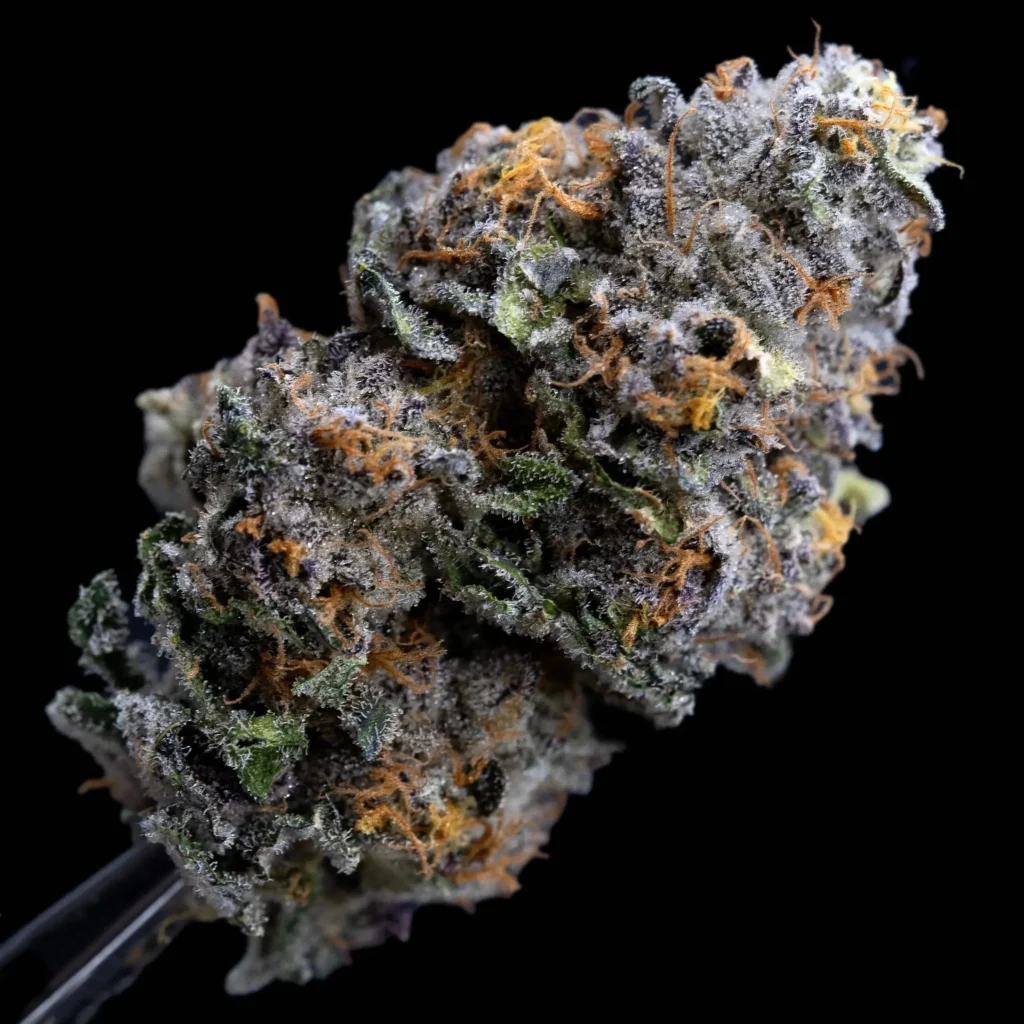
3. Resin density and trichome structure. PM’s trichome coverage should be dense and uniform — “glistening” is the consistent descriptor in collector reports. Under magnification, look for fully-developed trichome heads on intact stalks. These phenotypes wash exceptionally well.
4. Colour development without forcing. Purple and deep violet expression in the final two weeks without artificially dropping temperatures below 18°C — phenotypes that colour naturally in a well-managed environment are expressing genuine anthocyanin genetics from the Sherb BX1 side, not just stress response.
5. Profile deepening through cure. The keeper in this pack is the phenotype whose profile intensifies, rather than fades, through an extended cure. Evaluate at week two, six, and ten. The best PM phenotypes continue to develop through week ten and beyond — the marker note becomes cleaner and more defined as the cure progresses.
Growing Permanent Marker in Australia
Permanent Marker is rated moderate difficulty — it rewards growers who understand the Cookies family’s specific preferences and penalises those who apply generic feeding programmes without reading the plant’s responses. The dense structure and heavy foliage that make it visually impressive at harvest also create specific management requirements.
Structure management. Permanent Marker produces vigorous, bushy growth with thick foliage and a tendency toward a dense mid-canopy that restricts light penetration if left unmanaged. Low-stress training, lollipopping, and strategic defoliation are worth implementing — the goal is maintaining airflow and light penetration through the canopy without stressing the plant into a slow recovery. SCROG and multi-top approaches suit the growth structure well. The medium height means the photoperiod version is manageable in most Australian indoor setups without height constraints becoming an issue.
Feeding. The Cookies-family heritage makes PM sensitive to overfeeding — particularly nitrogen in late veg and early flower. Start feeds conservatively and scale up in response to the plant rather than to a schedule. Tip burn is the most common early indicator of nitrogen excess in this genetics. Calcium and magnesium support matters through flower as resin production increases. Flush thoroughly in the final two weeks — the burn quality that serious collectors use as a selection criterion is directly affected by flush quality.
Flowering and harvest timing. The 8–10 week window is accurate — most phenotypes finish around week nine under good conditions. Don’t harvest early. The marker note and the linalool-driven floral character develop most fully in the final weeks of flower and continue accumulating through cure. A week-eight harvest on a plant that could run to week ten will produce a noticeably flatter terpene profile. Trichome evaluation — cloudy heads with some amber — is the most reliable harvest indicator rather than calendar timing.
Sigma Secrets — Australian growing notes
Outdoor timing. Permanent Marker can perform outdoors in Australia, but suitability depends more on late-season humidity and rain than on state boundaries. Spring planting (September–October) generally points to a March–April harvest under natural photoperiods, with latitude and phenotype affecting the exact finish. Queensland and Northern NSW provide a long warm season, but that does not reliably support a second natural-light photoperiod crop. A second cycle would normally require autoflowering genetics, supplemental lighting or light-deprivation management.
Humidity management. The dense bud structure makes PM more susceptible to botrytis (bud rot) in high-humidity coastal conditions through late flower. Maintain airflow, implement selective defoliation through the canopy in the final three weeks, and monitor closely in humid spells. This isn’t unique to PM — it’s a characteristic of dense Cookies-family genetics generally — but it warrants specific attention in Queensland and Northern NSW coastal grows.
Odour management. The myrcene-linalool combination produces a strong, distinctive aroma that is detectable at significant distance in the final four weeks of flower. Carbon filtration is essential for indoor grows. For outdoor grows in proximity to neighbours, the proximity of harvest timing to the start of sensory conspicuousness (typically week five or six of flower) should factor into site planning.
Extraction — Solventless Potential
Permanent Marker is one of the more compelling solventless extraction candidates in the current Australian collector market. The combination of high trichome density, consistent resin production across phenotypes, and a terpene profile that carries through the extraction process makes it genuinely rewarding for hash washers and rosin pressers.
The marker note — the linalool-driven soapy-floral character that defines the strain — is particularly well-preserved in live rosin from fresh frozen material. The volatility of linalool means it degrades faster than caryophyllene or myrcene during drying and curing, which makes fresh frozen processing a meaningful improvement over dry-cured material for capturing the full profile. A fresh frozen PM live rosin should carry the soapy-floral marker note cleanly — if it’s absent in the rosin but present in the cured flower, the processing didn’t preserve the linalool fraction effectively.
Sigma Secrets — Extraction notes
Ice water hash. PM washes well — trichome head size and stalk structure are consistent with genetics that perform reliably in ice water extraction. Use fresh frozen material for the cleanest expression of the marker note. Process at cold temperature (1–4°C water) with gentle agitation to preserve trichome head integrity. The first wash is the most terpene-rich — don’t over-agitate in pursuit of yield at the cost of terpene quality.
Rosin pressing. Fresh frozen live rosin from PM at low temperature (65–75°C) preserves the linalool fraction better than dry sift or cured flower pressing. The resulting rosin should have a lighter colour and a more floral-chemical top note than rosin pressed from dry-cured material. Dry-cured rosin will emphasise the myrcene and caryophyllene at the expense of the linalool marker note.
Dry sift. PM’s dense trichome coverage and fully-developed trichome heads make it a solid dry sift candidate. Full melt dry sift from PM consistently reports the gas-and-candy profile with a floral complexity that distinguishes it from other Cookies-family genetics in the sift format.
The Auto Permanent Marker — What Changes and What Doesn’t
Auto Permanent Marker carries the same three-way lineage — (Biscotti × Jealousy) × Sherb BX1 — with ruderalis genetics introduced to trigger automatic flowering. The cross structure remains intact; what changes is the lifecycle format and the constraints that format imposes.
The terpene direction is preserved in quality auto phenotypes. The marker note — linalool-driven, soapy-floral — is present and recognisable in the best phenotypes from an auto pack. What’s different is intensity: the compressed auto lifecycle leaves less time for terpene accumulation in the final weeks, which is where the marker note develops most fully in the photoperiod plant. The auto expresses the profile at a slightly lower ceiling than the photoperiod equivalent in most grows.
The practical trade-offs are clear: 9–10 weeks seed to harvest under any light schedule, 70–100cm height, no seasonal timing requirements for outdoor grows, and a lower per-plant yield ceiling (60–120g outdoors versus 400–600g for the photoperiod). The auto is the right format for growers who value speed, flexibility, and a compact footprint. The photoperiod is the right format for growers running a dedicated indoor space who want the full terpene expression and maximum yield potential.
Critical note for auto growers
The marker note in Auto Permanent Marker is cure-dependent — same as the photo version, but more so. The compressed auto lifecycle means less terpene accumulation time on the plant, which makes the post-harvest cure more critical, not less. Cure at 60% RH for a minimum of six weeks before evaluating phenotypes for the hunt. Growers who evaluate at two weeks and dismiss a phenotype are frequently discarding a keeper. The difference between a two-week and six-week cure on this auto is significant — the linalool expression continues developing through the cure in a way that compensates, partially, for the shorter accumulation window on the plant.
Both formats — Permanent Marker feminised photoperiod and Auto Permanent Marker — are available in the Sigma catalogue in 5, 10, and 20 seed packs.
Frequently Asked Questions — Permanent Marker
What is Permanent Marker cannabis?
Permanent Marker is a three-way indica-dominant hybrid developed by JBeezy (Anthony Hart) of Seed Junky Genetics. The cross — (Biscotti × Jealousy) × Sherb BX1 — produces a terpene profile characterised by a distinctive soapy, solvent-like floral top note over candy sweetness, cookie dough, and gas. It won Leafly’s Strain of the Year in 2023 and High Times’ Strain of the Year in 2022.
What is Permanent Marker’s lineage?
Permanent Marker is (Biscotti × Jealousy) × Sherb BX1. Biscotti is Gelato #25 × South Florida OG. Jealousy is Gelato #41 × Sherb BX1. Sherb BX1 is a backcross to Sunset Sherbet. The cross carries significant Gelato-family concentration — Biscotti uses Gelato #25, Jealousy uses Gelato #41, and Sherb BX1 traces through Sunset Sherbet, which carries Girl Scout Cookies lineage from the same Cookies/Gelato family tree.
What does Permanent Marker smell like?
The defining characteristic is a soapy, solvent-like top note — described consistently by collectors as “Sharpie-like” or “permanent marker” — that sits above candy sweetness, cookie dough, and a gas undercurrent. On the exhale, caryophyllene brings pepper and spice. The soapy-floral note is produced by linalool at meaningful concentrations in combination with limonene and caryophyllene — it’s a terpene chemical illusion, not an actual solvent.
Why did Permanent Marker win Strain of the Year twice?
Back-to-back SOTY wins — High Times 2022, Leafly 2023 — reflect the combination of an immediately distinctive and unforgettable terpene profile, consistently high THC output in the high-20s to low-30s, strong cultivator performance including manageable structure and reliable yield, and cultural timing. The genetics arrived during a period when the market was saturating with generic dessert strains, and PM’s chemical-floral marker note was genuinely different from anything else available. Strains that win twice hold because the profile lives up to repeated exposure — not just first impression.
What are Permanent Marker’s dominant terpenes?
Myrcene (earthy musk base, cookie dough), limonene (citrus brightness, candy, solvent-adjacent top note at high concentration), caryophyllene (pepper, gas, spice backbone), and linalool (floral, soapy — the terpene responsible for the distinctive marker note). The interaction between limonene and caryophyllene at the concentrations PM produces is what creates the chemical-marker impression. Linalool rounds the profile toward soapy-floral rather than purely sharp chemical.
How long does Permanent Marker take to flower?
8–10 weeks for the photoperiod feminised version. Most phenotypes finish around week nine. Don’t harvest early — the linalool marker note develops most fully in the final weeks and continues accumulating through the cure. The autoflower version runs 9–10 weeks seed to harvest under any light schedule.
Is Permanent Marker good for solventless extraction?
Yes — it’s one of the more compelling solventless candidates in the current collector market. Trichome density is consistently high across phenotypes, and the linalool-driven marker note is well-preserved in live rosin from fresh frozen material. Process fresh frozen for the clearest expression of the soapy-floral character — dry-cured rosin will emphasise the myrcene and caryophyllene at the expense of the linalool fraction. Ice water hash from PM washes well with gentle agitation at cold temperature.
What is the difference between Permanent Marker and Auto Permanent Marker?
Same core lineage — (Biscotti × Jealousy) × Sherb BX1 — with ruderalis genetics added for automatic flowering in the auto version. The auto runs 9–10 weeks seed to harvest under any light schedule, is more compact at 70–100cm, and has a lower outdoor yield ceiling than the photoperiod. The marker note terpene expression is present in quality auto phenotypes but is slightly less intense than the photoperiod equivalent due to the compressed lifecycle. The post-harvest cure is more critical in the auto format — minimum six weeks at 60% RH before evaluating phenotypes.
