
A note on genetic provenance: This guide discusses the documented history and original breeder attribution of the named cultivar. Sigma Seeds supplies line-worked representations sourced through established European and North American breeding partners, not original-breeder packs unless explicitly stated. Stabilisation improves consistency but does not eliminate natural phenotype variation.
RS11 — Rainbow Sherbet #11 — is the exotic cannabis strain that shifted what the Australian collector market thought tropical terpenes could do. Not the sweetness of a Gelato cross, not the fruit-adjacent brightness of early Z-lineage genetics, but something more complex: guava and citrus candy over an OG-derived gas backbone, wrapped in resin density that makes it one of the more compelling solventless candidates in the current catalogue. Understanding what makes RS11 worth running — and what to look for when you do — starts with understanding where it came from.
This is a deep-dive into RS11 seeds in Australia for collectors who want more than a flavour note and a THC percentage. Lineage, the origin story, terpene chemistry, phenotype variation, keeper criteria, and growing in Australian conditions — both the feminised photoperiod and autoflower formats covered in full. If you’re new to reading exotic genetics and terpene profiles, the exotic strains guide and the terpene guide are the right starting points — this article assumes that foundation.
In this guide
- The origin — DEO Farms, 120 seeds, and how RS11 came to exist
- Lineage — what Pink Guava and OZK actually are
- Terpene profile — the candy-gas combination explained
- Phenotype variation — what to expect across the pack
- What to hunt for — the keeper criteria
- Growing RS11 in Australia
- Extraction — solventless potential
- Auto RS11 — what changes and what doesn’t
- RS11’s downstream impact — why it became a breeding cornerstone
RS11 — At a Glance
| Also known as | Rainbow Sherbet #11 · RS-11 · Rainbow Sherb #11 |
| Cross (fem) | Pink Guava × Sunset Sherbet |
| Cross (auto) | Pink Guava × OZK |
| Indica / Sativa | 60% Indica · 40% Sativa (fem) · 76% Indica · 24% Sativa (auto) |
| THC | 22–28% · CBD <1% |
| Terpenes | Limonene · Myrcene · Caryophyllene · Linalool (selected phenotypes) |
| Flavour | Tropical · Guava · Berry · Citrus · Creamy · Gasoline |
| Flowering time | 9–10 weeks (fem) · 10–11 weeks seed to harvest (auto) |
| Yield | High · 450–500g/m² indoors · 400–600g/plant outdoors (fem) |
| Height | Medium to tall (fem) · Compact to medium (auto) |
| Difficulty | Moderate |
| Seeds | Feminised photoperiod · Autoflower |
The Origin — DEO Farms, 120 Seeds, and How RS11 Came to Exist
How the Rainbow Sherbet line began
RS11 starts with DEO Farms, an Oakland-based breeding operation founded by a grower known as Rob. Rob’s starting point was the OZ Kush project — a cross of Eddy OG and Zkittlez that he ran through multiple cycles, developing an F2 selection he named Pink Guava, after the #41 phenotype’s distinctly tropical aroma. That Pink Guava OZ Kush F2 became the foundation of the Rainbow Sherbet line.
Rob crossed Pink Guava against Sunset Sherbet to create the Rainbow Sherbet genetics. The resulting open pollination run produced 120 seeds. Those 120 seeds were grown simultaneously by the teams at DEO Farms and Wizard Trees, a Los Angeles collective with a track record in phenotype selection. Both teams grew the same pack, evaluated independently, and converged on two standout phenotypes: #11 and #54. The #11 cut was the consensus favourite — denser, more terpene-expressive, and carrying a tropical and gas combination that hadn’t been seen in that configuration before.
Doja Pak — a California cannabis brand focused on top-shelf genetics curation — was brought into the project to help develop and release the #11 cut. The collaboration between DEO Farms, Wizard Trees, and Doja Pak is what brought RS11 to the wider market. That distinction between breeding, phenotype selection and elite curation is explored further in Sigma’s modern cannabis breeders guide. The strain was originally available as a clone-only cut, circulating through the California underground market before seed versions became available through various breeders.
On RS11 seed versions
The original RS11 was a clone-only cut — a single selected phenotype, not a seed product. Seed versions of RS11 available in the market reproduce the parental cross rather than the exact #11 expression. This means genuine phenotype variation across the pack is expected and inherent to the format — seed RS11 is not the same as running a clone of the original #11 cut, but it is the parental genetics that produced that cut. Finding the best expression in your pack is the point. Going in expecting uniformity will produce the wrong evaluation framework entirely.
The lineage dispute — what the sources say
The RS11 parentage is cited differently across sources, and it’s worth being direct about this rather than presenting one version as definitive. The most thoroughly documented account — from a direct interview with Rob, DEO Farms founder, cited across multiple primary sources — describes the cross as Pink Guava × Sunset Sherbet, with Sunset Sherbet contributing the creamy sweetness and colour expression. Other sources, including Doja Pak’s own descriptions and Weedmaps, list the cross as Pink Guava × OZK. A third account cites OZK and Pink Guava crossed with Black Sherbet.
The most likely explanation is that multiple versions of the RS11 name exist in the market, each using slightly different crosses within the same Rainbow Sherbet lineage. The Sigma feminised RS11 carries Pink Guava × Sunset Sherbet. The Sigma auto RS11 carries Pink Guava × OZK. Both are genuine Rainbow Sherbet crosses with the Z-lineage tropical foundation and OG-heritage gas backbone — they are different genetic interpretations of the same lineage direction, and growers running both will notice distinct differences in terpene character and structure.
Lineage — What Pink Guava and OZK Actually Are
Understanding RS11’s terpene profile requires understanding its parents — specifically where their terpene contributions come from and why the combination produces what it does.
Pink Guava — the tropical foundation
Pink Guava is DEO Farms’ OZ Kush F2 selection — built from a cross of Eddy OG and Zkittlez, then F2’d to stabilise the #41 phenotype’s exceptional tropical aroma. Eddy OG contributes the OG Kush backbone: structural density, resin production, and the gas and fuel notes that sit in the lower register of RS11’s profile. Zkittlez contributes the limonene-dominant tropical terpene expression — the fruit, citrus, and candy notes that make the Z lineage what it is. Pink Guava’s significance is that it concentrates the Zkittlez terpene expression within an OG-structured plant — which is exactly the combination that makes RS11 unusual among modern exotics. Most Zkittlez descendants produce fruit terpenes in a relatively light-structured plant. RS11 produces them in a dense, resinous OG-adjacent frame.
OZK — the OG-Z hybrid
OZK is the direct Eddy OG × Zkittlez cross that Pink Guava is derived from. Where Pink Guava is a selected and F2’d expression of OZK that emphasises the tropical sweetness, OZK itself sits at the raw intersection of OG structure and Z-lineage terpenes. In the auto version of RS11, the Pink Guava × OZK cross effectively doubles down on the OZK lineage — both parents share it — creating a genetic loop that concentrates the candy-fruit-and-gas combination at the core of RS11’s identity.
Sunset Sherbet — the creamy layer
Sunset Sherbet — a Girl Scout Cookies × Pink Panties cross developed by Mario Sherbinski — contributes the cream-and-berry middle notes that sit between RS11’s limonene top and its OG gas bottom. It also contributes colour expression: the purple and deep blue hues that develop in the final weeks of flower are a Sunset Sherbet characteristic transmitted reliably through many of its descendants. In the feminised RS11, the Sunset Sherbet contribution is what distinguishes it from a straight Z-lineage cross — the cream and berry notes that sit underneath the guava and citrus are the Sherbet influence, preventing the profile from reading as purely fruit-forward. The same parent drives the creamy berry foundation in Lemon Cherry Gelato, another major Sunset Sherbet descendant. The LCG photoperiod seeds retain the Sunset Sherbet × GSC structure.
RS11 Lineage — Traced Back
| Strain | Cross | What it contributes to RS11 |
|---|---|---|
| OZK | Eddy OG × Zkittlez | The Z-lineage tropical terpene foundation within an OG-structured frame. The genetic origin of RS11’s unusual limonene-in-OG character. |
| Pink Guava | OZK F2 (DEO Farms selection) | Concentrated tropical sweetness — guava and citrus — within dense, resinous OG structure. The primary terpene donor in RS11. |
| Sunset Sherbet | Girl Scout Cookies × Pink Panties | Cream and berry middle notes, colour expression, myrcene depth. The layer that prevents RS11 reading as flat fruit. |
| Zkittlez | Grape Ape × Grapefruit | The Z-lineage limonene foundation — the origin of the tropical and citrus terpene direction that defines all downstream Z-family genetics. |
Terpene Profile — The Candy-Gas Combination Explained
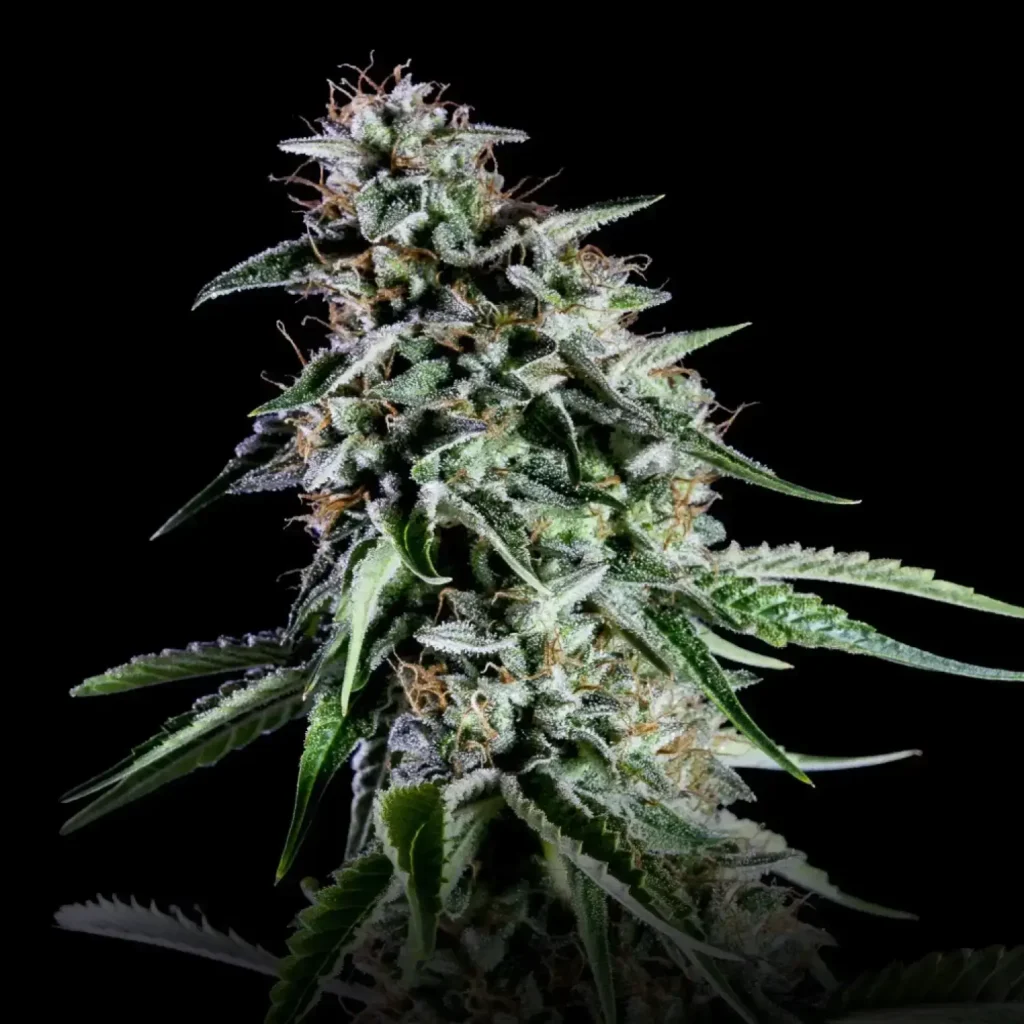
RS11’s terpene profile is limonene, myrcene, and caryophyllene dominant — with linalool appearing in selected phenotypes. The combination produces what the collector market has come to call “candy gas”: a profile that smells like tropical fruit candy at the top and fuel at the bottom, with enough complexity in between to hold a collector’s attention through an extended cure.
Limonene — the dominant and defining terpene
Limonene leads RS11’s profile in a way that’s genuinely unusual for an OG-heritage cross. Most Cookies and OG descendants are caryophyllene or myrcene-led, with limonene functioning as a secondary brightness note. RS11 inverts that structure — limonene is primary, which is why the first impression on jar open is tropical fruit rather than gas or cream. That inversion is the direct inheritance from Pink Guava’s OZK lineage, which concentrated the Zkittlez limonene expression into an OG-structured plant. In practice, this means RS11 announces itself with guava and citrus before the OG-derived gas notes come through underneath. The sequence of the aroma — fruit first, gas second — is the signature.
Myrcene — depth and resin amplification
Myrcene is the foundation that holds the profile together. From the Sunset Sherbet side, myrcene contributes the creamy depth and tropical earthiness that prevents the limonene brightness from reading as sharp or one-dimensional. Myrcene also correlates with resin density — high-myrcene genetics tend to produce higher trichome coverage, which is relevant both for flower quality and for solventless extraction potential. In RS11, the myrcene contribution is what gives the profile its weight — without it, the limonene-caryophyllene combination would read as thinner and more angular.
Caryophyllene — the gas backbone
Caryophyllene provides the fuel, pepper, and spice notes that sit in the lower register of RS11’s profile. From the OG Kush heritage running through both Pink Guava and OZK, caryophyllene is the terpene responsible for the petrol undercurrent that makes RS11 genuinely complex rather than purely sweet. The interaction between caryophyllene and limonene at the concentrations RS11 produces is what creates the “candy gas” effect — the two terpenes operating simultaneously, with the fruit leading and the gas sitting underneath rather than overwhelming it. When that balance tips — when caryophyllene becomes dominant and the limonene retreats — the profile loses what makes RS11 distinctive and reads as a generic OG-adjacent gas strain instead.
Terpene Stack — RS11
| Terpene | Role in profile | Aroma contribution | Source parent |
|---|---|---|---|
| Limonene | Primary / lead note | Tropical fruit, guava, citrus candy. The first impression on jar open. | Pink Guava (OZK / Zkittlez heritage) |
| Myrcene | Foundation / depth | Creamy tropical earthiness. Resin amplifier. Prevents the profile reading as flat fruit. | Sunset Sherbet, Pink Guava |
| Caryophyllene | Gas backbone / finish | Fuel, pepper, spice. The OG undercurrent beneath the fruit. Creates the candy-gas combination with limonene. | OG Kush heritage (Eddy OG via OZK) |
| Linalool | Floral softener (selected phenos) | Floral, slightly soapy, lavender-adjacent. Softens the caryophyllene edge in phenotypes where it’s present. | Sunset Sherbet |
The complete framework for reading and evaluating terpene profiles in practice — including how to identify limonene, myrcene, and caryophyllene expression in your phenotype evaluation — is covered in the Sigma terpene guide. For the research underpinning terpene-cannabinoid interactions in this kind of profile, Russo’s 2011 paper Taming THC: potential cannabis synergy and phytocannabinoid-terpenoid entourage effects in the British Journal of Pharmacology remains one of the more rigorous treatments available.
Phenotype Variation — What to Expect Across the Pack
RS11 seeds produce genuine variation — which is exactly what you should expect from a genetics built on the parental cross of a clone-only cut rather than the cut itself. The original #11 phenotype was one of 120 expressions of this cross. Running a pack of RS11 seeds is running the same genetic raw material that produced that selection, not running a reproduction of it. The hunt is finding the best expression in your pack — which may or may not resemble the documented #11 profile exactly.
The two main phenotype directions
Variation in RS11 packs tends to split along two main axes: phenotypes that lean toward the Pink Guava’s tropical sweetness, and phenotypes that lean toward the Sunset Sherbet’s cream-and-berry expression. Both directions are legitimate expressions of the genetics. The distinction is worth understanding before you start the hunt so you know which direction to prioritise.
Tropical-leaning phenotypes carry the guava and citrus limonene brightness most clearly. The profile leads with fruit immediately on jar open, the top notes are vivid and expressive, and the caryophyllene gas sits cleanly underneath rather than competing for the primary position. These tend to be the most terpene-complex phenotypes in the pack and the most likely to produce a distinctive nose-to-smoke translation. Structure is typically medium height with moderate bud density.
Sherbet-leaning phenotypes push the cream and berry notes of the Sunset Sherbet side more prominently. The profile is rounder and less sharp than the tropical-leaning phenotypes — myrcene and caryophyllene are more balanced with the limonene, producing a creamy-gas combination rather than a fruit-first profile. These phenotypes often develop the most pronounced purple and blue colour expression in late flower. Resin density tends to be consistently high across Sherbet-leaning phenotypes, making them particularly interesting for extraction runs.
Colour expression in RS11
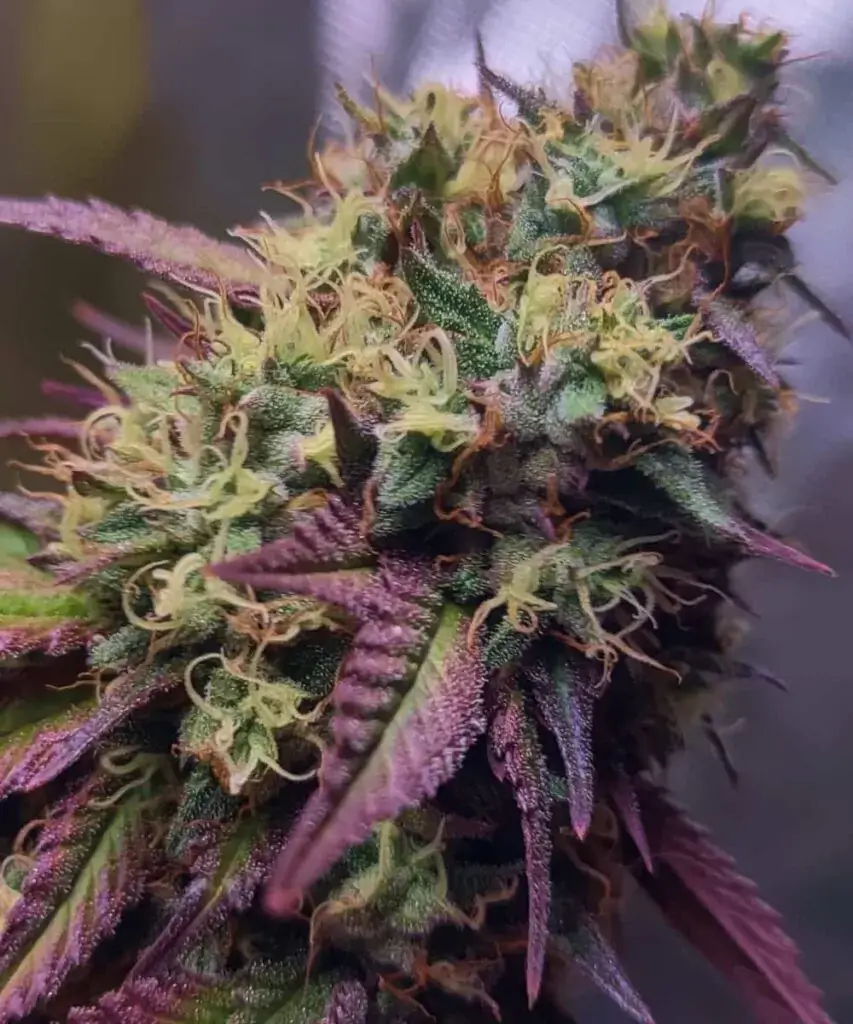
The purple, blue, and lavender colour development that RS11 is known for is an anthocyanin response — triggered by cool night temperatures in the final two to three weeks of flower. Dropping night temperatures to 17–18°C in this window will bring out the colour expression in phenotypes that carry the anthocyanin genetics from the Sunset Sherbet side. Phenotypes that don’t carry it strongly will stay green regardless of temperature management — the colour is genetic, not purely environmental. This is worth knowing before you attribute a lack of colour development to environmental failure rather than phenotype direction.
What to Hunt For — The Keeper Criteria
RS11 is one of the more rewarding packs to hunt in the current catalogue — the phenotype variation is meaningful, the genetic complexity makes the best expressions genuinely interesting, and the terpene profile holds well through extended cure. Running a ten-seed pack minimum is the practical floor for a meaningful hunt. The full keeper criteria, in priority order:
Keeper criteria in priority order
Sigma Secrets — What to hunt for in an RS11 pack
1. Limonene leads at week 6 of cure. The tropical and guava note should be the first and clearest impression on the fresh break. If the gas note from caryophyllene is dominant and the limonene is a secondary note, the phenotype has inverted the profile direction that makes RS11 distinctive. The keeper has fruit forward, gas underneath — not the reverse. Evaluate at six weeks of cure minimum before making this call.
2. The gas sits cleanly beneath the fruit. The caryophyllene note should be present and clear — not absent, not dominant. A phenotype with no gas note is one-dimensional fruit. A phenotype where the gas overwhelms the fruit is a different strain. The keeper holds the limonene-caryophyllene balance — candy on top, fuel underneath, neither competing for the primary position.
3. Nose-to-smoke translation. The tropical candy character should carry from jar to smoke. RS11’s nose-to-smoke translation is one of its documented strengths — the guava and citrus notes carry through in a way that many Z-lineage genetics don’t. Any phenotype where the jar smell is impressive but the smoke is flat is not worth preserving.
4. Resin density and trichome coverage. Dense, uniform trichome coverage across bud and sugar leaf — assessed under magnification for large, fully-developed trichome heads. High-resin RS11 phenotypes are strong solventless candidates and the trichome quality is a direct indicator of terpene density.
5. Profile development through extended cure. The keeper deepens rather than fades through cure. The best RS11 phenotypes continue to develop terpene complexity through week eight and beyond. Any phenotype where the tropical complexity fades significantly between week two and week six of cure is not a reliable keeper regardless of early impressions.
For a full framework on how to run a pack systematically, evaluate phenotypes at each stage, and preserve your keeper through cloning, see the Sigma phenohunting guide.
Growing RS11 in Australia
RS11 is rated moderate difficulty — accessible for experienced growers, manageable for those with a few runs behind them. The genetics reward environmental attention, particularly through the final two weeks of flower where the terpene development and colour expression happen. Cutting this window short is the most common mistake with this pack.
Structure and training
RS11 grows medium to tall and responds well to low-stress training and topping in early veg. The goal is flattening the canopy before the flip to improve light penetration and lateral bud development — RS11 produces multiple bud sites rather than concentrating on a single main cola, so an open canopy significantly improves total yield and bud density across the plant. SCROG is a strong option for indoor grows. Defoliation through the mid-canopy in the first two weeks of flower improves airflow, which matters given the density of the bud structure.
Feeding and nutrition
Nutrition demands are moderate — balanced phosphorus and potassium through mid-flower, conservative nitrogen as the plant enters the stretch, and a thorough flush in the final two weeks. The OG-heritage genetics make RS11 responsive to feed management: overfeeding nitrogen into the stretch is the most common error, producing the tip burn and nitrogen toxicity symptoms that are visible as dark, clawed leaf tips. Calcium and magnesium support through mid-to-late flower matters as resin production increases and the plant’s mineral demand rises accordingly.
Harvest timing
RS11 runs 9–10 weeks in flower. The best phenotypes signal readiness through terpene intensity and trichome maturity — milky heads with developing amber — rather than a fixed calendar date. Harvesting at week nine on a phenotype that could run to week ten will produce a noticeably flatter terpene profile. The tropical complexity, in particular, continues accumulating in the final week of flower and through the first weeks of cure. Don’t rush the finish.
Australian climate and environment
Sigma Secrets — Australian growing notes
Outdoor timing. RS11 performs well outdoors in Australian conditions. Spring planting (September–October) generally points to a March–April finish, but latitude, phenotype and the date natural flowering begins can shift the window. In Queensland and Northern NSW, the long warm season can support extended vegetative growth; it does not reliably create a second natural-light photoperiod crop. A second cycle would normally require autoflowering genetics, supplemental lighting or light-deprivation management. RS11’s medium-to-tall structure gives outdoor plants room to develop strong lateral growth, although final yield depends heavily on root volume, season length and environmental control.
Colour management. Drop night temperatures to 17–18°C in the final two to three weeks to trigger colour expression in phenotypes that carry the anthocyanin genetics. Southern and elevated inland locations are more likely to receive this temperature differential naturally. Warm coastal Queensland and Northern NSW may remain too mild for dependable colour expression outdoors; indoor growers can use a modest lights-off temperature reduction without exposing plants to excessive cold. Don’t force temperatures below 16°C — the benefit to colour expression doesn’t increase and the plant’s metabolism slows at that point.
Airflow. RS11 buds pack tightly and can retain moisture in the mid-canopy without adequate circulation. Maintain good airflow throughout flower — botrytis risk increases in humid coastal conditions through late flower, particularly in Queensland and Northern NSW. Selective defoliation in the final three weeks reduces the risk without the stress of aggressive late-flower management.
Extraction — Solventless Potential
Why RS11 works for solventless
RS11 is one of the stronger solventless candidates in the current Sigma catalogue. The combination of high trichome density from the OG-heritage genetics and a limonene-forward terpene profile that translates well into the extraction process makes it genuinely rewarding for ice water and rosin work.
The limonene-dominant tropical character of RS11 carries into solventless extraction in a way that many Gelato-adjacent genetics don’t — the fruit and guava notes are present and clear in live rosin from fresh frozen material, producing a concentrate with a distinctly different character from the cream-and-gas profiles that dominate most hash rosters. That distinctiveness is part of RS11’s value as an extraction genetics — it produces something identifiably different, which matters in a concentrate market where Gelato derivatives saturate the top shelf.
Ice water, rosin, and extraction protocols
Sigma Secrets — Extraction notes
Ice water hash. RS11 washes well. Trichome head size and stalk structure from the OG-heritage genetics are consistent with reliable ice water extraction performance. Run fresh frozen material at cold temperature (1–4°C) with gentle agitation to preserve trichome head integrity. The limonene fraction is volatile — fast processing at cold temperature preserves more of the tropical top note than extended or warm-water runs. The first wash carries the highest terpene concentration.
Live rosin. Fresh frozen live rosin from RS11 at low press temperature (65–75°C) preserves the limonene fraction significantly better than dry-cured flower pressing. The resulting rosin carries the guava and citrus top notes in a way that dry-cured pressing at higher temperatures does not — heat degrades limonene faster than caryophyllene or myrcene, so temperature management at the press is directly relevant to terpene expression in the final product.
Multiple plants for extraction runs. For growers running RS11 specifically for extraction, running three or four plants in rotation provides a consistent harvest cadence rather than committing a single large photoperiod run. The auto version is particularly suited to this approach — multiple auto plants cycling through in sequence produces a regular supply of fresh frozen material for processing.
Auto RS11 — What Changes and What Doesn’t
Auto RS11 carries Pink Guava × OZK rather than the feminised version’s Pink Guava × Sunset Sherbet. This is an important distinction — these are not the same cross in autoflower format, they are different genetic interpretations of the RS11 lineage. Growers running both will notice real differences in character.
What differs between the two
The Pink Guava × OZK auto leans more heavily on the OZK’s Zkittlez-adjacent candy-sweetness, with less of the Sunset Sherbet cream and berry influence that defines the feminised version. The limonene signature is consistent across both — the tropical and citrus top note is the defining characteristic of both crosses — but the auto’s terpene character is slightly sharper and less creamy than the fem. The structure is more compact, running 60–100cm versus the medium-to-tall fem, and the seed to harvest timeline of 10–11 weeks under any light schedule is the core practical advantage.
What stays the same
The limonene-dominant candy-fruit profile is present in quality auto phenotypes. The resin density from the OZK heritage is consistently high. The colour expression potential is present in phenotypes that carry the anthocyanin genetics — though slightly less pronounced than in the Sherbet-influenced fem version. The solventless extraction value is maintained — multiple auto plants in rotation is the practical approach for extraction cadence.
Auto RS11 — growing notes
Low-stress training only in the first three weeks. The auto lifecycle doesn’t allow recovery time from aggressive techniques early on. Bend and tie rather than cut — LST from week two through week four opens the canopy without the risk of stalling the plant at a critical growth stage. After week four the plant is entering or in flower and training stops entirely.
Evaluate phenotypes at six weeks of cure minimum before making keeper selections — same rule as the feminised version. The compressed auto lifecycle makes the post-harvest cure more important, not less, in developing the full terpene expression.
Both formats — RS11 feminised photoperiod and Auto RS11 — are available in the Sigma catalogue in 5, 10, and 20 seed packs.
RS11’s Downstream Impact — Why It Became a Breeding Cornerstone
RS11 as a terpene donor
RS11’s significance extends well beyond its own terpene profile. In breeding rooms, RS11 has functioned as what experienced breeders call a “terpene donor” — a parent strain used to introduce its distinctive limonene-forward tropical character into crosses that previously lacked it. The reason it works so well in this role is the same reason OZK was productive as a breeding parent: the limonene-dominant tropical terpene expression transmits reliably to offspring at rates higher than 50% when crossed against appropriate counter-parents.
The crosses RS11 made possible
The most significant downstream cross built on RS11 genetics is Zoap — Rainbow Belts × Pink Guava — which carries the Z-lineage limonene foundation forward into a cross that introduced ocimene as a secondary terpene, producing the citrus-and-floral profile that made Zoap one of the most discussed genetics of the 2023–2024 collector cycle. The Permanent Marker genetics — reviewed in full in the Permanent Marker strain guide — also carry Z-lineage limonene influence through the Sherb BX1 parent. Much of the modern exotic catalogue in Australia traces back to the terpene direction RS11 established.
Why RS11 became a breeding cornerstone
RS11 demonstrated something that wasn’t obvious before it: limonene-dominant tropical terpene expression could be produced reliably within an OG-structured, high-resin plant. The existing Z-lineage genetics — Zkittlez, early Rainbow Belts — produced the terpene profile in relatively light-structured plants. RS11’s OG-heritage frame produced it in a denser, more resinous format that translated better to commercial cultivation and extraction. That structural-terpene combination is what made it productive as a breeding parent, and why the crosses it’s generated have become significant in their own right.
Frequently Asked Questions — RS11 Seeds Australia
What is RS11 cannabis?
RS11, or Rainbow Sherbet #11, is an indica-dominant hybrid developed from DEO Farms’ Pink Guava crossed with Sunset Sherbet or OZK — the exact cross varies by breeder version. It was selected from an open pollination run of 120 seeds by DEO Farms and Wizard Trees, with Doja Pak involved in developing and releasing the #11 cut. RS11 is limonene-dominant with a tropical fruit and guava top note over a caryophyllene gas backbone — a combination that made it one of the most influential breeding parents in the modern exotic catalogue.
What are RS11’s genetics?
The two most consistently cited versions are Pink Guava × Sunset Sherbet (DEO Farms / Wizard Trees selection, as cited in Rob’s direct interview) and Pink Guava × OZK (cited by Doja Pak and other sources). Pink Guava is an OZ Kush F2 selection — itself a cross of Eddy OG and Zkittlez. OZK is the direct Eddy OG × Zkittlez cross. Sunset Sherbet is Girl Scout Cookies × Pink Panties. The Sigma feminised RS11 carries Pink Guava × Sunset Sherbet. The auto carries Pink Guava × OZK.
What does RS11 smell and taste like?
Limonene-dominant — tropical fruit, guava, and citrus candy on the nose, with a creamy berry mid-palate from the Sunset Sherbet or myrcene influence and a caryophyllene gas note on the finish. The profile sequence matters: fruit announces first, gas follows underneath. The best phenotypes hold the tropical complexity through an extended cure and translate it faithfully from jar to smoke.
How strong is RS11?
RS11 consistently tests at 22–28% THC across verified sources. CBD is typically below 1%. The effect is euphoric and mentally active at onset, with a body relaxation that develops without being sedating — described consistently as suitable across a range of situations without being incapacitating.
How long does RS11 take to flower?
The feminised photoperiod version runs 9–10 weeks in flower. The auto runs 10–11 weeks seed to harvest. Don’t rush the finish on either format — the terpene expression continues developing in the final week and through the cure. The difference between harvesting early and running the full window is meaningful in terms of terpene density and tropical complexity.
Is RS11 good for outdoor growing in Australia?
Yes. RS11 performs well outdoors in Australian conditions — spring planting (September–October) for a March–April harvest in most states. Queensland and Northern NSW can support a second smaller cycle. The structure responds well to space and lateral development outdoors, with 400–600g per plant achievable in good conditions. Temperature drops in the final weeks bring out the colour expression the genetics are capable of.
Is RS11 good for solventless extraction?
Yes — one of the stronger candidates in the current catalogue. Trichome density from the OG-heritage genetics is consistently high, and the limonene-forward tropical profile translates well into live rosin and ice water hash. Fresh frozen processing at cold temperature preserves the limonene fraction significantly better than dry-cured approaches. The resulting concentrate is distinctively fruit-forward — different from the cream-and-gas profiles that dominate most hash rosters.
What is the difference between the RS11 feminised and Auto RS11?
Different crosses — not just different formats. The feminised version carries Pink Guava × Sunset Sherbet. The auto carries Pink Guava × OZK. Both are RS11 lineage crosses with the limonene-forward tropical terpene direction, but the Sherbet influence in the fem produces a creamier, rounder profile while the OZK auto leans toward a sharper, more candy-forward expression. Running both will reveal clear differences in character alongside the obvious differences in lifecycle and structure.
Why is RS11 significant in modern cannabis breeding?
RS11 demonstrated that limonene-dominant tropical terpene expression could be produced reliably within a dense, high-resin OG-structured plant — a combination that didn’t exist at scale before it. That structural-terpene combination made it productive as a breeding parent, and the crosses built on it — including Zoap — have become significant in their own right. Much of the modern exotic catalogue in Australia traces back, directly or indirectly, to the terpene direction RS11 established.
