


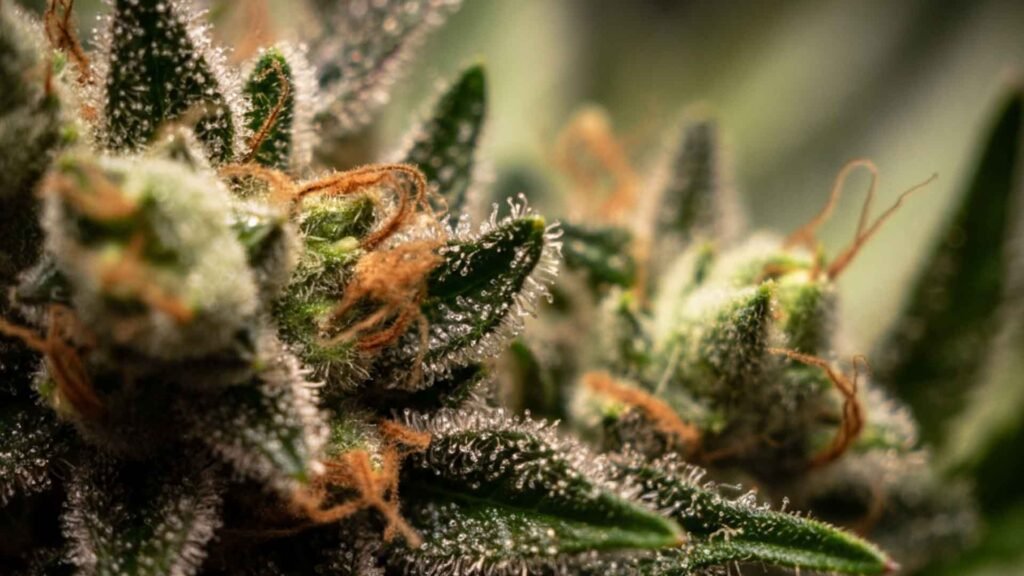
Cannabis terpene profiles in Australia are still mostly an afterthought. Strain names get listed. Indica or sativa gets tagged. A vague flavour note — “fruity,” “earthy,” “diesel” — gets appended. And that’s where most of the market stops. It’s not enough information to make a meaningful genetics decision, and serious collectors know it.
Terpenes are the chemical compounds responsible for every distinct aroma and flavour profile in cannabis. They’re produced in the same trichome glands as cannabinoids, they vary significantly across phenotypes within the same pack, and they are — more than any other single factor — what separates one strain from another at the level that actually matters to a collector. Understanding them isn’t academic. It’s practical. It’s the difference between running a pack blind and knowing exactly what you’re hunting for before you pop a seed.
This guide goes deep. Six major terpenes, how they express in modern exotic genetics, which strains carry them, how they interact with each other, and what to look for when you’re reading a profile. If you’re new to exotic genetics and want to understand the broader category first, start with What Are Exotic Cannabis Strains? — this guide picks up where that one leaves off. Australian cannabis terpene content at this depth doesn’t exist yet. It should.
In this guide
- What terpenes actually are — and why they matter more than cannabinoids
- Caryophyllene — the gas terp
- Limonene — the fruit and citrus terp
- Myrcene — the foundation terp
- Linalool — the floral terp
- Terpinolene — the wild card
- Ocimene — the sweet and waxy terp
- The entourage effect and terpene interactions
- How to read a terpene profile practically
- The three terpene families — Sigma’s taxonomy
What Terpenes Actually Are — and Why They Matter More Than Cannabinoids
Terpenes are aromatic organic compounds produced by a wide range of plants — cannabis among them. In cannabis, they’re synthesised in the trichome glands alongside cannabinoids like THC and CBD. They’re what your nose picks up when you open a bag: that immediate sensory hit of diesel, fruit, cream, or earth is almost entirely terpene-driven.
Over 200 terpenes have been identified in cannabis, though most occur in trace quantities. The ones that matter — the ones that define a strain’s profile and account for the differences that collectors actually care about — are a much smaller set. Six of them account for the vast majority of what you’ll encounter in modern exotic genetics. Those are what this guide covers.
The reason terpenes matter more than cannabinoids for a collector comes down to variation. THC percentages in modern genetics are relatively compressed — most top-shelf exotic genetics sit in a similar range. What varies dramatically is the terpene profile. The difference between Jealousy and Zoap isn’t THC percentage. It’s the terpene expression: caryophyllene-dominant gas-and-cream versus limonene-forward citrus and fruit. That’s the distinction worth understanding.
Worth knowing
Terpenes are volatile — they degrade with heat, light, and time. This is why cure matters. A well-cured flower from a terpene-rich strain will express its profile more clearly than the same genetics run too hot or harvested early. When you’re phenohunting, evaluate terpene expression on properly cured material, not fresh-dried flower. The profile you smell at week two of cure is not the same profile you’ll smell at week six.
There’s also the biosynthesis angle worth understanding. Terpenes in cannabis are produced through two main biochemical pathways — the MEP pathway and the MVA pathway — and different terpenes emerge from each. This isn’t just chemistry trivia. It’s why certain terpene combinations appear together more often than others, and why you can start to predict a strain’s secondary profile once you know its dominant terp. Caryophyllene, for instance, tends to co-occur with myrcene in Cookies-family genetics. Limonene tends to co-occur with terpinolene in Z-lineage crosses. These patterns are useful when reading a pack.
Caryophyllene — The Gas Terp
Beta-caryophyllene is the dominant terpene in most of what gets called “gas” in the modern exotic catalogue. It’s responsible for the dark, spicy, fuel-adjacent notes that define the Cookies family, GG4, and their descendants. If a strain smells like diesel, petrol, pepper, or dark earth — caryophyllene is doing the heavy lifting.
Caryophyllene is chemically unique among cannabis terpenes in one significant way: it’s the only terpene known to bind directly to CB2 receptors in the endocannabinoid system. This makes it technically a cannabinoid as well as a terpene — a distinction that makes it particularly interesting from a research perspective, though the practical implications for collectors are still being understood. What’s established is that it contributes to the overall profile in ways that go beyond aroma alone.
In terms of aroma profile: black pepper is the most accessible reference point for pure caryophyllene. But in cannabis, it rarely presents that cleanly — it’s usually modulated by the secondary terpene environment. In Cookies-family genetics it leans toward fuel and dark earth. In GMO crosses it pushes into garlic and diesel territory. In Jealousy, where it combines with linalool and myrcene secondaries, it produces the cream-and-gas profile that’s made that cross one of the most hunted in the modern catalogue.
Caryophyllene-dominant strains worth knowing
| Jealousy | Biscotti x Sherb BX. Caryophyllene primary, linalool secondary. The gas-and-cream profile that defines this cross — look for the phenotypes that lean diesel on the nose with a cream finish. |
| GMO (Garlic Cookies) | Girl Scout Cookies x Chemdawg. Caryophyllene primary, myrcene secondary. The garlic-diesel profile is caryophyllene pushed to an extreme by the Chemdawg background. |
| Cap Junky | Alien Cookies x Kush Mints. Caryophyllene and limonene co-dominants. The mint-gas profile comes from this combination — unusual and immediately distinctive. |
| GG4 (Gorilla Glue) | Chem Sis x Sour Dubb x Chocolate Diesel. Caryophyllene and myrcene. The original modern gas terp benchmark — everything downstream of GG4 owes something to this profile. |
When phenohunting caryophyllene-dominant packs, the phenotypes worth prioritising are the ones where the gas note is cleanest and most distinct on the nose — not muddied by green or vegetative notes, which indicate the secondary terpene profile hasn’t fully developed. Evaluate at week six of cure minimum. The fuel comes forward as the chlorophyll breaks down and the terpene profile settles.
Limonene — The Fruit and Citrus Terp
Limonene is the defining terpene of the Z lineage — the Zkittlez family and everything downstream of it. It’s responsible for the citrus, fruit, and candy-adjacent profiles that made Zkittlez a landmark release and have defined a generation of modern exotic crosses. RS11, Zoap, Rainbow Belts, Gello Shotz, Runtz — if it smells like tropical fruit, berry, or citrus sherbet, limonene is the primary driver.
Limonene is one of the most widely occurring terpenes in nature — it’s a major component of citrus peel — which makes it immediately accessible as a reference point. Pure limonene smells like lemon zest or orange peel. In cannabis, the expression is more complex: the strain’s genetic background, the secondary terpene environment, and the curing process all shape how limonene presents. In Zkittlez it reads as mixed tropical fruit. In RS11 it shifts toward a more complex fruit-and-gas combination where the Z lineage meets Animal Mints. In Zoap the combination with Pink Guava genetics pushes it toward citrus and floral territory.
On limonene and phenotype variation
Limonene-dominant genetics tend to throw significant phenotype variation in terpene expression specifically — more so than many other terpene families. A pack of RS11 can produce phenotypes that read as citrus-forward, berry-forward, or fruit-and-gas depending on the individual plant’s terpene ratio. This is part of what makes Z-lineage genetics rewarding to hunt. The variation isn’t random — it’s the genetic complexity of crosses that bring together limonene-forward and caryophyllene-forward lineages expressing differently across the pack.
Limonene is also notable for being highly volatile — it degrades faster than caryophyllene or myrcene when exposed to heat and light. This means limonene-dominant strains are particularly sensitive to cure conditions and storage. A Z-lineage cross that hasn’t been properly cured or has been stored in suboptimal conditions will lose its fruit profile faster than a gas-dominant strain loses its edge. When evaluating limonene-forward phenotypes, temperature-controlled storage and extended cure times are worth the investment.
Limonene-dominant strains worth knowing
| Zkittlez | Grape Ape x Grapefruit. The original limonene-dominant exotic. Heavy tropical fruit, almost candy-like. The benchmark against which all Z-lineage descendants are measured. |
| RS11 | OZK x Animal Mints BX1. Limonene primary with caryophyllene secondary from the Animal Mints background. The fruit-and-gas combination that makes this one of the most complex profiles in the modern exotic catalogue. |
| Zoap | Rainbow Belts x Pink Guava. Limonene primary, ocimene secondary. Citrus and floral — the Pink Guava genetics push the profile toward something more unusual than a straight Z-lineage cross. |
| Permanent Marker | Biscotti x (Jealousy x Sherb BX). Limonene and caryophyllene co-dominants. Sits at the intersection of the Z family and the Cookies family — fruit notes over a gas base. |
Myrcene — The Foundation Terp
Myrcene is the most abundant terpene in cannabis — the baseline against which everything else is measured. Most commercial genetics are myrcene-dominant by default: the earthy, herbal, slightly musky profile that most people associate with cannabis as a category is largely myrcene expression. In that sense, myrcene is where the market started and where most of it still sits.
In modern exotic genetics, myrcene is more interesting as a secondary terpene than as a primary. Pure myrcene dominance produces the kind of profile that defined pre-exotic commercial cannabis — earthy, damp, slightly fruity in a generic sense. That’s not what collectors are chasing. What’s more interesting is what myrcene does in combination: as a secondary terpene in caryophyllene-dominant genetics, it softens the gas notes toward earth and cream. In the cream/savoury/hash family — MAC 1, Hash Burger, Biscotti — myrcene is often the primary terpene, but it’s the combination with linalool and ocimene that produces the complex cream-and-hash profiles those genetics are known for.
Myrcene also plays a role in the entourage effect that’s worth understanding — covered in more detail in the entourage section below. The short version: myrcene is thought to increase the permeability of cell membranes, which may enhance the uptake of other compounds. This is why high-myrcene genetics tend to feel different from low-myrcene genetics even at similar cannabinoid levels.
Myrcene and hash production
High-myrcene genetics tend to correlate with high resin density and good hash washing characteristics. This isn’t a universal rule — trichome structure and resin chemistry matter too — but if you’re selecting genetics for solventless extraction, myrcene content is one of the markers worth paying attention to. MAC 1 and Hash Burger, both strong hash candidates, have significant myrcene in their profiles alongside their other dominant terpenes. The cream-and-earth notes that characterise hash-forward genetics are largely myrcene-driven.
Myrcene-prominent strains worth knowing
| MAC 1 | Alien Cookies F2 x (Starfighter x Colombian). Myrcene alongside caryophyllene and limonene. The cream-and-gas profile comes from this terpene combination — myrcene provides the cream foundation that the other terps build on. |
| Hash Burger | GMO lineage. Myrcene and caryophyllene. The savoury-earth profile sits in the overlap between these two terpenes — garlic and earth notes from the GMO heritage, softened by myrcene into something that reads as hash-forward. |
| Biscotti | Gelato 25 x South Florida OG. Myrcene and caryophyllene. The cookie-and-earth base that has made Biscotti one of the most widely used parent strains in modern breeding — its terpene profile transmits reliably across generations. |
Linalool — The Floral Terp
Linalool is the terpene most people know from lavender — it’s the dominant compound in lavender essential oil and one of the most recognisable floral scents in nature. In cannabis, it rarely presents as overtly floral. More often it contributes a subtle sweetness and complexity that softens harsher terpene combinations — the cream note in a gas-and-cream profile, the floral undertone in a fruit-forward cross, the smoothness in a hash-forward genetic.
In modern exotic genetics, linalool most often appears as a secondary or tertiary terpene rather than a primary. Its role is modulating. A caryophyllene-dominant strain with significant linalool reads differently from one without it — the linalool takes the edge off the raw fuel and introduces a sweetness that makes the profile more complex and more palatable. This is part of what makes Jealousy interesting: the linalool secondary is what gives the gas-and-cream profile its texture, making it distinct from a straight caryophyllene-dominant cross that reads as pure fuel.
Linalool in phenotype selection
When hunting caryophyllene-dominant packs, linalool expression is one of the key differentiators between phenotypes. A phenotype with strong linalool secondary will have a cream-and-floral complexity layered over the gas that a phenotype without it simply won’t have. Nose the fresh break and the cure separately — linalool often comes forward more clearly as the cure progresses, while the primary caryophyllene gas notes are present from earlier. Phenotypes that smell progressively more complex as they cure typically have meaningful linalool contribution.
Linalool also appears in some autoflowering genetics — particularly in the Mephisto catalogue, where certain crosses carry floral terpene profiles that are unusual in the broader autoflower market. This is one of the markers that distinguishes connoisseur autoflower genetics from commercial autoflowers, where terpene complexity is rarely a priority in selection.
Terpinolene — The Wild Card
Terpinolene is the most under-discussed of the major cannabis terpenes and arguably the most distinctive. It doesn’t fit cleanly into the gas or fruit categories — its aroma profile is complex and somewhat difficult to pin down: floral, herbal, slightly piney, with a fresh and almost sharp quality that doesn’t map neatly to any single reference point. Some describe it as fresh herbs, some as pine resin, some as a light floral-citrus combination. All of those are partly right.
In modern exotic genetics, terpinolene appears most prominently in the Z lineage alongside limonene — it’s one of the terpenes that gives Zkittlez and its descendants their complexity beyond simple fruit sweetness. The interplay between limonene’s citrus and terpinolene’s herbal-fresh quality is part of what produces the candy-adjacent profile that characterises the best Z-lineage phenotypes. Without terpinolene, a limonene-dominant strain tends to read as more one-dimensional — fruit without the complexity that makes it interesting.
Terpinolene is also notably the dominant terpene in some sativa-leaning genetics — Jack Herer and its descendants carry significant terpinolene — though these genetics sit outside the modern exotic catalogue that Sigma focuses on. In the context of modern exotics, terpinolene is best understood as a secondary that adds complexity to limonene-forward profiles rather than as a primary driver.
Identifying terpinolene in the field
Terpinolene can be difficult to identify in a complex terpene profile because it doesn’t announce itself the way caryophyllene or limonene does. The tell is a kind of fresh, sharp quality in the upper register of the aroma — the note that makes a limonene-forward profile feel bright and alive rather than flat and sweet. If a Z-lineage phenotype has that quality, terpinolene is likely contributing. If it reads as purely sweet fruit without that brightness, terpinolene is probably minimal in that pheno.
Ocimene — The Sweet and Waxy Terp
Ocimene is one of the less common primary terpenes in cannabis but increasingly relevant in the modern exotic catalogue as breeding has diversified. Its aroma profile sits in sweet, waxy, and slightly herbal territory — think fresh flowers, sweet herbs, or the slightly waxy note in some tropical fruits. It’s not a terpene that dominates a profile in the way caryophyllene or limonene does, but as a secondary it adds a sweetness and complexity that’s distinctive once you know to look for it.
Ocimene appears most notably in Zoap — where the Pink Guava genetics introduce it alongside limonene, producing the citrus-and-floral profile that makes Zoap unusual among modern exotic crosses. Most Z-lineage genetics are limonene-and-terpinolene dominant. Zoap’s ocimene secondary is part of what gives it its distinctive character — the floral quality that sits underneath the citrus and makes it immediately recognisable in a lineup.
In the cream/savoury/hash family, ocimene occasionally appears as a minor terpene contributing a subtle sweetness to the earth-and-cream base. In MAC 1 it’s present in trace quantities that add a light sweetness to what would otherwise be a pure gas-and-earth profile. These trace contributions are exactly where understanding terpene interactions becomes useful — a terpene doesn’t need to be dominant to change the character of a profile meaningfully.
The Entourage Effect and Terpene Interactions
The entourage effect is the hypothesis — increasingly supported by research, though the science is still developing — that cannabinoids and terpenes work together to produce effects that are different from what either compound produces in isolation. The interaction between THC, CBD, and the full terpene profile of a strain produces something that can’t be predicted from any single compound alone.
For collectors, the practical implication is that terpene profile isn’t just an aroma question — it’s relevant to the overall character of what you’re growing and consuming. Two genetics with identical THC percentages but different terpene profiles will not feel the same. This is something experienced growers know intuitively before the science catches up to explain it.
Key terpene interactions in modern exotics
Caryophyllene + myrcene: The gas-and-earth combination found in most Cookies-family genetics. Myrcene is thought to increase cell membrane permeability, potentially enhancing the uptake of caryophyllene and cannabinoids. This combination characterises most of what’s described as “heavy” in modern exotic genetics.
Limonene + caryophyllene: The combination at the heart of crossed Z/Cookies genetics like RS11 and Permanent Marker. Limonene is thought to interact with serotonin receptors, while caryophyllene binds CB2. The combination produces a profile — and potentially a character — that neither produces alone.
Linalool + caryophyllene: The gas-and-cream combination in Jealousy and similar genetics. Linalool modulates the harshness of straight caryophyllene expression both in aroma and in character — this is the combination that makes a gas-dominant strain feel textured and complex rather than one-dimensional.
The honest caveat: the entourage effect research is real but the conclusions are still preliminary. Specific claims about what individual terpenes do in combination with cannabinoids should be held lightly — the science is moving fast and some of what gets stated confidently in cannabis media is ahead of what’s been properly established. A useful starting point for the underlying science is Russo’s 2011 paper Taming THC: potential cannabis synergy and phytocannabinoid-terpenoid entourage effects, published in the British Journal of Pharmacology — one of the more rigorous early treatments of terpene-cannabinoid interaction. What is clear is that terpene profile matters beyond aroma, and that genetics selection on terpene grounds is rational, not just aesthetic.
How to Read a Terpene Profile Practically
Most terpene data you’ll encounter comes in one of two forms: lab-tested percentage breakdowns from flower, or sensory descriptions from breeders and reviewers. Both are useful, with different limitations.
Lab data gives you a percentage breakdown of the major terpenes present in a tested sample. The limitation is that terpene profiles vary significantly across phenotypes, growing conditions, harvest timing, and cure. A lab result from one phenotype of a pack is not necessarily representative of what you’ll find in yours. Use it as a directional guide, not a specification.
Sensory descriptions — what a strain smells and tastes like as reported by breeders, reviewers, and other growers — are useful for developing your own vocabulary and reference points. The limitation is subjectivity and the natural variation between phenotypes. Two growers running the same pack will find different phenotypes and describe them differently.
The most practical approach for a collector is to build your own reference library through direct experience — grow known genetics, pay attention to the terpene expression at different stages of cure, and develop the sensory vocabulary to distinguish what you’re smelling. This takes time but it’s the only way to develop a genuinely useful nose for terpene evaluation.
A practical terpene evaluation framework
Fresh break: What do you smell immediately when you break the bud? The primary terpene usually announces itself here — gas, fruit, cream, or earth.
30 seconds after break: What develops? The secondary terpenes begin to present as the initial volatile burst settles. This is where complexity reveals itself.
At cure week 2 vs week 6: Terpene profiles shift during cure. Limonene-forward genetics tend to settle and deepen. Caryophyllene-dominant genetics often become more distinct. Evaluate at both points to understand what the genetics are doing over time.
Plant vs plant within a pack: When phenohunting, compare terpene expression plant-to-plant at the same cure stage. The differences between phenotypes — some lean gas, some lean cream, some lean fruit — reveal the genetic complexity of the cross and help identify which phenotype is worth running again.
The Three Terpene Families — Sigma’s Taxonomy
Sigma organises its catalogue around three terpene families. Every strain in the collection sits in one of these families, or at the boundary between two. The taxonomy is practical, not academic — it’s a tool for making genetics decisions, not a scientific classification system.
Gas / Chem / Fuel
Primary terp: Caryophyllene
Common secondaries: Myrcene, linalool
Profile: Diesel, fuel, dark earth, pepper, spice. Often cream or garlic notes from secondary terpenes.
Catalogue examples: Jealousy, GG4, GMO, Cap Junky, Cookies family
Fruit / Candy / Dessert
Primary terp: Limonene
Common secondaries: Terpinolene, ocimene, caryophyllene
Profile: Citrus, tropical fruit, berry, candy. Terpinolene adds brightness; caryophyllene secondary adds gas depth in crossed genetics.
Catalogue examples: Zkittlez, RS11, Zoap, Rainbow Belts, Runtz, Permanent Marker
Cream / Savoury / Hash
Primary terp: Myrcene
Common secondaries: Linalool, ocimene, caryophyllene
Profile: Cream, earth, vanilla, garlic, hash. Linalool adds floral sweetness; caryophyllene adds depth and spice. The hash-forward family.
Catalogue examples: MAC 1, Hash Burger, Biscotti, Mimosa
Most of the interesting genetics in the modern exotic catalogue sit at the intersection of two of these families rather than squarely inside one. RS11 is fruit-forward with a gas undercurrent — it sits between family one and family two. Jealousy is gas-and-cream — it bridges family one and family three. These intersections are where the most complex and most rewarding profiles tend to live, and where phenotype variation is often most pronounced. A pack that crosses two terpene families will throw more diverse phenotypes than a pack that stays within one — which means more to hunt, and a wider range of keeper candidates.
Understanding the three families and where a strain sits within them is the most practical thing a collector can do before running a new pack. It tells you what primary expression to expect, what secondary notes to look for, and which phenotypes are expressing the genetics correctly versus which are outliers worth noting but not necessarily prioritising. For a full breakdown of the lineage trees behind these families — Cookies, Zkittlez, and Chemdawg — see What Are Exotic Cannabis Strains?
Frequently Asked Questions
What are terpenes in cannabis?
Terpenes are aromatic organic compounds produced in the trichome glands of cannabis alongside cannabinoids. They are responsible for every distinct aroma and flavour profile in cannabis — the diesel, fruit, cream, and earth notes that differentiate one strain from another. Over 200 terpenes have been identified in cannabis, though six major terpenes account for the vast majority of what you’ll encounter in modern exotic genetics: caryophyllene, limonene, myrcene, linalool, terpinolene, and ocimene.
What is the most common terpene in cannabis?
Myrcene is the most abundant terpene in cannabis and the baseline terpene in most commercial genetics. It’s responsible for the earthy, herbal, and mildly musky profile that most people associate with cannabis as a category. In modern exotic genetics, myrcene is often more interesting as a secondary terpene — where it modulates and adds complexity to primary terpenes like caryophyllene or limonene — than as a primary driver of a profile.
What terpene is responsible for the gas or diesel smell in cannabis?
Beta-caryophyllene is the primary terpene responsible for the gas, diesel, and fuel-adjacent notes in modern exotic cannabis. It’s the dominant terpene in most Cookies-family genetics — GG4, Jealousy, GMO, Cap Junky — and is what distinguishes the “gas” category from fruit or cream-forward profiles. Caryophyllene is also chemically unique in that it’s the only cannabis terpene known to bind directly to CB2 receptors in the endocannabinoid system, making it technically both a terpene and a cannabinoid.
What terpenes are in exotic cannabis strains?
Modern exotic cannabis strains in Australia are characterised by secondary and tertiary terpenes pushed to the foreground in ways that conventional commercial genetics didn’t achieve. Gas-forward exotics like Jealousy and GG4 are caryophyllene-dominant. Fruit and candy-forward exotics like Zkittlez, RS11, and Zoap are limonene-dominant with terpinolene and ocimene secondaries. Hash and cream-forward genetics like MAC 1 and Hash Burger are myrcene-dominant with linalool and caryophyllene secondaries. The most interesting modern exotics sit at the intersection of these families — crossing terpene profiles to produce complexity that neither parent strain had alone.
What is the entourage effect?
The entourage effect is the hypothesis — increasingly supported by research — that cannabinoids and terpenes work together to produce effects that are different from what either compound produces in isolation. The interaction between THC, CBD, and the full terpene profile of a strain produces something that can’t be predicted from any single compound alone. The practical implication for collectors is that terpene profile matters beyond aroma — two genetics with identical THC percentages but different terpene profiles will not feel the same. The specific mechanisms are still being researched, but the principle is well-supported by available evidence and by the experience of growers who have worked with diverse genetics over time.
Do terpenes affect how cannabis feels?
Yes — through the entourage effect, terpenes interact with cannabinoids and with each other to shape the overall character of a strain beyond what THC percentage alone would predict. Caryophyllene binds directly to CB2 receptors. Limonene is thought to interact with serotonin receptors. Myrcene is believed to increase cell membrane permeability, potentially affecting how other compounds are absorbed. Linalool modulates the character of caryophyllene-dominant profiles. These interactions are real, though the research is still developing and specific claims should be held with appropriate scepticism until the science matures.
What terpenes are best for hash and solventless extraction?
High-myrcene genetics tend to correlate with strong hash washing characteristics — myrcene-dominant strains like MAC 1, Hash Burger, and Biscotti are among the most reliable performers for solventless extraction. Trichome structure and resin chemistry matter alongside terpene profile, but myrcene content is a useful marker when selecting genetics for hash production. Caryophyllene as a secondary terpene in hash-forward genetics also contributes to the depth and complexity of the resulting concentrate’s flavour profile.
How do I know what terpenes a cannabis strain has?
Lab-tested terpene data — where available — gives a percentage breakdown of the major terpenes in a tested sample. The limitation is that terpene profiles vary significantly across phenotypes, growing conditions, harvest timing, and cure, so a lab result from one phenotype is directional rather than definitive. Sensory evaluation is the other tool: developing a vocabulary for what caryophyllene, limonene, and myrcene smell like in isolation, then learning to identify them in combination in real genetics, is the most reliable long-term approach. The practical evaluation framework in this guide — fresh break, 30 seconds after break, week 2 vs week 6 of cure — is the starting point for building that reference library.