


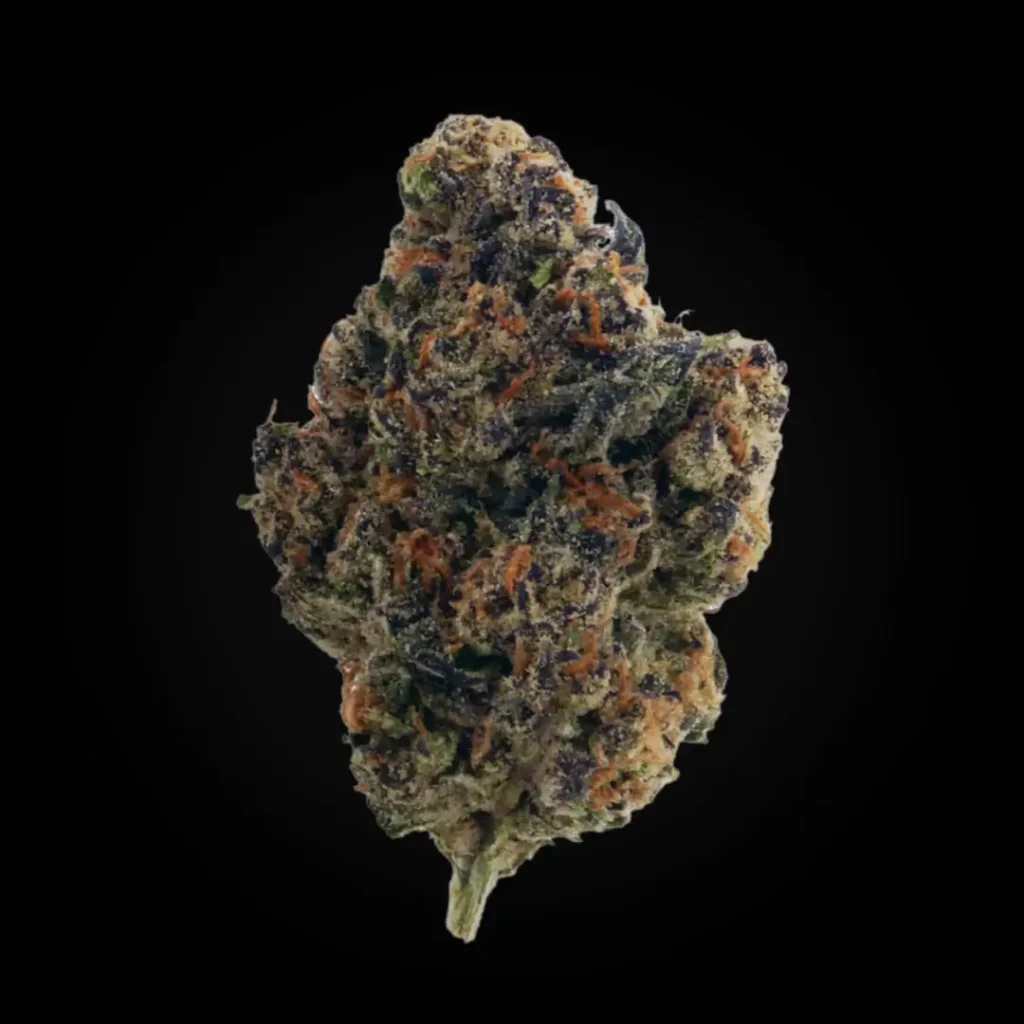
The word “exotic” gets applied to almost everything in the Australian cannabis market right now. Strains that were common in the US five years ago arrive here with the label attached. It gets stretched thin quickly. That’s worth saying at the start — because the point of this piece isn’t to defend a buzzword. It’s to define what exotic cannabis strains in Australia actually are, and why understanding that category matters if you’re serious about what you’re running.
Exotic cannabis strains are a post-2015 development, primarily out of the US West Coast breeding scene. They represent a new class of hybrid genetics characterised by unusual terpene profiles, genuine phenotype variation across a pack, and visual expression — trichome density, colour range, bud structure — that distinguishes them clearly from the commercial genetics that defined the market before them. They didn’t appear randomly. They share a lineage. Understanding that lineage is where the definition becomes useful.
In this article
Where Modern Exotics Come From — Three Family Trees
Almost every strain that gets called exotic in the Australian collector market traces back to one of three lineages, or to crosses between them. Get familiar with these trees and everything else becomes easier to read.
The Cookies family. Girl Scout Cookies — a cross involving OG Kush and Durban Poison genetics — established a template in the early 2010s that breeders have been working with ever since. It produced a terpene profile that was difficult to categorise at the time: sweet, earthy, slightly chemical. More importantly, it threw exceptional phenotype variation and trichome production. Everything downstream of Cookies — Gelato, Biscotti, MAC 1, Jealousy, Permanent Marker — carries those traits to varying degrees. The Cookies tree is the foundation of most of what gets called “gas and cream” in the modern exotic catalogue.
The Zkittlez family. Dying Breed’s Zkittlez (Grape Ape x Grapefruit) arrived with a terpene profile the commercial seed market hadn’t encountered before: heavy fruit, almost candy-like, with a limonene-forward structure that made its descendants immediately recognisable. RS11, Zoap, Rainbow Belts, Gello Shotz, Runtz — a large portion of what gets called exotic today sits in the Z lineage. If a strain smells like tropical fruit, berry candy, or citrus sherbet, it’s almost certainly downstream of Zkittlez.
The Chemdawg / GMO family. Chemdawg is the oldest of the three and the foundation of most modern gas terpene profiles. Garlic Cookies (GMO) — Girl Scout Cookies crossed with Chemdawg — pushed fuel and garlic notes to an extreme that made it a landmark in its own right. Much of the Hash Vault category, where trichome density and resin quality are the primary selection criteria, sits in this lineage. Hash Burger, one of the most talked-about recent releases, has GMO ancestry.
Worth knowing
These three family trees aren’t discrete — they’ve been crossed against each other extensively. Zoap is Rainbow Belts (Z lineage) crossed with Pink Guava (Cookies-adjacent). Cap Junky is Alien Cookies (Cookies family) crossed with Kush Mints. Most of the interesting genetics from the past five years sit at the intersection of these trees, not squarely inside any one of them.
What Makes a Strain Exotic in Practice
Lineage is one part of it. But a strain doesn’t earn the exotic classification just because its parents were notable. These are the characteristics that distinguish genuine exotic cannabis strains in the Australian market from the ones just wearing the label.
Unusual terpene profiles. Conventional commercial genetics were largely dominated by myrcene — the most common cannabis terpene, responsible for earthy, herbal, and mildly fruity notes. Modern exotics pushed secondary and tertiary terpenes to the foreground in ways that produced genuinely new sensory profiles. Caryophyllene-heavy genetics like Jealousy and GG4 produce fuel-and-spice profiles that are immediately distinct from anything that came before them. Limonene-forward genetics like Zkittlez and RS11 produce fruit and citrus profiles that don’t smell like conventional cannabis at all. These aren’t subtle differences.
Genuine phenotype variation. Open a pack of most commercial genetics and the plants will be reasonably uniform. Open a pack of genuine modern exotics — Jealousy, MAC 1, Rainbow Belts — and you’ll find real variation: different structures, different terpene expression, different finishing times. This is a feature, not a quality control issue. The variation is where the value is.
Visual expression. Dense trichome coverage, unusual colour development — purples, pinks, off-whites that aren’t common in older genetics — and compact, resinous bud structure are consistent markers of modern exotic genetics. These visual characteristics aren’t cosmetic. They correlate directly with the terpene and cannabinoid density that makes these genetics worth hunting in the first place.
Scarcity and movement. Genuine exotic genetics move through the market in limited runs. Authentic packs from the breeding lines behind Jealousy or MAC 1 weren’t widely distributed — they circulated in small quantities through collector networks. In the Australian market, access to genuine exotic genetics remains genuinely limited. That’s part of why understanding provenance and lineage matters more here than in markets where supply is less constrained.
Modern exotics worth knowing
| Jealousy | Biscotti x Sherb BX. Caryophyllene-dominant. Heavy gas-and-cream profile with significant phenotype variation across the pack. |
| RS11 | OZK x Animal Mints BX1. Fruit-forward with a gas undercurrent. One of the most sought-after phenotype hunts in the modern exotic catalogue. |
| Zoap | Rainbow Belts x Pink Guava. Limonene-forward, citrus and floral. One of the more visually distinctive modern crosses. |
| MAC 1 | Alien Cookies F2 x (Starfighter x Colombian). Cream-and-gas profile. Heavy trichome production. A benchmark for solventless extraction. |
| Permanent Marker | Biscotti x (Jealousy x Sherb BX). From the Seed Junky stable. One of the most discussed recent releases in the Australian collector market. |
| Hash Burger | Skunk House Genetics. GMO lineage. Savoury, earthy, hash-forward terpene profile. Leafly’s 2025 Strain of the Year. |
The Terpene Vocabulary Worth Learning
The fastest way to read an exotic cannabis strain is through its dominant terpenes. Not at a chemistry level — that’s not the point. But the major terpenes have consistent flavour and aroma profiles that, once understood, let you predict what you’re hunting for before you crack a pack. It also makes strain pages, lineage discussions, and pack notes considerably more useful.
Sigma organises its catalogue around three terpene families. Most modern exotics fall into one, or sit at the boundary between two.
Gas / Chem / Fuel
Key terpene: Caryophyllene
Profile: Diesel, fuel, earth, spice. Dark and pungent.
Strains: GG4, Jealousy, Cookies, Cap Junky, GMO
Fruit / Candy / Dessert
Key terpenes: Limonene, terpinolene
Profile: Citrus, berry, tropical, candy. The Z-lineage profile.
Strains: Zkittlez, RS11, Zoap, Rainbow Belts, Runtz
Cream / Savoury / Hash
Key terpenes: Myrcene, linalool, ocimene
Profile: Cream, earth, vanilla, garlic, hash. Complex and quieter.
Strains: MAC 1, Hash Burger, Biscotti, Mimosa
These categories aren’t rigid. Many strains carry meaningful secondary profiles that push them toward a border between families — Jealousy sits in gas/chem but throws cream notes in certain phenotypes that pull it toward the third family. That’s part of what makes the hunt interesting, and part of why terpene vocabulary matters more than strain names when you’re selecting genetics.
Why Phenotype Variation Is the Point, Not the Problem
The most common misconception about modern exotic genetics is that phenotype variation represents a quality control failure. It doesn’t. It’s the fundamental characteristic that makes these genetics worth running.
Commercial seed production is designed around uniformity. A mass-produced feminised pack is built so every plant performs as close to identically as possible — predictable yield, predictable finishing time, predictable profile. That consistency is genuinely useful in commercial operations. It’s also not what makes genetics interesting to a collector.
Modern exotic genetics were developed with variation preserved intentionally. A pack of Jealousy throws plants that can differ significantly in structure, terpene expression, and finishing characteristics. Some of those plants are ordinary. Some are exceptional. The exceptional ones — the keeper phenotypes — are what collectors are actually chasing. Finding one worth running again is the entire point of the exercise.
On variation
A pack with no phenotype variation has already been selected for someone else’s preferences — not yours. The variation is the genetics working correctly. It’s the raw material the hunt is built on.
Phenohunting is the practice of running a pack specifically to identify the best phenotype, isolating it, and making it the basis of your future work. It has its own methods, vocabulary, and culture — covered in a dedicated Insights article coming soon.
What This Means for Australian Collectors in 2026
The market for exotic cannabis strains in Australia is a few years behind the US, which isn’t necessarily a disadvantage. The genetics that proved their worth in the US collector market over the past decade are arriving here now — with a body of knowledge about phenotype selection, terpene profiles, and growing characteristics that didn’t exist when those genetics were first released. You’re not buying blind.
The challenge in the Australian context is provenance. Much of what gets sold as exotic here is re-labelled older genetics, or white-label crosses using the names of well-known US breeding lines without the genetics behind them. That’s not unique to Australia — it happens everywhere — but it does mean that understanding what distinguishes genuine exotic genetics from the label is practically useful, not just interesting.
The lineage markers are the starting point. If a strain claiming to sit in the Z family doesn’t carry the limonene-forward profile that defines that lineage, the claim is worth questioning. If a Cookies-family cross doesn’t throw the phenotype variation that characterises those genetics, something is off. The vocabulary in this article exists to help you ask better questions about what you’re running — not just to sound informed about it.
Sigma’s catalogue is built around these genetics. The strain pages give lineage, terpene profile, and what to look for across the phenotype range. That’s what separates the exotic genetics from the label.
Frequently Asked Questions
What are exotic cannabis strains?
Exotic cannabis strains are a category of modern hybrid genetics developed primarily in the US West Coast breeding scene from around 2015 onwards. They are characterised by unusual terpene profiles — fruit, gas, cream, and savoury notes that weren’t common in commercial genetics before them — genuine phenotype variation across a pack, and dense trichome production. Almost all of them trace back to one of three lineages: the Cookies family, the Zkittlez family, or the Chemdawg / GMO family.
What makes a cannabis strain exotic?
Four characteristics distinguish genuine exotic genetics from the label: an unusual terpene profile driven by secondary or tertiary terpenes rather than just myrcene; meaningful phenotype variation across a pack; visual expression including dense trichome coverage and unusual colour development; and a traceable lineage back to one of the key modern breeding families. A strain called exotic without these characteristics is a marketing term, not a genetics description.
What is the difference between exotic and regular cannabis strains?
Regular or commercial cannabis strains are typically bred for uniformity — predictable yield, consistent finishing time, stable profile across a pack. Exotic strains are bred with variation preserved intentionally, producing plants that differ meaningfully across a pack in structure, terpene expression, and finishing characteristics. The terpene profiles are also distinct — commercial genetics tend to be myrcene-dominant and earthy, while modern exotics produce fruit, gas, cream, and savoury profiles that are immediately recognisable as different.
What are the most popular exotic cannabis strains in Australia?
The most sought-after exotic cannabis strains in the Australian collector market currently include Jealousy (Biscotti x Sherb BX), RS11 (OZK x Animal Mints BX1), Zoap (Rainbow Belts x Pink Guava), MAC 1 (Alien Cookies F2 x Starfighter x Colombian), Permanent Marker (Biscotti x Jealousy x Sherb BX), and Hash Burger (GMO lineage, Skunk House Genetics). Most of these trace back to either the Cookies family or the Zkittlez family, or to crosses between them.
What are the three main exotic cannabis lineages?
The three family trees that account for most of what gets called exotic in the Australian market are the Cookies family (originating with Girl Scout Cookies, foundation of most gas-and-cream genetics), the Zkittlez family (Dying Breed’s Grape Ape x Grapefruit cross, foundation of fruit and candy terpene profiles), and the Chemdawg / GMO family (the oldest of the three, foundation of most heavy fuel and garlic terpene profiles and much of the Hash Vault category). Many modern exotics sit at the intersection of two or more of these trees.
Are exotic cannabis strains harder to grow?
Not inherently — but they do reward growers who understand phenotype variation and are prepared to run a pack rather than treat every seed as identical. Because genuine exotic genetics throw real variation across a pack, you’ll get more out of them if you know what you’re looking for in each plant. The cultivation requirements themselves aren’t more demanding than other modern hybrids.