
A note on genetic provenance: This guide discusses the documented history and original breeder attribution of the named cultivar. Sigma Seeds supplies line-worked representations sourced through established European and North American breeding partners, not original-breeder packs unless explicitly stated. Stabilisation improves consistency but does not eliminate natural phenotype variation.
Blackberry Moonrocks strain guide: Blue Moonrock × Blackberry Kush, Anesia Seeds, 33% THC, and the most distinctive floral-berry terpene profile in the current Sigma catalogue.
Anesia Seeds built their reputation on one objective: push the biological ceiling of THC production while keeping the terpene profile worth smoking. Future #1 was the tropical-citrus expression of that philosophy.
Blackberry Moonrocks is the indica-berry expression: a different genetic direction producing a completely different terpene result at the same extreme potency level. The lavender-blueberry-blackberry profile driven by linalool is rare in the modern exotic catalogue, where most high-potency genetics go gassy, dessert, or tropical. Blackberry Moonrocks goes floral.
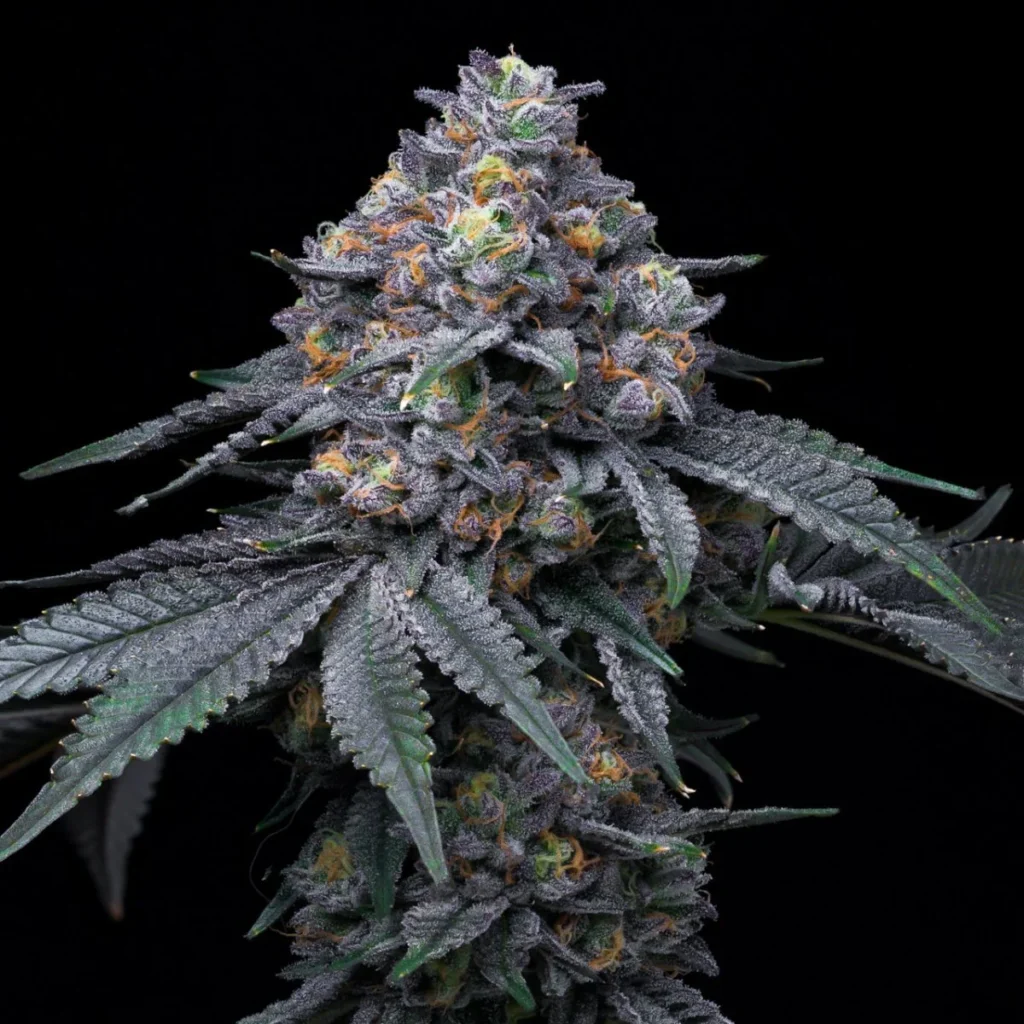
This is a deep-dive into the Blackberry Moonrocks strain: Anesia’s breeding approach, the Blue Moonrock and Blackberry Kush lineage, the terpene chemistry with linalool as the lead, phenotype variation, keeper criteria, growing in Australia, and extraction potential. Both the feminised photoperiod and the autoflower version are covered.
For the foundations on reading terpene profiles and cannabis genetics, the exotic strains guide and the terpene guide cover the essentials. Blackberry Moonrocks seeds are available in the Sigma catalogue.
In this guide
- Anesia Seeds: the European high-potency breeding programme
- Lineage: Blue Moonrock × Blackberry Kush explained
- The name and the visual: why it looks like it came from the moon
- Terpene profile: linalool, myrcene, caryophyllene, limonene
- Phenotype variation: what to expect across the pack
- What to hunt for: the keeper criteria
- Growing Blackberry Moonrocks: what the lineage predicts
- Auto Blackberry Moonrocks: what changes and what doesn’t
- Extraction: floral-berry solventless
Blackberry Moonrocks: At a Glance
| Breeder | Anesia Seeds |
| Cross | Blue Moonrock × Blackberry Kush |
| Indica / Sativa | 80% Indica · 20% Sativa |
| THC | 33% (repeated lab tests) · CBD <1% |
| Terpenes | Linalool · Myrcene · Caryophyllene · Limonene |
| Flavour | Lavender · Blueberry · Blackberry · Light citrus |
| Flowering time | 8–9 weeks |
| Yield | 550g/m² indoors · up to 700g/plant outdoors |
| Height | 110–130cm |
| Difficulty | Moderate · mold resistant · suitable for experienced beginners |
| Seeds | Blackberry Moonrocks feminised photoperiod · Auto Blackberry Moonrocks |
Anesia Seeds: The European High-Potency Breeding Programme
One objective, two different expressions
Anesia Seeds is a European seed bank with over fifteen years in operation and a breeding philosophy built around a single primary objective: push the biological ceiling of cannabinoid production without sacrificing the terpene profile. Future #1 — GG4 × Starfighter F2, 33–37% THC, tropical mango and nerolidol — was the first documented result of that programme to reach the collector market at scale. The Future #1 strain guide covers the breeding philosophy and the 37% THC story in full.
Blackberry Moonrocks is the same philosophy applied to a completely different genetic direction. Where Future #1 reached extreme THC through a GG4 resin-production engine and a Colombian-Starfighter terpene matrix, Blackberry Moonrocks achieves it through two high-resin indica-dominant parents selected specifically for berry and floral terpene expression.
The result is 33% THC with a lavender-blueberry-blackberry profile that has no equivalent in the broader Sigma catalogue and very few equivalents in the modern exotic catalogue at all. Most genetics chasing high potency go gassy, fuel-forward, or dessert-sweet. Blackberry Moonrocks goes floral-berry, and that distinctiveness is the editorial argument for running it.
The selection process
Anesia documented their breeding process for Blackberry Moonrocks with characteristic directness: both parent plants, the Blue Moonrock female and the Blackberry Kush male, were selected across multiple generations for flavour and potency before the cross was finalised. The result was a strain that Anesia describe as combining exceptional cannabinoid production with what they characterise as one of the most distinctive aroma profiles in their catalogue. The 8–9 week flowering window and the 550g/m² indoor yield figure represent the practical growing outcome of that selection process: high-performance genetics that are also manageable in terms of grow complexity.
On the 33% THC figure
The 33% THC figure for Blackberry Moonrocks comes from Anesia Seeds’ repeated lab testing — the same methodology that produced the documented 37% figure for Future #1. As with Future #1, it represents the upper range under optimised conditions from selected phenotypes rather than a guaranteed result across every plant in the pack. Most well-grown Blackberry Moonrocks runs produce plants in the 25–30% range — still among the highest in the indica-dominant category. The figure is a reliable indicator of genetic potential rather than a guaranteed outcome per plant. The same principle applies: the terpene complexity is what justifies running this genetics alongside the potency headline.
Lineage: Blue Moonrock × Blackberry Kush Explained
Blue Moonrock: the mother
Blue Moonrock is an Anesia Seeds in-house selection. Anesia does not publicly document Blue Moonrock’s own parent genetics, which means the full lineage trace beyond the first generation is not independently verifiable. What is documented across multiple sources is Blue Moonrock’s expressed characteristics: a heavily indica-dominant structure producing exceptionally dense, resin-coated buds with a lavender-and-blueberry terpene profile driven by linalool and myrcene, and strong anthocyanin genetics that produce the blue and purple colour expression that defines the visual identity of both Blue Moonrock and Blackberry Moonrocks.
Blue Moonrock shares naming and apparent phenotypic overlap with Blue Moon Rocks — BOG Seeds’ Blue Moon × BOG Bubble cross that established the blueberry-lavender terpene direction in the indica collector market in the early 2000s. Whether Anesia’s Blue Moonrock descends from or was developed alongside BOG’s line is not confirmed. What is consistent across all sources is the expressed terpene direction: linalool-led lavender with myrcene berry depth, and a resin architecture that makes Blue Moonrock a documented extraction-grade genetics in its own right. In Blackberry Moonrocks, Blue Moonrock contributes the linalool-lavender terpene foundation, the resin density, and the anthocyanin colour genetics that produce the near-black bud appearance the strain is named for.
Blackberry Kush: the father
Blackberry Kush is a well-documented indica-dominant hybrid from Alien Genetics, an Afghani × Blackberry cross that contributes the blackberry and dark berry terpene direction, the dense OG-adjacent indica structure from the Afghani side, and the caryophyllene-myrcene backbone that anchors the profile under the linalool lavender from the Blue Moonrock mother.
Afghani is one of the foundational landrace genetics of modern indica breeding, known for extreme resin production, compact structure, and an earthy-hash terpene base. Blackberry contributes the fruity dark berry top notes that soften and brighten the Afghani base. The Afghani resin-heavy structure combined with Blackberry’s fruit-forward terpene direction is what makes Blackberry Kush a reliable breeding parent for high-potency berry-indica genetics.
In Blackberry Moonrocks, Blackberry Kush contributes three things: the blackberry and dark fruit terpene direction that complements and extends the Blue Moonrock’s blueberry and lavender character, the caryophyllene-myrcene backbone that gives the profile its depth and prevents it reading as purely floral, and the Afghani indica resin production architecture that, combined with the Blue Moonrock mother’s resin genetics, drives the extreme trichome density that makes Blackberry Moonrocks a standout extraction candidate.
Blackberry Moonrocks Lineage: Traced Back
| Strain | Cross | What it contributes to Blackberry Moonrocks |
|---|---|---|
| Blue Moonrock | Anesia Seeds in-house selection (full lineage not publicly documented) | Linalool-lavender terpene foundation, resin density, anthocyanin colour genetics (blue-purple-black expression), blueberry myrcene base. |
| Blackberry Kush | Afghani × Blackberry (Alien Genetics) | Blackberry and dark berry terpene direction, Afghani indica resin architecture, caryophyllene-myrcene depth that anchors the profile under the linalool floral. |
| Afghani | Central Asian landrace | Extreme resin production, compact indica structure, earthy-hash terpene base. One of the foundational resin-production genetics in modern cannabis. |
| Blackberry | Berry phenotype selection | Dark berry and blackberry fruit terpene direction. The top note that lifts the Afghani earthy base into the fruit territory that defines Blackberry Kush. |
The Name and the Visual: Why It Looks Like It Came From the Moon
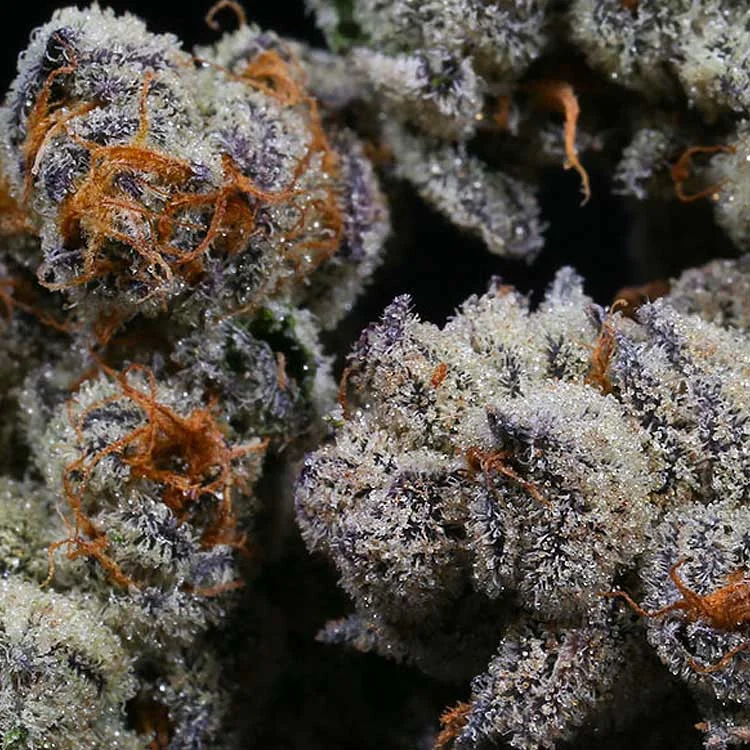
What Moonrocks looks like at harvest
The Moonrocks name is a reference to the visual appearance of the buds at harvest, not to the cannabis product type (flower dipped in oil and rolled in kief) of the same name. Blackberry Moonrocks buds are rock-hard, excessively trichome-covered, and develop a blue, purple, or near-black colour in the final weeks of flower as the anthocyanin genetics from the Blue Moonrock mother express under cool temperatures. The dark bud colour underneath combined with the heavy white trichome coverage on top produces the moon-surface appearance that the name describes.
The colour development is the most visually distinctive characteristic of this genetics. Under cool night temperatures in the final two to three weeks of flower, Blackberry Moonrocks phenotypes carrying the anthocyanin genetics strongly will shift from dark green through purple to near-black. The trichome coverage on top of this dark base gives the buds a frost-over-night-sky appearance that is among the most visually striking in the current Sigma catalogue. This is an aesthetic driven by genetics rather than growing technique, though cool temperatures accelerate and deepen the expression.
Colour as a selection signal
The anthocyanin expression in Blackberry Moonrocks correlates with the Blue Moonrock genetics expressing strongly in a given phenotype. Phenotypes with the most dramatic colour development, deepest purple through to near-black at harvest, typically also carry the linalool-lavender terpene character most clearly. Colour is a useful secondary indicator during a phenotype hunt because it tracks the Blue Moonrock parent’s contribution, which is the source of the most distinctive terpene character in the cross. It should not replace nose evaluation as the primary selection criterion, but it’s a more reliable supporting signal here than in most genetics.
Terpene Profile: Linalool, Myrcene, Caryophyllene, Limonene
Linalool: the defining terpene
Linalool leads the Blackberry Moonrocks terpene profile and is the terpene most responsible for its distinctiveness in the current catalogue. Linalool is a monoterpene alcohol found in lavender, bergamot, coriander, and selected cannabis phenotypes, relatively common as a secondary terpene across many cannabis genetics, but rare as the primary terpene in a high-potency modern exotic. Most high-THC genetics in the collector market are dominated by myrcene, caryophyllene, or limonene. A linalool-led profile at 33% THC is uncommon.
The aroma contribution of linalool in Blackberry Moonrocks is lavender — clean, floral, slightly herbal, with a soapy quality on the exhale that is distinctly different from the gas, fuel, cookie, or citrus profiles that define most of the modern catalogue. It’s a profile that is divisive in the best possible way: collectors who run this pack alongside MAC 1, Cap Junky, Jealousy, or RS11 report that it provides a terpene contrast that makes every other strain in the run taste different by comparison. For a deeper treatment of linalool’s function in the cannabis terpene matrix, the Sigma terpene guide covers it in full alongside the other major cannabis terpenes.
Myrcene: the berry foundation
Myrcene is the secondary terpene, providing the blueberry and dark berry depth that sits beneath the linalool lavender and gives the profile its fruit body. Without myrcene, the linalool would read as purely floral-herbal. With myrcene at these concentrations, the profile reads as lavender-berry: the floral note sits over a ripe fruit base that grounds the profile and prevents it from being thin or perfume-like. The myrcene in Blackberry Moonrocks comes from both parent lines: Blue Moonrock’s blueberry expression and Blackberry Kush’s dark berry direction. Both parents push in the same terpene direction, amplifying the result in the same way the double Sherbet concentration works in Jealousy.
Caryophyllene and limonene: backbone and brightness
Caryophyllene provides the peppery-spice backbone from the Afghani and Blackberry Kush heritage. It anchors the profile under the linalool and myrcene and prevents it reading as purely sweet or purely floral. The caryophyllene note in Blackberry Moonrocks is more restrained than in MAC 1 or Cap Junky: it’s present as a grounding depth note rather than a dominant characteristic, but it’s essential to the profile’s complexity. Without it, the lavender-berry combination would flatten into a single-register sweetness. Limonene provides the citrus brightness that Anesia describe as a “light citrus zing”: the note that freshens the profile on the inhale and prevents the lavender from reading as heavy or medicinal. It’s the highest-register terpene in the stack, arriving last on nose evaluation and departing first through the cure.
The research on linalool’s documented effects — including its documented interactions with the endocannabinoid system and potential anxiolytic properties — is covered in Russo’s 2011 paper Taming THC: potential cannabis synergy and phytocannabinoid-terpenoid entourage effects in the British Journal of Pharmacology.
Terpene Stack: Blackberry Moonrocks
| Terpene | Role in profile | Aroma contribution | Source parent |
|---|---|---|---|
| Linalool | Primary / floral lead | Lavender, clean floral, slightly soapy on exhale. The defining terpene that makes Blackberry Moonrocks unlike anything else in the catalogue. | Blue Moonrock |
| Myrcene | Secondary / berry depth | Blueberry and dark berry fruit base. Grounds the linalool floral and gives the profile its body. Amplified by both parents contributing myrcene in the same direction. | Blue Moonrock + Blackberry Kush |
| Caryophyllene | Foundation / spice backbone | Pepper and spice depth. Restrained relative to the linalool lead but essential — anchors the profile and prevents it reading as purely sweet or purely floral. | Blackberry Kush (Afghani heritage) |
| Limonene | Brightness / citrus lift | Light citrus zest. The highest-register terpene in the stack — freshens the profile and prevents the lavender from reading as heavy. First note on inhale, first to degrade through cure. | Blue Moonrock + Blackberry Kush |
Phenotype Variation: What to Expect Across the Pack
The two phenotype directions
Blackberry Moonrocks produces variation along the two parent lines. Phenotypes leaning toward the Blue Moonrock mother express the linalool lavender note most clearly: these are the most distinctively floral expressions in the pack, with the strongest colour development and the heaviest trichome coverage. Phenotypes leaning toward the Blackberry Kush father express the dark berry and blackberry terpene direction more prominently, with the caryophyllene spice-backbone more present and the linalool floral note sitting further back in the profile. Both directions are legitimate; the difference is which parent’s terpene character leads.
Blue Moonrock-leaning phenotypes are typically more compact, with tighter internodal spacing and more pronounced colour development. The bud structure tends toward denser, harder formations that are the result of the Blue Moonrock resin architecture expressing fully. These phenotypes carry the linalool-lavender note most clearly and represent the most distinctive and collectible expression in the pack. Trichome density is typically at its highest in these phenotypes.
Blackberry Kush-leaning phenotypes grow with slightly more indica vigour and stretch from the Afghani side, producing a blackberry-forward profile where the myrcene dark berry notes lead over the linalool. These phenotypes tend toward a slightly less dramatic colour expression but are often the higher-yielding direction in the pack. The caryophyllene backbone is more prominent, giving the profile more structural depth.
Colour development across phenotypes
Colour expression varies across the pack from deep purple to near-black under cool late-flower temperatures, with some phenotypes developing the full black-bud appearance that inspired the Moonrocks name and others expressing a more moderate purple. The near-black phenotypes are Blue Moonrock-dominant expressions where the anthocyanin genetics are strongest. Temperature management in the final two to three weeks, dropping night temperatures to 16–18°C, triggers and deepens the colour expression in susceptible phenotypes. Even without deliberate temperature drops, Blackberry Moonrocks typically develops visible purple expression in most Australian indoor grows where nights cool naturally.
What sets Blackberry Moonrocks apart in a collection
A collection built around MAC 1, Cap Junky, Jealousy, Permanent Marker, RS11, and Future #1 has exceptional coverage of the gas, citrus, dessert, and tropical terpene categories. What it lacks is a floral-berry indica at high potency. Blackberry Moonrocks fills that gap. Running it alongside the rest of the catalogue produces a contrast that makes every other strain’s character more legible — the lavender and dark berry profile is different enough from everything else that it functions as a reference point, not just an addition. For serious collectors building a varied phenohunt schedule, Blackberry Moonrocks earns its place as the floral indica in the rotation. For the full framework on running packs systematically, see the Sigma phenohunting guide.
What to Hunt For: The Keeper Criteria
Keeper criteria in priority order
Sigma Secrets: What to hunt for in a Blackberry Moonrocks pack
1. The linalool lavender note is present and clear at week 6 of cure. The floral-lavender character from linalool is what makes Blackberry Moonrocks worth keeping over a generic high-THC indica. On the fresh break, beneath the berry top notes, there should be a clean, identifiable lavender-floral quality that is distinct from the earthiness or spice of the caryophyllene backbone. Linalool develops and stabilises through the cure — evaluate at six weeks minimum. Any phenotype where this note is absent and the profile reads as generic berry-indica is not the keeper.
2. Lavender and berry are both present in the right proportion. The keeper holds the linalool floral note and the myrcene berry depth simultaneously. A phenotype where lavender overwhelms and the berry reads thin has too much Blue Moonrock influence and not enough Blackberry Kush. A phenotype where the berry dominates and the lavender is barely detectable is the reverse. The intersection — lavender as the lead, berry as the body — is the expression that justifies the pack.
3. Near-black colour with heavy trichome coverage. The visual signature of the strongest phenotypes — dark purple to near-black buds coated in white trichomes — is a reliable indicator that the Blue Moonrock genetics are expressing fully. Prioritise phenotypes with strong colour development alongside the terpene criteria above. Colour alone is not sufficient selection criteria, but it correlates with linalool expression in this genetics.
4. Nose-to-smoke translation. The lavender-berry character should carry clearly from jar through to the exhale. Linalool’s moderate volatility means it can fade faster than caryophyllene through the smoke — prioritise phenotypes where the floral note persists to the finish rather than appearing only on jar open and disappearing in the smoke.
5. Effect quality matches the genetics. Blackberry Moonrocks at 33% THC with a linalool-myrcene terpene matrix should produce a deep, heavy indica experience with a calm, euphoric onset rather than an anxious or edge-heavy effect. The linalool-myrcene combination is associated with relaxing, sedating effect characteristics. A phenotype where the effect is uncomfortable or anxiety-inducing is not well-suited to this genetics profile — note and move on.
Growing Blackberry Moonrocks: What the Lineage Predicts
Why this is the most accessible genetics in the Anesia line
Blackberry Moonrocks is rated moderate difficulty, a meaningful distinction from Future #1 in the Sigma Anesia catalogue, which while not rated advanced shares the general Anesia requirement for optimised conditions to reach the documented THC figures. Anesia describes Blackberry Moonrocks as easy to manage and unusually resistant to mould and fungal disease. Treat that as a breeder-reported tendency rather than immunity: the Afghani heritage through Blackberry Kush may contribute structural resilience, but phenotype, flower density and the actual environment still determine disease pressure. Dense indica flowers can retain moisture even when the underlying genetics are comparatively robust.
Structure and canopy management
The 80% indica dominance produces a compact, branching structure that stays manageable indoors without aggressive training. Height ranges from 110–130cm, with most indoor phenotypes staying in the lower part of that range without significant canopy management. Topping in early veg to develop multiple lateral sites is recommended for maximising the 550g/m² yield potential: the branching structure responds well to training and distributes the bud development across the canopy more efficiently than running the plant untopped. The indica density of the bud structure means airflow management through flower remains important even with the mold resistance claim: adequate circulation prevents moisture retention in the dense mid-canopy.
Harvest timing and linalool development
Linalool is a moderately volatile terpene that continues to develop and stabilise through the final week of flower. The lavender note that defines the keeper phenotype develops most fully when the plant is taken at full trichome maturity. Pulling early, at week seven on a plant that can run to nine, sacrifices linalool development alongside yield and trichome density. Milky heads with developing amber is the correct harvest window. The colour expression is most dramatic in the final ten days as the anthocyanins accumulate: pulling early also sacrifices the full colour development that makes this genetics visually distinctive.
Sigma Secrets: Australian growing notes
Outdoor performance. Blackberry Moonrocks can suit Australian outdoor conditions, particularly dry temperate and warm inland climates. Anesia’s reported mould resistance is a useful positive signal, but it should not be relied on in prolonged wet weather: the compact indica flowers still require airflow and regular inspection. Spring planting (September–October) generally points to a late March to early April harvest, with latitude and phenotype affecting the finish. In Northern NSW, southeast Queensland and other humid coastal areas, thin congested interior growth and protect maturing flowers from extended rain where possible. Anesia documents outdoor yield potential of up to 700g per plant under favourable conditions; treat that as an upper-end breeder figure rather than a typical result.
Colour management. Australian night temperatures in late summer and early autumn suit Blackberry Moonrocks’ anthocyanin expression naturally in most states. Southern Australian climates (Victoria, Tasmania, southern New South Wales) often produce the most dramatic colour development without any deliberate temperature management. Queensland and Northern NSW growers may want to manage night temperatures downward in the final two to three weeks to trigger the full colour expression.
Cure discipline. Linalool is moderately volatile and benefits from a careful cure at 60% RH in a sealed container. The lavender note develops and deepens through an extended cure in a way that myrcene and caryophyllene dominant genetics do not — at six weeks, a well-cured Blackberry Moonrocks phenotype should read as more distinctly lavender-berry than it did at three weeks. This is the genetics where cure patience makes the biggest difference to the profile.
Auto Blackberry Moonrocks: What Changes and What Doesn’t
The auto lineage
Auto Blackberry Moonrocks uses a different parent combination from the photoperiod version: Blue Moonrock × Auto Blueberry Banana × Blackberry Kush. The addition of Auto Blueberry Banana introduces the ruderalis genetics for automatic flowering while maintaining the berry terpene direction through the Blueberry Banana parent. The result is a three-way cross that preserves the lavender-blueberry-blackberry terpene profile of the photoperiod version in a compact auto format.
Key differences from the photoperiod
THC holds at 25% in the auto format, below the photoperiod’s 33% ceiling but high for an auto and in the top tier of the auto category in the current Sigma catalogue. The compact 70–90cm height suits indoor setups where the photoperiod’s 110–130cm structure is a constraint. Flowering runs 10 weeks seed to harvest under any light schedule, approximately one week longer than the photoperiod’s flowering window, reflecting the auto format’s generally extended lifecycle relative to the compressed timeframe expectation. Yield potential is 450g/m² indoors, slightly below the photoperiod’s 550g/m², consistent with the auto format’s yield trade-off.
The terpene direction — linalool-led lavender, myrcene berry depth, caryophyllene backbone — is preserved in the auto format. The Auto Blueberry Banana parent contributes additional blueberry-forward character that deepens the berry component of the profile relative to the photoperiod version. The lavender-berry combination that defines the genetics is present in quality auto phenotypes, though at slightly lower total terpene concentration than the photoperiod due to the compressed lifecycle. Both formats are available in the Sigma catalogue: Blackberry Moonrocks feminised photoperiod and Auto Blackberry Moonrocks.
Auto Blackberry Moonrocks: format summary
| Cross | Blue Moonrock × Auto Blueberry Banana × Blackberry Kush |
| THC | 25% (vs 33% photoperiod) |
| Height | 70–90cm (vs 110–130cm photoperiod) |
| Lifecycle | 10 weeks seed to harvest (any light schedule) |
| Yield indoors | 450g/m² (vs 550g/m² photoperiod) |
| Terpene profile | Preserved — linalool lavender, myrcene berry, caryophyllene backbone. Blueberry direction slightly more prominent from Auto Blueberry Banana parent. |
Extraction: Floral-Berry Solventless
Why Blackberry Moonrocks is a strong extraction candidate
Blackberry Moonrocks is documented by Anesia Seeds as an extraction-grade genetics — a claim supported by the Afghani heritage’s resin production credentials and the visual evidence of trichome coverage at harvest. The convergence of two high-resin parent lines (Blue Moonrock and Blackberry Kush, both with Afghani structural genetics or analogous resin-dense backgrounds) produces the trichome density required for ice water extraction. The yield per gram of input material is high relative to most indica-dominant genetics at comparable THC levels.
Linalool in extraction
Linalool’s extraction behaviour is the most important technical consideration for running Blackberry Moonrocks for hash. It is a moderately volatile terpene: more volatile than caryophyllene or myrcene, less volatile than limonene. Fresh frozen live rosin preserves the linalool lavender note significantly better than dry-cured rosin, where some linalool loss through the drying and curing process reduces the lavender expression in the final product. The difference between fresh frozen and dry-cured Blackberry Moonrocks rosin is more pronounced than for most other genetics in the catalogue because the defining terpene is the one most affected by the drying process.
Sigma Secrets: Extraction notes
Ice water hash. Blackberry Moonrocks washes well. Afghani-heritage trichome structure performs reliably in ice water extraction. Run at cold temperature (1–4°C) with gentle agitation. Fresh frozen is strongly recommended over dry material — linalool retention is meaningfully higher in fresh frozen runs, and the lavender character in the resulting hash is more present and more pronounced. The first wash carries the highest linalool and myrcene concentration.
Rosin pressing. Fresh frozen live rosin at 65–72°C is the optimal format for preserving the linalool-lavender character. Keep the press temperature at the lower end of the range. Linalool degrades faster under heat than caryophyllene or myrcene — the lavender note is noticeably more present in rosin pressed at 65°C than at 80°C. Dry-cured rosin at standard temperatures still produces a strong berry-spice profile but with reduced lavender expression.
In a hash roster. Blackberry Moonrocks rosin occupies a distinctive position in a hash collection. Where MAC 1 brings incense-citrus and Cap Junky brings mint-gas, Blackberry Moonrocks brings lavender-berry: a floral-indica profile that has no direct equivalent in most Australian hash rosters. It’s the strain that makes the rest of the roster taste more varied by contrast.
Frequently Asked Questions: Blackberry Moonrocks Strain
What is Blackberry Moonrocks?
Blackberry Moonrocks is a feminised indica-dominant hybrid (80% Indica / 20% Sativa) developed by Anesia Seeds from a cross of a selected Blue Moonrock female and a Blackberry Kush male. It produces 33% THC in repeated lab testing, with a lavender-blueberry-blackberry terpene profile led by linalool. The buds develop purple to near-black colour at harvest, coated in heavy white trichomes: the appearance that inspired the Moonrocks name.
What are Blackberry Moonrocks’ genetics?
Blackberry Moonrocks is Blue Moonrock × Blackberry Kush, developed by Anesia Seeds. Blue Moonrock is an Anesia in-house selection whose own parent genetics are not publicly documented: it contributes the linalool-lavender terpene character, the resin density, and the anthocyanin colour genetics. Blackberry Kush is an Afghani × Blackberry cross from Alien Genetics, contributing the blackberry terpene direction, the Afghani indica resin architecture, and the caryophyllene-myrcene backbone.
What does Blackberry Moonrocks smell and taste like?
Lavender-forward floral with blueberry and dark blackberry berry depth, a light citrus brightness, and a restrained pepper-spice base from caryophyllene. The linalool lavender is the first and most distinctive impression on jar open and on the exhale: clean, floral, and slightly soapy. The myrcene berry depth sits beneath it, and the citrus brightness arrives on the inhale. The overall profile is unlike anything in the gas, dessert, or tropical categories that dominate the modern catalogue.
Is the 33% THC figure accurate?
It comes from Anesia Seeds’ repeated lab testing, the same methodology that produced their documented figures for Future #1. It represents the upper range under optimised conditions from selected phenotypes. Most well-grown Blackberry Moonrocks runs produce plants in the 25–30% range, which is still among the highest in the indica-dominant category. The same principle applies as with Future #1: the terpene profile is what justifies running this genetics alongside the potency headline, not the headline alone.
What is linalool and why does it matter in Blackberry Moonrocks?
Linalool is a monoterpene alcohol found in lavender, bergamot, and coriander: common as a secondary terpene in many cannabis genetics, but rare as the primary terpene in a high-potency modern exotic. In Blackberry Moonrocks, linalool drives the lavender-floral character that defines the strain’s identity. At 33% THC with linalool as the lead terpene, Blackberry Moonrocks occupies a category essentially by itself in the current Australian collector market. The linalool note is moderately volatile: it benefits from fresh frozen extraction and extended cure time relative to caryophyllene-dominant genetics.
What is the difference between Blackberry Moonrocks and Auto Blackberry Moonrocks?
The auto version uses a different cross: Blue Moonrock × Auto Blueberry Banana × Blackberry Kush. This three-way cross introduces ruderalis genetics for automatic flowering through the Auto Blueberry Banana parent. THC holds at 25% (versus 33% for the photoperiod), height is 70–90cm (versus 110–130cm), and the lifecycle is 10 weeks seed to harvest under any light schedule. The terpene direction, linalool lavender, myrcene berry, caryophyllene backbone, is preserved in the auto, with the Blueberry Banana parent adding additional blueberry depth. Both versions are in the Sigma catalogue: feminised photoperiod and autoflower.
Is Blackberry Moonrocks good for solventless extraction?
Yes. Anesia documents it as an extraction-grade genetics, and the Afghani heritage in the Blackberry Kush parent supports that claim with documented resin production credentials. It washes well in ice water extraction. Fresh frozen live rosin at 65–72°C is the recommended format for preserving the linalool-lavender character: linalool is moderately volatile and benefits from lower press temperatures than caryophyllene-dominant genetics. In a hash roster, Blackberry Moonrocks rosin occupies a distinctive position: floral-berry with no equivalent in most Australian collections.
How does Blackberry Moonrocks compare to Future #1?
Both are Anesia Seeds genetics at extreme THC levels. Beyond the breeder and the potency, they are completely different strains. Future #1 (GG4 × Starfighter F2) is a balanced hybrid with a tropical-citrus-nerolidol terpene profile: sativa-influenced, uplifting, bright. Blackberry Moonrocks (Blue Moonrock × Blackberry Kush) is 80% indica with a linalool-lavender-berry profile: calming, floral, sedating at higher doses. They represent the two ends of the Anesia catalogue: maximum potency through a sativa-adjacent citrus lens, and maximum potency through an indica-dominant floral-berry lens. The Future #1 strain guide covers that genetics in full detail for comparison.
Is Blackberry Moonrocks difficult to grow?
Moderate difficulty. Anesia describe it as easy to care for and resistant to mold, which is unusual for a genetics at this potency level. The Afghani heritage through Blackberry Kush contributes structural resilience and environmental tolerance that makes this more forgiving than MAC 1 or Cap Junky. A grower who has successfully completed at least one indoor photoperiod run with a Cookies-family or OG-heritage genetics should have the baseline skills to run Blackberry Moonrocks well. The main considerations are the standard indica management requirements: airflow through the dense bud structure and temperature management in late flower to trigger colour expression.
Where can I find Blackberry Moonrocks seeds in Australia?
Blackberry Moonrocks feminised photoperiod seeds are available in the Sigma Seeds catalogue. Browse the full range to see what else is available alongside Blackberry Moonrocks, including Future #1, the other Anesia Seeds genetics in the catalogue.
